Wax resist helps potters protect areas from glaze, enabling sharp lines, intricate patterns, and controlled color separation. This guide highlights five practical wax resist products that work with bisque-fired and glazed pottery, suitable for beginners through advanced ceramic artists. Each option is evaluated by suitability, best-use scenarios, and potential limitations to help you pick the right one for your studio needs.
| Product | Brand | Volume | Best For |
|---|---|---|---|
| Penguin Pottery Ceramic Wax Resist | Penguin Pottery | 1 Pint (473 ml) | Detailed brushwork and underglaze work |
| Pasler Wax Resist | Pasler | 16 fl oz (473 ml) | Greenware and bisque glaze masking |
| AMACO Jar Wax Resist | AMACO | 16 FL Oz | Bisque glaze resistance for slips |
| Penguin AccuBlue Wax Resist | Penguin Pottery | 1 Pint (473 ml) | Underglaze patterns with clear visibility |
| 500g Wax Resist by EIGTWEN | EIGTWEN | 500 g | Outlines and high-temperature firing masking |
Penguin Pottery Ceramic Wax Resist (1 Pint)

Best for: Potters seeking a standard, reliable wax resist with broad compatibility. This resin-based wax is designed to withstand firing and is suitable for sgraffito and brushwork. It’s especially useful for mid-range projects where precise masking is needed before underglaze or glaze applications.
Why selected: It emphasizes stability during firing, reducing risk of smearing. Its non-toxic, lead-free formulation makes it suitable for everyday studio use and potential functional pieces.
Limitations: Wax will burn off under the glaze during firing, revealing the protected areas; apply evenly to avoid gaps. Not ideal for extremely delicate or highly detailed patterns that require ultra-thin masking.
Pasler Wax Resist for Pottery (16 oz)

Best for: Greenware and bisque pieces where you want clear, visible masking before glaze application. The water-based formula is easy to see and dries quickly, helping you plan glaze boundaries precisely.
Why selected: The product is designed to be green for visibility, with fast-drying properties and moderate viscosity for even application. It’s user-friendly for beginners and hobbyists mapping out basic masking patterns.
Limitations: As with many wax resists, ensure complete dry time before glazing to prevent smudges. It may require careful brushing to avoid thin, uneven edges on complex shapes.
AMACO Jar Wax Resist (16 Fl Oz)

Best for: Studios needing a straightforward, widely available wax resist that pairs well with glaze and slip masking on bisque-fired pieces.
Why selected: AMACO is a long-standing brand in ceramics, and this wax resist is described as non-toxic and ACMI certified, which adds a layer of safety and reliability for educational settings or shared studios.
Limitations: Availability in multiple jar sizes can be convenient, but ensure you have enough product for larger projects to avoid mid-project shortages.
Penguin AccuBlue Wax Resist (1 Pint)
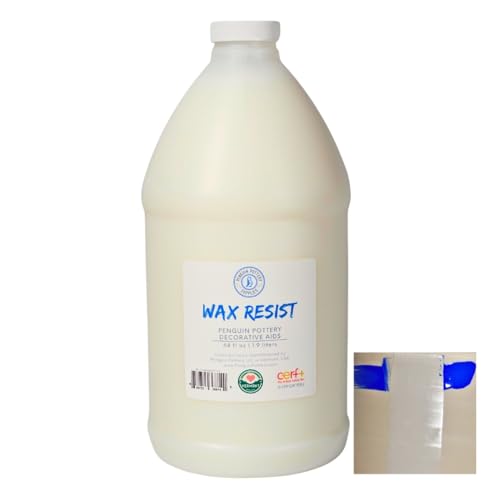
Best for: Artists who want sharp, clean lines and reliable performance across underglaze and glaze layers. AccuBlue branding suggests clear demonstration of masked areas for precise patterning.
Why selected: It mirrors the stability and safety features of other Penguin Pottery products, with an emphasis on long-lasting masking through firing temperatures.
Limitations: As with many wax resists, high-temperature firing will remove the wax; plan your glaze sequence to avoid unexpected color changes in masked zones.
500g Wax Resist for Pottery (EIGTWEN)

Best for: Beginners and small studios needing a larger block of wax resist for outlining and masking before glazing, especially when working on detailed patterns or repetitive motifs.
Why selected: The description emphasizes easy use, outline masking, and a straightforward firing reveal, which helps in planning complex designs without frequent reapplication.
Limitations: The method requires careful timing — allow adequate drying time and ensure the wax is fully set before glazing to prevent bleed.
Buying Guide: How to Choose the Right Wax Resist
What should you consider when selecting a wax resist for pottery?
- Firing compatibility: Ensure the wax will burn off cleanly during bisque or glaze firing without leaving residues that affect color or texture.
- Visibility: If you rely on visual masking, choose products with colored formulations or those that dry to a distinct hue.
- Application method: Brush-on resist is versatile for freehand masking; stencil-friendly or liquid options may suit more controlled patterns.
- Safety and compatibility: Look for non-toxic, lead-free formulations and ensure the product is suitable for the clay body and glaze system you use.
- Drying time and handling: Quick-drying formulas help with tight schedules, while slower-drying options may be better for large or delicate works.
- Storage and shelf life: Consider packaging size and whether the product can be resealed effectively to prevent drying out.
Frequently Asked Questions
- Is wax resist safe for dinnerware? Yes, many wax resists are designed to be non-toxic and lead-free, but always verify the product’s safety documentation and ensure the final piece is properly fired and cooled before use.
- Will the wax leave residue after firing? Wax typically burns away during firing, revealing the masked patterns. Plan the firing schedule to ensure complete wax removal.
- Can wax resist be used on all clay bodies? Most wax resists work with common ceramic clays, but always test compatibility with your specific clay and glaze system before a large project.
- What’s the difference between wax resist and latex resist? Wax resist forms a physical barrier that prevents glaze adhesion, while latex or other barrier resists rely on polymer chemistry. Wax often handles high temperatures well, but latex can be more flexible in some underglaze applications.
- How long does wax resist need to dry before glazing? Drying times vary by product; typical guidance suggests a few minutes to prevent smearing, followed by light handling to confirm it’s set.
- Can I use wax resist with underglazes? Yes, wax resist is commonly used with underglazes to create crisp lines and reveal contrasting colors after firing.