Waterslide decals for ceramics provide a simple, high-clarity way to add custom art to mugs, plates, vases, and other smooth surfaces. This guide highlights five top options, explains who each product suits best, and outlines practical buying considerations. Ideal for crafters, small-business makers, and hobbyists seeking crisp imagery on ceramic surfaces.
| Product | Best For | Notes |
|---|---|---|
| Jecqbor Inkjet Clear (20 sheets) | Handmade mugs, glassware, home decor | Clear, high-definition inkjet transfer |
| Jecqbor Laser Clear (20 sheets) | Laser-printed glass, ceramics, plastics | Laser-compatible, bright colors |
| Hayes Inkjet Clear (20 sheets) | DIY ceramic projects, gifts | 200gsm, quick-dry with good adhesion |
| PRESSINART Under-glaze Blue Line (4 sheets) | Artistic pottery, porcelain accents | Large-format underglaze transfers |
| Printers Jack Inkjet Clear (20 sheets) | General ceramic crafts, tumblers | Up to 5760 dpi, versatile use |
Choosing the right waterslide decal paper depends on your printer type, surface color, and the desired finish. The following sections present the five most relevant products, with practical guidance on who should buy each option and why.
Jecqbor Inkjet Clear Waterslide Paper (20 Sheets)
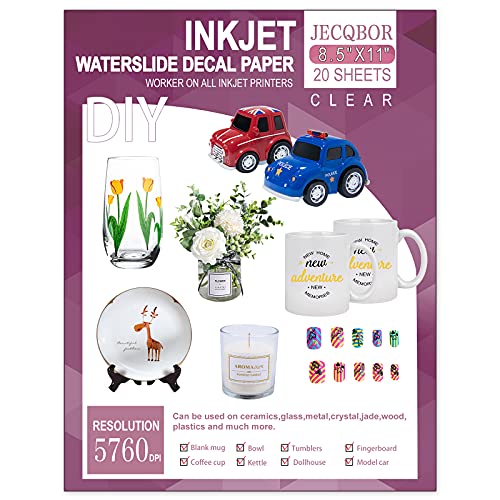
Best for: DIY ceramic projects on white or light-colored surfaces. This inkjet clear paper delivers high-definition color with non-fading results, suitable for cups, mugs, glasses, and decorative items. It works with pigment and dye inks and prints up to 5760 dpi, which helps achieve sharp details on small or complex designs.
Why selected: Clear background shows through on light surfaces, enabling vibrant transfers with minimal background disruption. It suits hobbyists and small makers who print at home using inkjet printers.
Caution: Only compatible with inkjet printers. Avoid using with laser printers or dark surfaces, which can affect adhesion and clarity.
Jecqbor Laser Clear Waterslide Paper (20 Sheets)
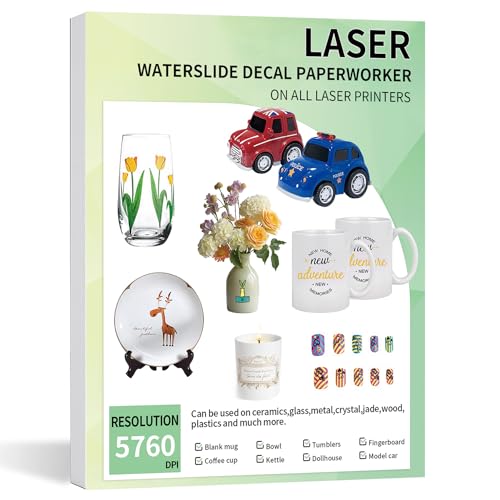
Best for: White or light-colored surfaces where a laser-printed transfer is preferred. This paper aims for high-definition laser printing with vivid, non-fading results, ideal for glassware, ceramics, and plastics.
Why selected: Clear background remains discreet on light backgrounds, producing crisp lines and solid color blocks. Laser compatibility can improve durability in some use cases.
Caution: Requires a laser printer; ensure your printer settings are optimized for decal transfer papers to avoid misalignment or smudging.
Hayes Waterslide Paper For Inkjet (20 Sheets)
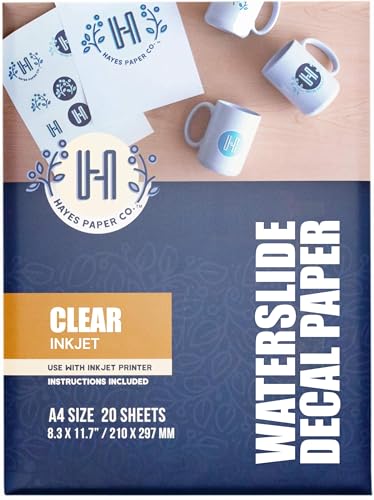
Best for: Clear, high-clarity transfers on mugs, plates, or glass items where a glossy finish is desired. The 200gsm thickness supports stable transfers with a straightforward water-slide process.
Why selected: It emphasizes easy DIY steps—print, seal, soak, and slide—making it accessible for beginners and hobbyists aiming for professional-sounding results.
Caution: Requires a dedicated sealing step with acrylic spray to ensure durability. Not suitable for all heat-exposed items without proper coating.
PRESSINART Under-glaze Style (4 Sheets)

Best for: Detailed ceramic art with a blue line house motif and underglaze aesthetics. These large decals (about 20 x 15 inches per sheet) are well-suited for big surfaces or layered designs on pottery.
Why selected: The generous size and distinct blue sketch style offer a unique handmade look, making it ideal for decorators seeking a traditional or artisanal feel.
Caution: Transfer requires careful handling to align large patterns; uneven surfaces may challenge even application. A protective glaze may be needed for durability.
Printers Jack Inkjet Clear Waterslide (20 Sheets)

Best for: General-purpose ceramic crafts, tumblers, mugs, and glass items. This A4-size paper supports broad versatility with a high printing resolution up to 5760 dpi.
Why selected: It combines broad compatibility with a clean, transparent finish, helping designs look crisp on light or white surfaces while offering straightforward DIY steps.
Caution: Ensure compatible ink type (inkjet) and seal with a clear acrylic coat to enhance durability on used or washed items.
Buying Guide
What surface should you target? Choose papers labeled “clear” if you want the background to show through on light surfaces. For white or dark surfaces, white inkjet papers can provide better contrast. Consider whether you’ll use ceramics, glass, metal, or plastic, as some papers are optimized for specific materials.
Printer type matters. Inkjet papers are common for home crafters, while laser papers offer fast drying and strong color on compatible printers. Confirm your printer supports decal paper and follow the recommended settings to avoid misprints or jams.
Finish and durability. If you plan to wash or handle items frequently, apply a protective coating after transfer, such as a clear acrylic spray. Some papers specifically mention a need for sealing to improve longevity.
Paper thickness and size. Heavier paper (around 200 gsm) often yields sturdier transfers with less tearing during dipping, while larger sheets enable bigger designs or combined motifs. Check sheet dimensions (A4 vs 8.5×11 inches) to match your project scale.
Usage pattern. For beginners, start with simple designs on small items like mugs before attempting large sheets or underglaze transfers. Keep a spare set for testing color accuracy and alignment before final projects.
FAQ
- What surfaces can I transfer onto with these decals? Most decals work on white or light-colored ceramics, glass, metal, jade, and certain plastics. Clear papers are ideal when you want the background to remain visible.
- Do I need a special printer? Inkjet printers are the most common, but some papers are labeled laser clear. Use the type that matches your printer to ensure color accuracy and adhesion.
- Is sealing necessary after application? A clear acrylic spray or glaze is often recommended to improve durability, especially for items that will be washed or handled frequently.
- Can I use these on dark surfaces? Most clear papers transfer best on light surfaces. For darker surfaces, white inkjet papers or white-background decals are typically more visible.
- How complex are the steps? Typical steps include printing, applying a protective coating if needed, applying a clear coating after transfer, soaking in water, and smoothing out air bubbles.
- How large are the decals? Sheet sizes vary; larger sheets allow bigger designs or multiple motifs. Check dimensions before planning a multi-piece layout.