When choosing a water-based wood dye or stain, consider how you plan to apply color, the level of control you need, and whether you’re staining indoor projects or outdoor furniture. This guide spotlights five top options that balance vibrancy, safety, and ease of use. Suitable for hobbyists and professionals alike, these selections cover powder dyes, liquid dyes, and full-coverage water-based stains. Each product is explained with who it’s best for and practical limits to help you decide.
| Product | Best For | Key Benefit |
|---|---|---|
| NINESUNG 5-Colors Wood Dye Powder | Small projects and craft dyeing | Vivid color from powder dye that activates with water |
| Wood Dye Kit — Aniline Dyes (Keda Dyes) | Colorful, multi-color projects | Five exotic colors in one kit for broad tonal range |
| TransTint Dyes, Black, 2oz | Professional-grade color control | High concentration; precise control and clear grain |
| Wood Stain — Vividye Golden Oak | Indoor furniture and cabinetry | Low odor, non-toxic; deep, rich color with good coverage |
| Furniture Clinic Wood Stain — Dark Oak | Domestic living spaces and outdoor projects | One-coat color and fast drying on multiple surfaces |
NINESUNG 5-Colors Wood Dye Powder
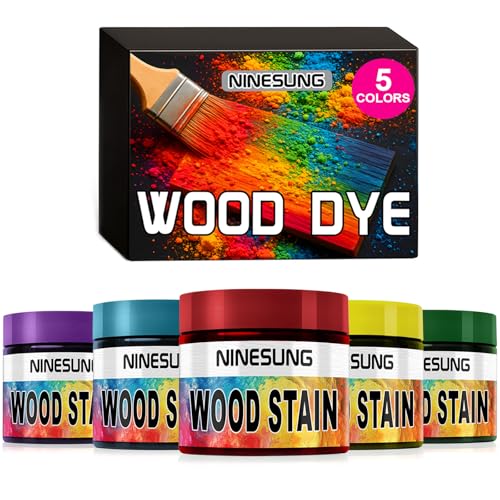
Best for: Hobbyists and small craft projects that require bold, quick color changes. The powder format makes it easy to blend custom shades by mixing colors and water to activate the pigment. Each canister holds about 2 oz of pigment, and the powder is designed to dry quickly with good coverage. This option is ideal when you want vibrant hues on both indoor and outdoor wood surfaces without heavy solvent odors.
Why it’s selected: The five-color set provides flexibility and easy color experiments. It’s simple to mix, and the color penetrates wood evenly with a fast-drying profile. The moisture-proof canisters help preserve pigment quality between sessions.
Caution: Powder pigments can settle; stir well before use. Accurate mixing (2–5% dye-to-water range) is key for consistent color. Over-wetting can lead to longer drying times in humid conditions.
Wood Dye Kit — Aniline Dyes (Keda Dyes)
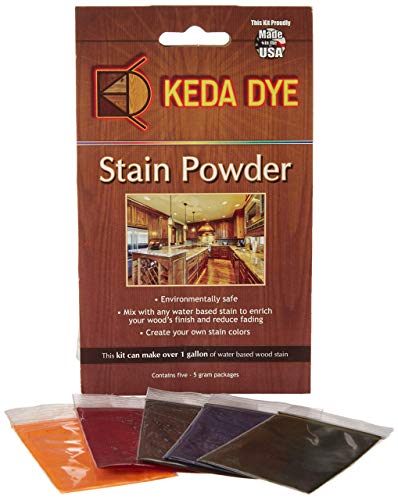
Best for: Multi-color projects or projects requiring a broad palette in a compact kit. The kit provides five colors suitable for deep, exotic tones, with strong staining potential on diverse woods. Suitable for interior wood furniture, decorative panels, and crafts where vibrant, evenly distributed color is desired.
Why it’s selected: The kit’s five colors enable designers to craft custom looks and shading. Eco-friendly features align with indoor projects where low odor matters. The dyes offer strong penetration and are easier to mix into a consistent liquid dye.
Caution: This is a dye system; achieving solid, uniform color may require practice with staining technique and surface preparation. Some woods may show lighter or darker results based on grain density and extractives.
TransTint Dyes, Black, 2oz

Best for: Professionals needing precise color control and compatibility with multiple finishes. The extremely concentrated formula means a few drops go a long way. The dye is compatible with water, alcohol, shellac, lacquer, and other finish systems, producing clear, grain-friendly color without muddying.
Why it’s selected: TransTint dyes are recognized for professional-grade color results and strong grain clarity. The 2 oz bottle yields substantial color when mixed correctly, offering economical use for large projects or multiple color variations. Useful when a project requires exact shade matching or subtle tonal shifts.
Caution: Use with appropriate ventilation and avoid over-application to prevent blotching on soft or porous woods. Testing on sample panels is advised to dial in color depth before committing to a entire piece.
Wood Stain — Vividye Golden Oak

Best for: Indoor projects like kitchen cabinets or bedroom furniture where a deep, natural oak-like tone is desired. The water-based formula reduces strong odors and VOCs, making this an appealing option for living spaces. It is designed to provide rich color while highlighting wood grain.
Why it’s selected: The product emphasizes deep pigment penetration and even coverage. It yields a professional-looking finish with a realistic oak appearance, suitable for projects where minimal coats deliver robust color depth. Coverage estimates help plan the number of coats for the desired look.
Caution: For the most vibrant, evenly colored result, three coats are recommended. Overapplication in tight corners or intricate joinery may require careful brushing to avoid pooling.
Furniture Clinic Wood Stain — Dark Oak

Best for: Quick-drying projects where a natural matte finish is acceptable or preferred. The stain is designed to be effective on all wood surfaces, indoor and outdoor, with low odor and non-toxic properties. It’s a strong option for fast turnaround on furniture and trim.
Why it’s selected: This stain offers a practical balance of color depth and speed. It comes in multiple sizes and a visible one-coat performance, making it a convenient choice for projects needing rapid results. The matte finish helps minimize sheen on rustic or traditional wood pieces.
Caution: One-coat coverage can vary with wood type and prior finish. Always test on a scrap piece to ensure the color depth matches your expectations before full application.
Buying Guide: Key Considerations For Water-Based Wood Dyes And Stains
Water-based wood dyes and stains differ in pigment form, concentration, and finish behavior. Here are practical questions to guide your decision:
- What is my project environment? For indoor spaces, look for low odor and non-toxic formulas. For outdoor use, ensure UV resistance and weather stability are stated by the brand.
- Do I want powder dyes or liquid dyes? Powder dyes offer robust color control and can be mixed to create custom shades, ideal for craft projects. Liquid dyes often provide quicker, consistent application with easy measurement.
- What level of color depth and grain visibility do I need? Dyes typically highlight grain with transparent color, while stains can enhance grain with more opaque color, depending on coats.
- How many coats are practical for my project? Some products advertise one-coat color, while others require multiple coats for depth and evenness.
- What woods am I staining? Some woods absorb dyes differently; testing on a sample panel helps predict final results.
- Is odor and safety a priority? Water-based formulas generally offer lower odor and safer handling, suitable for homes and classrooms.
Frequently Asked Questions
- What is the advantage of water-based dyes over solvent-based ones? Water-based formulations typically emit fewer fumes, dry faster, and are easier to clean up, making them safer for indoor use.
- How should I mix dye powders with water? Most powder-based dyes specify a mixing ratio, commonly around 2–5% pigment to water. Stir well and allow pigment to activate before applying.
- Can I mix different colors to create custom shades? Yes. Powder dyes and some liquid dyes are designed for blending, enabling tailored hues. Test on sample boards first.
- Will these dyes stain the grain clearly? High-quality dye systems aim to enhance grain clarity while avoiding muddiness. The technique and wood species influence results.
- How many coats should I apply for best results? Many water-based stains suggest multiple coats for depth; however, some products advertise one-coat coverage. Follow the manufacturer’s guidance and test.
- Are these products safe for indoor use around families and pets? Most listed options emphasize non-toxic and low-odor formulations, but always read the product label for safety details.