Answering the question, water-based clays are best for quick shaping, easy cleanup, and accessible air-dry or kiln-free projects. This guide highlights five top products ideal for artists, hobbyists, and educators seeking reliable, workable clays for sculpting and modeling. Each option suits different needs—from beginner-friendly air-dry clays to flexible earth-tones for detailed work. The list below helps you compare texture, drying method, and handling characteristics to choose the right clay for your project.
| Product | Best For | Drying Type | Notes |
|---|---|---|---|
| VIBRATITE 10 Lbs Natural Air Dry Clay | Beginners and mixed-media artists | Air dry | Fine kaolin texture; non-toxic; great for large projects |
| Old Potters Premium Air Dry Clay | Beginner to intermediate sculptors | Air dry | All-natural; best with proper drying to avoid cracking |
| Deouss 5 Lbs Low Fire Pottery Clay | Hand builders and wheel throwers | Low-fire; kiln required | Strong plasticity; smooth consistency |
| WOODOVER Premium Air Dry Clay White, 10 lb | Artists and kids: family projects | Air dry | No additives; gradual drying recommended to prevent cracking |
| Crayola Air Dry Clay (5lbs) | Classrooms and beginners | Air dry | Bulk classroom option; supports traditional clay techniques |
VIBRATITE 10 Lbs Natural Air Dry Clay

The VIBRATITE air-dry clay is a porcelain-like kaolin-based material with a fine, uniform texture. It offers a smooth touch and is non-toxic and odorless, making it suitable for artists of all skill levels. Best for: beginners seeking a pliable, easy-to-model clay for general sculpture, pottery mockups, and craft projects. Limitation: drying may require even moisture to prevent cracking in thick builds.
Old Potters Premium Air Dry Clay, White, 10 lbs

Old Potters emphasizes all-natural materials with no fillers, designed for a wide range of DIY projects. Best for: beginners and intermediate sculptors who prefer natural composition and simple, hand-building techniques. Limitation: clay may crack if not dried properly; avoid trapping air during modeling and provide even drying conditions.
Deouss 5 Lbs Low Fire Pottery Clay

Deouss Terra Cotta clay offers strong plasticity and a smooth, non-sticky feel, ideal for hand-building, sculpting, and wheel throwing. Best for: users who plan to bisque to cone 04 and glaze to cone 06, with a focus on moisture-controlled shaping. Limitation: requires firing; not suitable for finished pieces that must air-dry completely.
WOODOVER Premium Air Dry Clay White, 10 lb
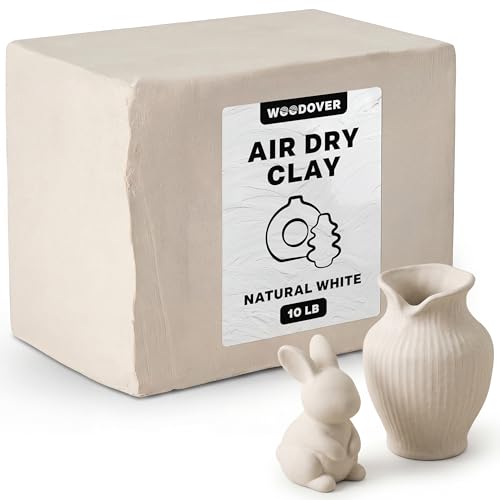
WOODOVER’s white air-dry clay provides a straightforward option for all creators, including kids. Best for: family projects and general sculpting where a natural composition without additives is preferred. Limitation: gradual drying is necessary to prevent cracking; avoid rapid moisture loss and trapped air during modeling.
Crayola Air Dry Clay (5lbs)

Crayola’s 5-pound air-dry clay is a classroom-friendly option designed for kids and beginners. Best for: educators and students using coil, slab, pinch, or score-and-weld techniques in bulk. Limitation: bulk use may require careful moisture management to prevent cracking in thicker builds.
Pepy Reusable Oil-Based Plasticine Clay

Pepy’s non-drying, oil-based model clay remains pliable and never hardens, making it ideal for detailed sculpting, stop-motion work, and prototypes. Best for: artists and beginners who require fine detail retention without drying out. Limitation: not suitable for projects requiring air-drying or permanent setting in the clay’s current state.
ReArt Air-Dry Clay Modelling, 2.2 Lb

ReArt emphasizes high plasticity with fine grain and strong self-hardening properties. Best for: beginners and advanced sculptors who want detailed work with minimal shrinkage. Limitation: some users may experience longer drying times for thicker pieces.
DAS Air-Hardening Modeling Clay

DAS air-hardening clay provides a smooth texture that does not require oven baking. Best for: crafters who want a fuss-free, self-hardening medium for sculpture and decorative items. Limitation: air-drying can lead to slight shrinkage and cracking if not handled with care.
Buying Guide: Key Considerations For Water-Based Sculpting Clays
- Drying Method: Choose air-dry options for quick projects or clay that requires firing for permanence. Consider thickness and humidity to prevent cracking.
- Plasticity And Texture: Look for clays described as highly plastic with uniform texture if you need fine details. Some clays are better for wheel throwing or hand-building.
- Non-Toxic And Odor: For classrooms or family use, prioritize non-toxic formulations and low odor.
- Workability: Some clays stay pliable longer; others dry faster. Your workflow will determine the best fit.
- Edge And Detail Retention: If you plan intricate details, select clays praised for fine grain and minimal shrinkage.
- Cleanup And Safety: Water-based clays are generally easier to clean than oil-based options, but follow manufacturer guidance for cleanup and storage.
FAQ
- What is the difference between air-dry and kiln-fired clay?
Air-dry clay hardens without firing, while kiln-fired clay requires a kiln to achieve final strength and durability. - Which clay is best for beginners?
Air-dry clays marked as beginner-friendly and non-toxic are typically best for newcomers. - Can air-dry clay crack?
Yes, especially if dried too quickly or unevenly; gradual moisture loss helps prevent cracking. - Is oil-based modeling clay suitable for sculpture?
Yes, oil-based clays remain pliable and do not dry out, making them ideal for detailed modeling and stop-motion projects. - How do I prevent warping in larger air-dry sculptures?
Build with armature supports where appropriate and ensure even drying environments to minimize warping. - Are these clays safe for kids?
Many options are non-toxic and designed for classroom or family use, but always check product labels for safety notes.