Answering the question “which water-based paints are best for wood?” this guide highlights five top options that deliver easy application, quick drying, and low odor. These picks suit different buyers: DIY hobbyists seeking simple refinishing, homeowners upgrading furniture, and crafters painting small projects. Each product section explains who it’s best for, why it was chosen, and any practical limitation to consider. A concise buying guide and FAQ follow to help finalize your decision.
Summary of selected products
| Product | Best For | Why It Stands Out |
|---|---|---|
| DWIL Matte Finish Furniture Paint | Dating or refinishing wood furniture | No primer required, fast-drying matte finish, direct-to-wood application |
| Varathane Water-Based Ultimate Polyurethane | Protecting indoor wood surfaces | Crystal-clear seal, fast dry, easy cleanup |
| Nicpro Metallic Gold Acrylic Paint | Decorative accents and craft projects | Vibrant metallic finish, non-toxic, large 8.45 oz bottle |
| Zinsser 3608 Cover Stain Primer Spray | Sealing problem spots and stains | Hides stains, bonds to glossy surfaces, no sanding required |
| Apple Barrel Gloss Acrylic Paint | Base colors and crafts | Vivid gloss, convenient two-ounce bottle for small projects |
DWIL Matte Finish Furniture Paint — 16 Oz

Best for: DIY refinishing projects on cabinets, doors, tables, and dressers. DWIL’s matte acrylic finish adheres directly to wood with no primer required, forming a protective film. It suits low-traffic pieces where a smooth, contemporary look is desired. The product claims fast-drying performance for multiple coats in a single day, aiding quick project completion.
Why chosen: Direct-to-wood application reduces prep time. It’s non-toxic and odor-minimized, which is preferable for indoor use and small spaces. The ability to skip sanding for most applications streamlines the workflow.
Caution: For high-traffic surfaces, plan an additional protective layer or topcoat to boost durability, as the main paint finish may wear faster under heavy use.
Varathane Water-Based Crystal-Clear Ultimate Polyurethane

Best for: Protecting indoor wood furniture, cabinets, and trim where a clear, durable finish is needed.
Why chosen: This water-based polyurethane dries clear, maintains natural wood color, and cleans up with soap and water. It dries to the touch in about 30 minutes and covers a substantial area, enabling relatively quick recoats.
Caution: Relying on water-based polyurethanes for exterior use is inappropriate; outdoor projects require products formulated for weather exposure and UV resistance.
Nicpro Metallic Gold Acrylic Paint

Best for: Decorative accents, metal, wood, clay, and crafts needing a metallic gold finish.
Why chosen: The large 8.45 oz bottle provides good coverage with a rich metallic sheen. It’s non-toxic and low-odor, suitable for indoor use and for beginners exploring metallic effects on various surfaces.
Caution: Metallic paints can require multiple coats to achieve uniform shine on larger surfaces; test on a small area first to ensure color consistency.
1 Quart Bulls Eye 1-2-3 Primer Sealer Stain Killer

Best for: Interior and exterior surfaces needing stain blocking and adhesion enhancement.
Why chosen: This primer sealer bonds to glossy surfaces and requires minimal sanding, helping ensure paint adhesion and even color. It is capable of sealing problematic surfaces and providing a dependable base for subsequent paint layers.
Caution: Primers are not substitutes for topcoats in all scenarios; select a compatible finish coat based on the project’s usage and environment.
Thompson’s WaterSeal Clear Wood Sealer
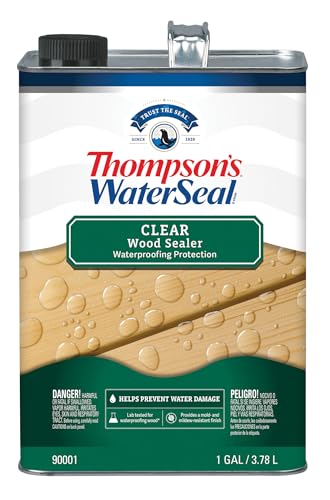
Best for: Wood sealing and water protection on decks, fences, and outdoor wood projects.
Why chosen: This product helps prevent water damage while maintaining the natural color of wood and sealing surfaces. It can serve as a base or standalone sealant depending on the project needs.
Caution: Outdoor applications require reapplication over time to maintain protection, and surface prep should follow manufacturer guidelines for best results.
Zinsser 3608 Cover Stain Primer Spray

Best for: Hiding knots, stains, and tannin bleed in wood projects.
Why chosen: This shellac-based primer provides excellent stain blockage and adhesion, with no sanding required in many cases. It is a versatile spray option for quick priming on larger surfaces or hard-to-reach areas.
Caution: Avoid inhaling spray mist; use in a well-ventilated area and follow safety recommendations for spray products.
Buying Guide: Key Considerations for Water-Based Wood Finishes
- Surface type and usage: Choose paints and sealers based on indoor vs. outdoor use, traffic level, and desired finish (matte, satin, gloss).
- Adhesion and prep: Some products bond directly to wood, while others require a primer or sealer. Assess whether sanding is needed before applying color.
- Drying time and recoats: If you need multiple coats in a day, look for fast-drying formulas that allow quick recoat times.
- Color and finish: Metallics, clear sealers, and tinted paints all have distinct aesthetic outcomes. Test samples on scrap wood if possible.
- Safety and cleanup: Water-based products typically offer easier cleanup and lower odor; verify non-toxic certifications if working with kids or in small spaces.
- Durability: For high-traffic furniture, plan for a protective topcoat or a more durable enamel to extend longevity.
Frequently Asked Questions
- What is the main benefit of water-based wood paints?
Answer: They dry quickly, have lower odor, and clean up with water, making them convenient for indoor use. - Do I need a primer for wood furniture?
Answer: Some water-based paints can bond directly to wood, but primers or sealers are recommended for glossy surfaces or stain-prone woods. - Which product is best for a protective finish on furniture?
Answer: Water-based polyurethane, like Varathane, provides clear protection with easier cleanup and fast drying. - Can I use metallic acrylic paints on wood?
Answer: Yes, metallic acrylics like Nicpro provide decorative accents on wood, though multiple coats may be needed for even coverage. - Are water-based primers suitable for exterior use?
Answer: Exterior primers exist, but check product labeling to ensure suitability for outdoor conditions and weather exposure.