Here are the best UV-curing resins for LCD/DLP/SLA 3D printers designed to deliver high precision, fast curing, and reliable stability. This guide focuses on resins ideal for hobbyists, educators, and professionals seeking dependable results without extensive post-processing. Each selection targets common print goals such as detailed miniatures, strong mechanical parts, or quick-turn prototyping.
| Product | Best For | Key Benefit |
|---|---|---|
| ELEGOO Upgraded 8K Standard Photopolymer Resin | 8K/High-Resolution Displays | Low shrinkage for high-precision detail |
| ANYCUBIC Upgraded Standard Resin | Bright detail with fast curing | Improved adhesion and stability |
| SUNLU 1kg Standard Resin | General-purpose prototyping | Low shrinkage, good stability |
| ANYCUBIC 1kg Standard Resin | Balanced precision and speed | Low shrinkage, strong fluidity |
| ELEGOO ABS-Like 3.0 Resin | Functional prototypes | High strength and toughness |
Note: The selections above emphasize reliable curing, dimensional stability, and practical post-processing. When choosing, consider printer compatibility, resin viscosity, odor, and required part strength for your project. The table above compares the core advantages to help you pick quickly.
ELEGOO Upgraded 8K Standard Photopolymer Resin

Best for: 8K-capable LCD printers and high-detail models. This resin features low shrinkage to preserve fine features and smooth surfaces. It cures quickly on 405 nm systems, enabling faster prints and predictable results. Selected for applications requiring crisp edges, such as miniatures or intricate prototypes.
Why chosen: The resin formula focuses on reducing volume shrinkage during photocuring, which improves dimensional accuracy and surface finish. Its stability supports reliable printing across varied layer heights and exposure settings.
Limitations: As with many fast-curing resins, users may notice stronger odors; ensure good ventilation and proper post-curing. Verify compatibility with your printer’s resin tray and film.
ELEGOO Standard Photopolymer Resin LCD UV-Curing Resin
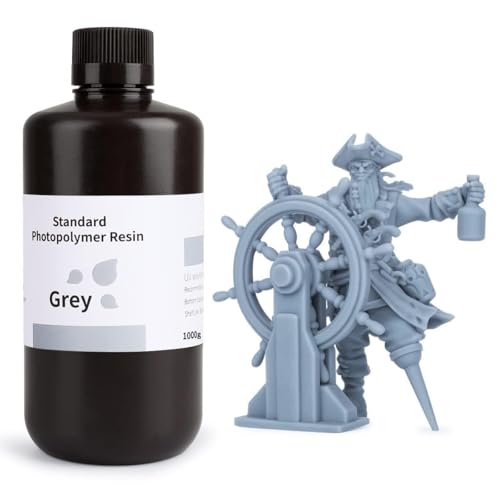
Best for: General-purpose 3D printing with reliable surface finish. Suitable for hobbyists and education projects where predictable outcomes and ease of use matter. This resin aims for a balance of cure speed and dimensional stability.
Why chosen: It provides low shrinkage and stable curing characteristics, helping to achieve smooth finishes with fine details. It’s compatible with most MSLA printers that accept standard 405 nm resins.
Limitations: While versatile, it may not deliver the extreme toughness of ABS-like formulations for functional parts. Post-curing strength depends on exposure and model geometry.
ANYCUBIC Upgraded Standard Resin

Best for: Users seeking improved printing success rates and better detail with less shrinkage. Great for rapid prototyping and educational demonstrations where quick turnarounds are valuable. Selected for more consistent results across multiple prints.
Why chosen: Upgraded formula targets higher adhesion, reduced shrinkage, and better flowability. It also mentions lower viscosity, which helps resins fill fine microfeatures without excessive forcing.
Limitations: The resin’s performance can vary with different printers; tuning exposure times is often necessary for optimal results.
SUNLU 3D Printer Resin 1kg Standard

Best for: Beginners and intermediate users who want an easy-to-handle resin with solid stability. Ideal for learning printing workflows, model testing, and non-structural parts. This resin is often chosen for general-purpose projects.
Why chosen: Promotes low shrinkage and good tolerance to common solvents, enabling reliable dimensional accuracy and surface finish across a range of print settings.
Limitations: Curing results can depend on printer compatibility; some users may notice variance in odor and post-processing requirements depending on environment.
ELEGOO ABS-Like 3D Printer Resin 3.0
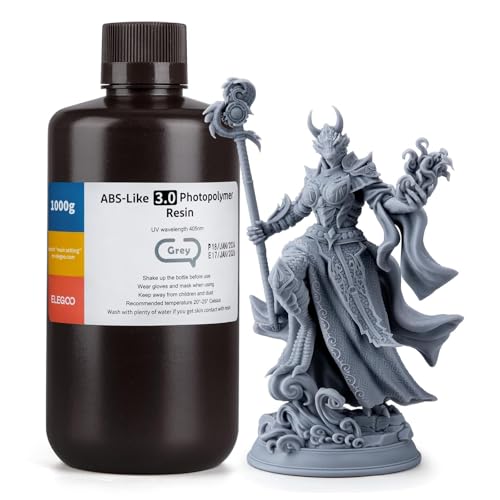
Best for: Functional prototypes and parts requiring higher strength and toughness. Suitable for mechanical components where the model needs to withstand some stress without cracking.
Why chosen: ABS-like resin 3.0 emphasizes high strength and toughness alongside high precision and low shrinkage. It also highlights fast flow and rapid curing for efficient prototyping cycles.
Limitations: ABS-like formulations can be more rigid; delicate features may require careful handling to avoid brittleness in complex geometries.
Buying Guide: How to Choose UV Resin For 3D Printing
What matters most when selecting UV resin for a printer depends on your project type, printer model, and desired outputs. Consider viscosity, cure speed, shrinkage, and final part strength. The following questions help narrow choices:
- What is my printer’s LED wavelength and resin compatibility? Most 405 nm resins work across many LCD/SLA printers, but always verify compatibility with your model.
- Do I prioritize fine details or durability? Choose low-shrinkage resins for high-detail models; ABS-like or high-toughness resins for stronger parts.
- How important is curing speed? Faster resins reduce print times but may demand precise calibration of exposure and layer thickness.
- What post-processing steps are acceptable? Some resins require longer post-curing to reach full hardness, while others are ready with minimal post-processing.
- Is odor and ventilation a concern? Many resins off-gas odors; ensure proper ventilation or use in a well-ventilated area.
- What is the resin’s stability under storage and handling? Look for resins with clear stability claims and good flow properties to minimize clogs in the nozzle.
Frequently Asked Questions
- What does “low shrinkage” mean for prints? It reduces dimensional changes during curing, improving accuracy and fit of multi-part assemblies.
- Can I mix resins from different brands? It’s not recommended as formulations vary in viscosity and cure behavior, which can cause print failures.
- How do I reduce odor from resin? Use well-ventilated spaces, wear a mask, and consider post-curing in a ventilated area or enclosed cabinet with exhaust.
- Is UV resin safe after curing? Cured resin is generally solid and less hazardous, but avoid skin contact during handling and dispose of waste according to local guidelines.
- What kind of post-processing is common? Rinsing with isopropyl alcohol, post-curing under UV or sunlight, and light sanding for a smooth finish are common steps.
- Do I need to shake resin before use? Yes, shaking helps evenly distribute pigments and additives for consistent color and consistency between prints.