Yes, tussah silk fibers can elevate cold process soap by adding a silky feel, better hardness, and extended shelf life. This guide highlights five top tussah silk products ideal for soap making, spinning, and felting. It focuses on natural white or golden tussah roving and top, selecting options that are easy to work with for both beginners and small soap makers. Read on to find which is best for scent-free bars, dye-friendly coloring, and cruelty-free sourcing.
| Product | Best For | Notes |
|---|---|---|
| Shepherd Textiles Tussah Silk Roving (2 oz.) | Luxurious bars, quick-adds | Natural white; 2 oz; good for 100+ loaves |
| Living Dreams Yarn Tussah Silk Fiber (Extra Bleached White) | Bright, dye-ready soaps | 2 oz; extra bleached; 5″ staple length |
| Living Dreams Yarn Tussah Silk Fiber Natural White | Undyed, versatile tones | 2 oz; natural white; dye-friendly |
| Shepherd Textiles Cruelty Free Tussah Silk | Cruelty-free option | 2 oz; wild-gathered; no dyes |
| Treela Silk Sliver 120g | High-volume soap projects | Bleached white; 120g; broad craft use |
Shepherd Textiles Tussah Silk Roving (2 oz.)

Best for quick integration into cold process soap with minimal fuss. This tussah silk roving provides a pure, natural white fiber that dissolves smoothly when added in small amounts to lye water. The product is well-suited for soap makers who want a luxurious slip and a silkier lather without complex preparation. It’s especially suitable for hobbyists who plan to produce many loaves, since a small pinch per loaf is enough to deliver noticeable texture and feel.
Who this is for: beginner to intermediate soap makers seeking a reliable, low-effort silk additive. Why selected: it’s easy to portion, natural, and yields a pronounced silk feel. Limitation: not dyed or colorfast by itself, so you may need to dye your soap separately if you want vivid hues.
Living Dreams Yarn Tussah Silk Fiber Extra Bleached White Combed Top

This option is best for soap makers who want a bright, white base that takes dye very readily. It dissolves in lye water to enrich bars with a silky feel and typically helps produce a harder, longer-lasting bar. The natural 5-inch staple length makes it manageable for blending into batters and for use in cold process formulations. Best for dyeing experiments and color-rich soap lines.
Who this is for: crafters aiming for vibrant color development and a premium texture. Why selected: high dye receptivity and a clean white baseline. Caution: natural white silk can lighten toward warm tones if overdyed; test color payoff first.
Living Dreams Yarn Natural White Tussah Silk Fiber
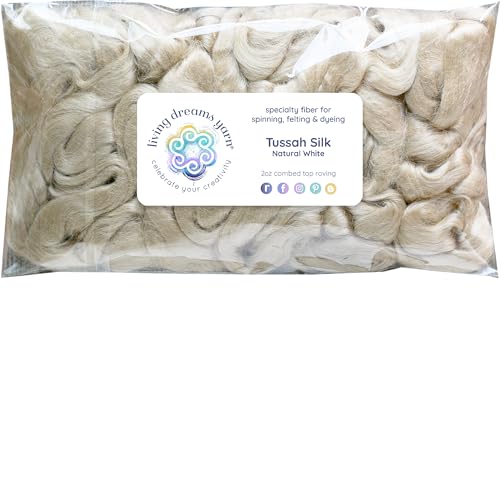
Best for unaltered silk texture with easy dye uptake. This natural white combed top roving blends well into soaps and DIY moisturizers, helping to create richer lathers and improved bar structure. It’s a versatile choice for crafters who want a natural, undyed silk base for future color experiments.
Who this is for: soap makers prioritizing a pure, undyed silk fiber. Why selected: reliable white base that holds up well in lye, with good dye compatibility. Limitation: undyed silk may require more precise coloring work to achieve bright hues.
Treela Silk Sliver 120g for Soap Making

Best for large-scale projects or when creating multiple soap lines. This 120g package of pure tussah silk sliver yields a silky lather and smooth texture across many bars. It’s suitable for both cold process and artisan production workflows, including felting and spinning.
Who this is for: small business crafters and serious hobbyists producing batches. Why selected: high quantity value and broad craft applicability. Caution: ensure even distribution to prevent fiber clumping in the soap batter.
Buying Guide: Tussah Silk For Soap Making
What form should you buy? Silk fiber for soap comes as roving, combed top, sliver, or ready-to-dissolve fibers. For beginners, pre-cut roving or small slivers in 2 oz portions are easiest to manage. For higher-volume makers, 120 g or larger slivers help maintain production pace without frequent restocking.
Which Silk Type Is Best For My Soap?
- Bleached white tussah silk: best for bright, dye-ready bars.
- Natural white tussah silk: versatile and easier to blend; dye evenly when you choose to color.
- Gold tussah silk: adds a warm undertone and can look luxurious in natural soaps.
How Much Silk Should I Use?
- Typically a pinch equivalent to about 0.5 grams per five-pound loaf provides noticeable silk feel.
- For larger batches, scale proportionally to maintain even distribution and avoid residue.
Are There Ethical Considerations?
- Cruelty-free tussah silk options exist, including fibers collected from empty cocoons.
- Check for dye-free or natural processing if you want to minimize additives in your bars.
How Do I Add Silk To Soap?
- Dissolve small amounts of silk into your lye water before mixing with oils to improve incorporation.
- Sprinkle or blend silk fibers evenly into the batter to avoid clumping.
Storage And Handling
- Store silk fibers in a cool, dry place to prevent moisture-related clumping.
- Keep away from direct sunlight to reduce any risk of color changes if dyed.
Summary Of Key Differences
- Bleached vs natural white: dye compatibility vs natural tone.
- Fiber form: roving vs combed top vs sliver affects handling and dissolution.
- Cruelty-free options: available from wild-harvested tussah.
Short FAQ
- Q: Can tussah silk be used in any soap base? A: Yes, it works well with cold process soaps and moisturizers when dissolved properly.
- Q: Will silk make my soap expensive? A: It adds a premium feel, but small amounts go a long way for texture enhancement.
- Q: Is silk compatible with all colorants? A: Silk generally takes well to dyes, especially the white varieties; test blends for bold colors.
- Q: Is tussah silk cruelty-free? A: Some products are labeled cruelty-free or collected from empty cocoons; verify sourcing on packaging.
- Q: How should I store silk fibers? A: In a cool, dry place, away from sunlight to prevent color shifts if dyed.
- Q: Can I blend tussah silk with other fibers? A: Yes, silk blends with wool or other natural fibers can enhance texture and lather.