Explore high-quality texture rollers designed to add detailed patterns to clay, pottery, and polymer projects. This guide highlights five reliable sets that balance durability, ease of use, and creative variety, helping both beginners and seasoned artists achieve consistent results.
The following table summarizes the featured products, including patterns, materials, and key benefits to help you compare quickly.
| Product | Material | Designs | Notes | Brand |
|---|---|---|---|---|
| Hokkieam Clay Texture Rollers | Premium Plastic | 10 unique patterns | Ergonomic, lightweight, easy grip | HOKKIEAM |
| Byllstore Clay Texture Rollers | Beech wood | 10 unique patterns | Durable, long-lasting, comfortable grip | Byllstore |
| HORSDO Pottery Tools Wood Big Hand Rollers | Rosewood | Detailed texture options | Non-stick surface, easy to clean | Horsdo |
| YANSH PROGLOBAL 8-Piece Texture Rollers (Complex) | Plastic composite | Boho, Floral, Ethnic, Mandala, etc. | Non-stick, seamless, storage boxes included | YANSH PROGLOBAL |
| KEOKER Polymer Clay Texture Roller | 3D-printed brushed texture | Floral design | Compact size for earrings, easy to use | Keoker |
Hokkieam Clay Texture Rollers — 10-Pack

Hokkieam’s 10-pack texture rollers deliver a versatile range of patterns suitable for pottery and polymer clay. Crafted from premium plastic, these rollers emphasize durability and long-lasting performance. The set’s distinct designs support both fine-detail work and bolder impressions, making it suitable for beginners exploring textures and seasoned crafters expanding their repertoire. An ergonomic, grip-free design promotes comfortable, controlled rolling, helping maintain consistent results across sessions.
Byllstore Clay Texture Rollers — 10-Pack

This 10-piece wooden texture roller set from Byllstore uses high-quality beech wood to deliver durable performance with a natural grip. The ergonomic, handle-free design supports smooth, precise rolling. Each roller offers a unique pattern to expand creative options—from delicate lines to bold textures—while the wooden construction adds a classic feel to pottery and polymer clay projects.
HORSDO Pottery Tools Wood Big Hand Rollers
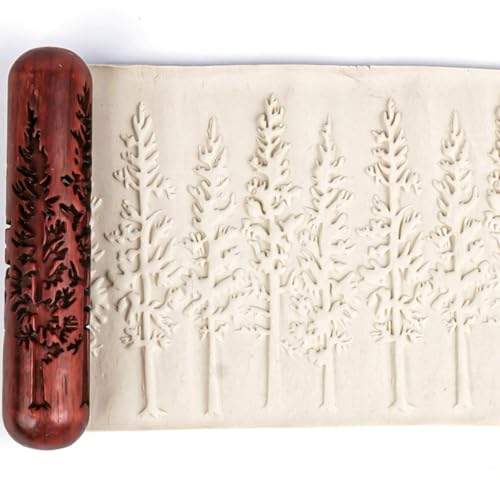
HORSDO’s large hand rollers use rosewood to provide a durable, glossy surface with clear grain. The texture capability supports detailed impressions for pottery and ceramics, delivering vivid results. The polished, non-stick surface reduces clay adhesion, facilitating easier cleaning and reuse. This tool is particularly suited for artists seeking a high-quality wood option for durable performance and precise textures.
YANSH PROGLOBAL — 8-Piece Complex Texture Rollers

This eight-roller set from YANSH PROGLOBAL features a diverse range of patterns including Boho, Floral, Ethnic, Mandala, and Paisley. The non-stick, seamless design ensures smooth rolling and easy cleanup. Storage is simplified with two included boxes, helping maintain an organized workspace and extending the life of each roller. Suitable for both beginners and professionals seeking varied textures in polymer clay and ceramic projects.
YANSH PROGLOBAL — 8-Piece Basic Texture Rollers

This eight-roller set emphasizes foundational textures such as Knitted, Brick, Basketball Weave, and Twill Weave. Like the complex set, it includes two large storage boxes for protection and organization. The one-piece construction provides a non-stick, seamless rolling experience, making it easy to achieve consistent results whether you’re new to clay or expanding your toolkit.
KEOKER Polymer Clay Texture Roller — Floral

Keoker’s floral texture roller is designed for compact applications like earrings or small jewelry components. The tool is described as a polymer clay texture roller with a simple, intuitive workflow suitable for creating decorative surfaces on smaller pieces. Its compact size makes it a practical addition to starter kits focused on detailed, delicate work, especially in jewelry making.
All five selections emphasize durability, ease of use, and a range of textures suitable for pottery, polymer clay, and mixed-media crafts. When choosing texture rollers, consider the material (plastic vs. wood vs. composite), the ergonomics of the grip, the variety of patterns, and how easy it is to clean and store the set after use.
Buying Guide
Key considerations for texture rollers include material and build quality. Durable plastics reduce cost while offering broad pattern options; wood options (like beech or rosewood) provide a tactile grip and a classic feel, though they require more maintenance to prevent staining and ensure longevity. Non-stick, one-piece roller designs prevent clay from sticking, ensuring smoother operation and easier cleanup.
Pattern variety matters for creative exploration. Sets with a mix of fine and bold textures expand possibilities for surface detailing on both clay tiles and jewelry components. Storage is an often overlooked factor; two-box or compact storage helps protect the rollers when not in use and keeps your workspace organized. For beginners, ergonomic designs and lighter weight reduce fatigue during long sessions, while experienced users may prioritize broader pattern diversity and higher durability for regular, heavy use.
Price can indicate quality, but it should be weighed against design intent. If you mostly work with small pieces or earrings, a compact floral roller set may be ideal. If you create larger pottery textures or practice slab building, a larger, heavier-duty set with non-stick performance will likely serve you better. When evaluating a brand, consider customer feedback on durability, cleaning ease, and how well the patterns translate onto different clays and surface textures.
In practice, assembling a balanced toolkit involves selecting at least one set with wooden rollers for grip and warmth, a more affordable plastic set for experimentation, and a mid-range option with non-stick, seamless design for professional results. This combination supports a flexible workflow across multiple clay types and project scales.