Looking for the best technical pens for drawing? This guide highlights top options that deliver sharp lines, reliable archival ink, and consistent performance for illustration, manga, architecture, and journaling. The selections here suit professionals needing durability and hobbyists pursuing clean, precise lines. Each product is evaluated for who it’s best for and why it stands out, plus practical cautions where relevant.
| Product | Best For | Why We Picked It |
|---|---|---|
| SAKURA Pigma Micron Fineliner Pens | Everyday drawing and journaling | Archival, fade-resistant ink with precise sizes |
| TWOHANDS Art Pens | Professional illustration and bullet journaling | Wide tip range for versatility and bleed-free performance |
| MARTCOLOR Micro Pen Fineliner | Beginners to intermediate sketching | 10 sizes, water-based pigment ink, easy handling |
| Mr. Pen Art Pens | Micro drawing and lettering | 8 tip sizes plus brush, smooth lines |
| Rotring Isograph Technical Pen | Technical drafting and precise linework | Refillable reservoir and easy ink access |
SAKURA Pigma Micron Fineliner Pens
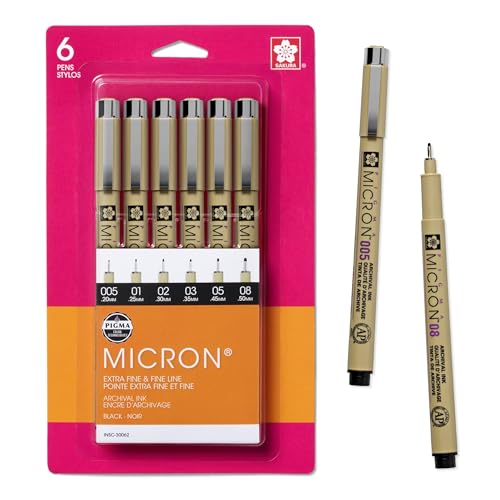
SAKURA Pigma Micron Fineliner Pens are a staple for artists who need dependable archival black ink. This 6-pack covers a range of point sizes from 0.20 mm to 0.50 mm, enabling precise line work and varied textures. The ink is fade resistant, waterproof, and quick-drying, with pH-neutral properties and AP certification, making it safe for art projects and journaling. Best for detailed line art, stippling, and cross-hatching. Caution: ink dries quickly; avoid heavy pressure to maintain tip longevity.
TWOHANDS Art Pens Fineliner Set

This 12-pen set offers a comprehensive range from 0.2 mm to 3.0 mm and includes 0.2 mm through 3.0 mm plus a few mid-range sizes. The waterproof, fade-resistant, and quick-drying pigment ink supports clean lines across various media, including watercolor washes after drying. Best for professional illustration, bullet journaling, and technical drawing. Choose this if you want one versatile kit with both fine and broad tip options; caution: some larger tips require firmer pressure on thicker papers to avoid line variation.
MARTCOLOR Micro Pen Fineliner Set

The MARTCOLOR set provides 10 distinct nib sizes plus a soft brush tip, all using water-based pigment ink. The ink is waterproof, fade-proof, and non-bleeding, making it suitable for layered artwork and mixed media. Best for beginners and students who want a broad size range for line variety. It’s easy to identify each pen with color-coded caps. Limitation: water-based ink may feather on very absorbent papers if used with heavy pressure.
Mr. Pen Art Pens Multiliner Set

Mr. Pen offers a versatile 8-pen set including 0.2 mm, 0.25 mm, 0.3 mm, 0.35 mm, 0.45 mm, 0.5 mm, 1.0 mm, and a brush tip. The ink is black, designed for smooth, skip-free lines, and well-suited to micro drawing, Bible journaling, and technical sketching. Best for artists who want precise control across a comfortable range of line weights. Caution: brush tip requires gentle handling to maintain its shape over time.
Rotring Isograph Technical Pen

Rotring Isograph is designed for high-precision drafting and line work on tracing paper, vellum, and lineboard. It features a refillable ink reservoir and a push-on ink access sleeve for quick maintenance. Best for professionals who require consistent, clean lines and long-term reliability in technical drawing. Limitation: higher price and a learning curve for those new to cartridge-based pens. It’s less forgiving on rough papers compared to modern pigment ink pens.
Buying Guide: Picking The Right Technical Pens
- What is your primary use? For detailed illustration and journaling, consider Sakura Pigma Micron or TWOHANDS for a wide tip selection. For technical drafting, Rotring Isograph offers precision and reliability.
- Ink type and permanence: Archival pigment inks provide fade resistance and water resistance once dry. Water-based inks are easier to clean but may feather on very absorbent paper.
- Tip range and compatibility: If you need both hairline details and broader strokes, choose sets that cover 0.2 mm to at least 1.0–3.0 mm. Brushes add versatility for shading.
- Paper compatibility: Lighter papers may require finer tips to prevent ink bleeding. Heavier papers can handle larger tips for bolder lines.
- Maintenance and durability: Refillable reservoirs or replaceable nibs reduce waste and cost over time. Consider how easy it is to replace ink or clean the tip access mechanism.
- Safety and certifications: Look for AP or ACMI certifications when ink is used for long-form journaling or educational purposes.
Frequently Asked Questions
- What is the difference between fineliners and technical pens? Fineliners primarily use pigment ink for consistent lines, while technical pens often use a reservoir or cartridge system designed for ultra-precise drafting and long-lasting lines.
- Are archival inks necessary for drawings? Archival inks resist fading and water damage, which is valuable for lasting art projects, especially in journals and mixed media.
- Can these pens be used with watercolor? Yes, many pigment-based fineliners dry quickly and are compatible with light watercolor washes once fully dry. Always test on your paper.
- How do I avoid bleed-through? Use a paper with a smooth surface and consider lighter pressure on expensive or bleed-prone papers. Pigment inks tend to bleed less than dye inks.
- Are brush tips worth it for line work? Brush tips offer expressive lines and shading, but require practice to control. They are best for artists who blend inking with painting.
- What should beginners start with? A 6- or 8-pen set covering 0.2–0.5 mm plus a brush tip provides flexibility without overwhelming complexity.