Find precision, movement, and lifelike color in the best squirrel tails for fly tying. This guide highlights top options suited to different tying styles, from natural gray tails to dyed shades that imitate prey or attractors. Suitable buyers include beginners building a first fly-tying kit, intermediate tiers seeking reliable movement, and seasoned tiers requiring bold color accents. Read on to compare material, color options, and suitability for various fly patterns. A quick buyer table follows to help you choose at a glance.
| Product | Best For | |
|---|---|---|
| Hareline Fly Tying Gray Squirrel Tail Dyed – Natural | All-around tying, lifelike movement | Soft fur with natural mottling, strong movement |
| Squirrel Tails-Fox Squirrel | Color variety, beginner-friendly | Eight color options to match patterns |
| Hareline Fly Tying Gray Squirrel Tail Dyed – Blue | Blue-themed patterns, pop in water | Natural mottling with dyed blue hue |
| Real Random Assorted Natural American Gray Squirrel Tail | Authentic natural tails, varied patterns | Real tails with natural variation |
| Hareline Fly Tying Gray Squirrel Tail Dyed – Purple | Purple accents for attractor flies | Vibrant dyed purple with natural movement |
Hareline Fly Tying Gray Squirrel Tail Dyed – Natural

Best for lifelike movement and natural mottling. This Hareline tail uses soft natural fur with excellent movement, making it suitable for realistic bait patterns. Ideal for tiers seeking a traditional, versatile material that behaves well in water. The description notes Hareline’s long-standing presence and broad color range, which supports reliable material sourcing. Caution: color stability may vary with dyeing across batches, so test for your specific fly pattern.
Squirrel Tails-Fox Squirrel

Best for color variety and beginner-friendly options. This product offers eight colors to match a wide range of patterns, making it easy to experiment with different fly designs. The tails provide typical natural movement and can be substituted into many streamer and nymph patterns. Caution: natural variation in tail width and length means some inconsistency across batches; select multiple pieces if a uniform look is desired.
Hareline Fly Tying Gray Squirrel Tail Dyed – Blue
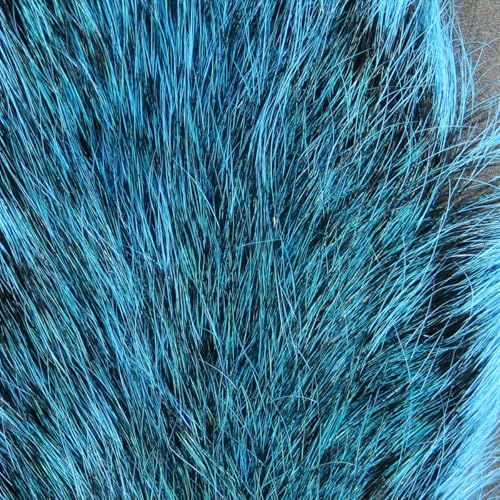
Best for blue-themed patterns and added visibility. The tail blends a soft natural base with a dyed blue overlay, enabling appealing profiles for streamer patterns or callibaetis nymphs. Best for anglers who want a hint of color without sacrificing natural movement. Caution: ensure dye uptake is consistent across lots to maintain uniform color in a batch.
Real Random Assorted Natural American Gray Squirrel Tail

Best for authenticity and variety. These tails are real, natural American gray, offering authentic color patterns with minor natural variation. They suit traditional fly patterns where a realistic silhouette matters. Caution: natural tails vary in length and width, which may affect uniformity in a single batch of flies.
Hareline Fly Tying Gray Squirrel Tail Dyed – Purple

Best for attractor flies with purple accents. This dyed option delivers a bold purple that can help patterns stand out in low light or stale water. Paired with natural mottling, it provides a balanced look that remains believable. Caution: colored tails may fade over time or in sunlight exposure; handle with care during storage and tying.
Buying Guide: Key Considerations For Squirrel Tail Fly Tying
- Material quality: Look for soft fur with natural movement and consistent density. High-quality tails tend to tie more cleanly and move realistically in water.
- Color options: Decide between natural gray and dyed tails based on your patterns. Dyed tails expand color palettes but may vary batch to batch.
- Tail length and width: Real tails vary in length and width. Choose tails that fit your target fly sizes and patterns.
- Movement and texture: Tails should track with water flow and deliver a lifelike silhouette. Texture influences how flies pill and track on water.
- Source variations: Natural tails come with inherent variations. Plan for occasional differences when tying multiple flies.
- Durability and storage: Dry tails properly to avoid feathering or fraying. Store away from direct heat and sunlight to prevent dye fading.
Frequently Asked Questions
- What is the best squirrel tail for beginner tiers?
– The Squirrel Tails-Fox Squirrel option offers a range of colors and straightforward handling, making it beginner-friendly. - Are dyed tails acceptable for saltwater flies?
– Yes, dyed tails are commonly used for both freshwater and saltwater patterns, but test color fastness in your environment. - Do natural tails vary a lot in size?
– Natural tails do vary in length and width; expect some batch-to-batch differences. - Can I mix natural and dyed tails in a single pattern?
– Yes, mixing can create interesting textures and color accents if done deliberately for balance. - How should I store squirrel tails to preserve color?
– Store in a cool, dark place away from direct sunlight and heat to reduce color fading and fur damage. - Is there a notable advantage to using dyed tails?
– Dyed tails provide color control and pattern differentiation, particularly for attractor or color-rich patterns.