Answering the needs of stained glass hobbyists and professionals, these soldering irons offer precise temperature control, quick heat-up, and safe operation for lead came, copper foil, and wire work. The choices below balance power, reliability, and usability to suit beginners through pro-level crafters. Best for: beginners seeking a turnkey kit with extras; you’ll find flexible temperature ranges and safety features for steady results.
Summary of selected products:
- YIHUA 928D-III Soldering Iron — High power, digital display, portable, sleep mode.
- Hakko FX601-02 Adjustable Temperature Soldering Iron — Precise closed-loop temperature control.
- Weller W100PG Farenheit Heavy Duty Soldering Iron — High wattage with multiple temperature settings.
- Q-MING Soldering Iron Kit 100W — LED display, fast heat-up, portable and adjustable.
- Weller WLIRPK8012A Kit — Ergonomic grip, quick tip changes, versatile tips for stained glass work.
YIHUA 928D-III Soldering Iron, 110W Digital, 194–896°F

The YIHUA 928D-III provides strong heating power with a wide 194°F–896°F (90°C–480°C) range. It features a fully digital display and a sleep mode for safety, making it suitable for detailed stained glass work and wire soldering. Best for: crafters who want quick heat, precise calibration, and a compact tool with clear temperature feedback. Limitation: heavier irons can fatigue longer sessions; switch to a stand or rest during long tasks.
Hakko FX601-02 Adjustable Temperature Soldering Iron

This Hakko model uses electronic closed-loop temperature control with a dial to set your target temperature. A built-in temperature sensor ensures consistent heat, which helps when shaping lead came or foil-work against glass. Best for: users who need reliable, repeatable heat with minimal drift. Limitation: lower wattage may be slower on large joints compared to high-power units.
Weller W100PG Farenheit Heavy Duty Soldering Iron
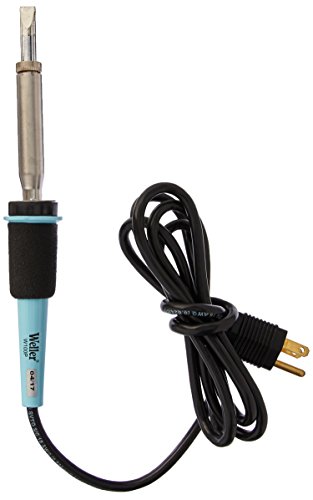
The Weller W100PG offers heavy-duty performance with a 100-watt element and multiple temperature settings up to 700–800°F, including 600, 700, and 800, to accommodate different solder compositions and glass projects. Best for: stained glass tasks that demand high heat for faster shrink or solder flow while maintaining control. Limitation: higher heat can increase risk of overheating delicate joints if not managed carefully.
Soldering Iron Kit, 100W LED Digital with Ceramic Heater

This kit features a rapid 15-second heat-up with a ceramic heater and a calibrated temperature range from 180℃–500℃ (356℉–932℉). The LED display makes temperature tracking straightforward. Best for: beginners to intermediate users needing a complete starter kit with extra tips, wick, and flux. Limitation: bulkier setup compared to compact irons; consider workspace for stand and accessories.
Weller 80W WLIRPK8012A Soldering Iron Kit

This kit emphasizes comfort with an ergonomic grip and a quick-tip-change capability, plus a full range of tips (including chisel and small screwdriver variants) to tackle stained glass soldering tasks. Best for: users who prioritize long sessions with a steady hold and the need for multiple tip styles. Caution: ensure you select the appropriate tip type to avoid excess heat on fine foil lines.
Buying Guide
What power level do I need for stained glass?
Higher wattage (70–110W) heats quickly and maintains stable temperatures for larger or multiple joints. For detailed foil work and lead came, a mid-to-high wattage with precise control helps prevent cold joints.
Why is temperature control important?
Stained glass soldering involves varied materials and fluxes. Closed-loop or digital temperature control reduces drift and helps you maintain consistent joints across different glass thicknesses and lead came sizes.
What features help with safety and workflow?
- Sleep or auto-shutoff modes reduce risk when pausing work.
- Clear digital displays minimize guesswork and improve accuracy.
- Ergonomic grips and quick-tip changes save time during long sessions.
Should I choose a kit or a standalone iron?
Kits add value with extra tips, wick, flux, and stands, which is helpful for beginners and intermediate users who want a complete setup. Standalone irons are lighter and simpler for experienced crafters who already own tools.
Which brand or model is best for beginners?
Look for a balance of ease of use, safety features, and a comprehensive starter kit. The included accessories and a straightforward temperature display can ease beginners into consistent soldering results.
What is the right tip for stained glass work?
For lead came and copper foil work, broader chisel or bevel tips help distribute heat evenly without scorching glass edges. Fine-tip options are useful for precise joints and delicate foil lines.
Frequently Asked Questions
- What temperature is best for stained glass soldering?
- Can I use any solder with these irons?
- Is a digital display necessary?
- How do I prevent tip oxidation?
- What safety gear should I use?
- Are these irons suitable for multi-project use?
Most stained glass work benefits from a steady temperature in the mid-range to avoid scorching, typically around 600–700°F (315–370°C) for standard lead came soldering, but consult flux guidelines for your project.
Use lead-free solder for safety, especially in interior projects. Check flux compatibility and solder alloy recommendations in your kit’s documentation.
Not strictly necessary, but a digital display improves precision and repeatability, which helps when switching between joints and different lead widths.
Keep tips tinned when not in use and clean them after each session. Store irons in a stand to reduce exposure to air.
Wear safety glasses, ventilate the workspace, and use heat-resistant gloves as needed when melting solder near glass edges.
Yes. The higher wattage units with stable temperature control are well-suited for repetitive staining glass tasks across multiple projects.