The best sewing tool for removing stitches is a seam ripper with a sharp forked blade and a size suited to the fabric. A two-size set is useful for both delicate stitching and larger seams, while a kit with scissors or extra tools can suit a more equipped sewing station. The picks below include options for everyday sewing, precise unpicking, and buyers who want several accessories in one set.
| Product | Best For | Standout Feature |
|---|---|---|
| FIVEIZERO Seam Rippers | Versatile everyday use | Two sizes plus scissors |
| CampTek Seam Ripper Tool | Multiple cutting tools | Replaceable-blade thread snips |
| Aipker 2PCS Seam Rippers | Grip and control | Embossed ergonomic handles |
| Ortarco Seam Ripper Kit | Keeping spares on hand | Four rippers in two sizes |
| ZMAAGG 15PCS Seam Ripper Kit | Building a sewing kit | Rippers and sewing accessories |
FIVEIZERO Seam Rippers
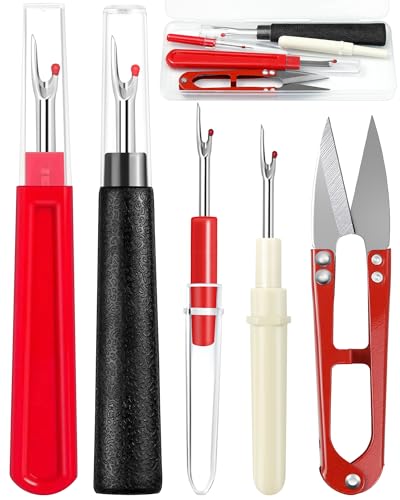
Best for: Sewers who want two seam ripper sizes and a cutting accessory in one set. The four-piece set includes two large 5.5-inch rippers and two small 3.5-inch rippers, with red and black-and-white color options.
The large tools are intended for thicker fabrics, while the smaller ones are suited to delicate materials. A red protective ball at the tip helps safeguard fabric as the ripper moves beneath stitches. The set also includes stainless steel scissors for cutting threads or other small sewing tasks.
Why it stands out: The mix of sizes makes it easier to choose a tool for the stitch and material rather than relying on one blade. Limitation: The product information does not specify extra accessories beyond the rippers and scissors.
CampTek Seam Ripper Tool Set
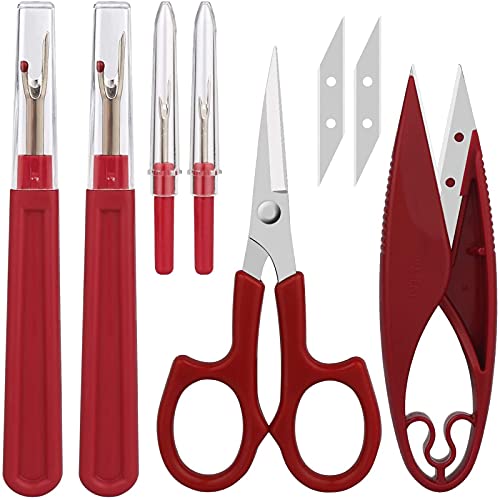
Best for: Buyers who want multiple ways to remove seams and trim thread. This set has two 3.5-inch small rippers, two 5.5-inch large rippers, thread snips, and a 5-inch pair of scissors.
The small ripper is described as useful for reaching tight spaces and undoing fine stitching. The larger ripper is intended for faster work on thicker or multiple fabric layers. The set’s thread snips have a double-edged, replaceable-blade design, according to the product details.
Why it stands out: It combines seam removal, thread trimming, and scissors in one kit. Limitation: The large ripper is described as sharp and fast-cutting, so use controlled movements near fabric you want to preserve.
Aipker Ergonomic Seam Rippers
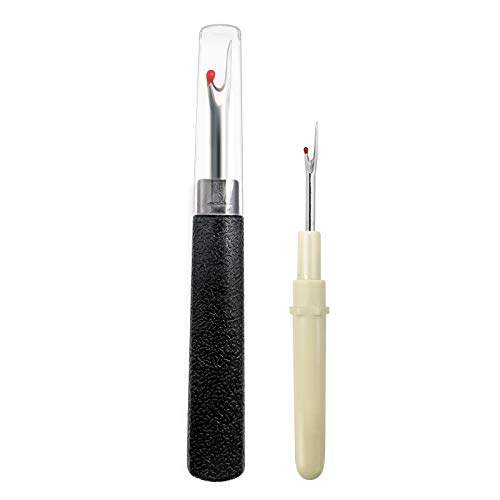
Best for: Sewers who prioritize a comfortable, secure grip. The two-ripper set includes a 3.5-inch small tool and a 5-inch larger tool, both with clear protective caps.
The handles have an embossed, non-slip design, and the caps can extend the handles when fitted onto the ends. The blades are made from hardened steel, according to the product description. The two sizes provide a choice between fine stitching and larger seams without adding a broad assortment of accessories.
Why it stands out: Its handle design is the key distinction for buyers who want more control while unpicking. Caution: The listing warns users to keep the sharp tools away from children.
Ortarco Four-Piece Seam Ripper Kit

Best for: Sewing rooms that need spare tools or several rippers available at once. The kit includes two large and two small handheld seam rippers with ABS plastic handles and high-carbon steel blades.
The tools are designed for ripping seams, opening stitched buttonholes, and removing threads and snaps. Having four rippers can be convenient for keeping one near a machine, another with a hand-sewing kit, or sharing tools across a work area.
Why it stands out: It focuses on a set of four seam rippers rather than bundling a longer list of accessories. Limitation: The listed contents do not include scissors or thread snips.
ZMAAGG 15-Piece Seam Ripper Kit
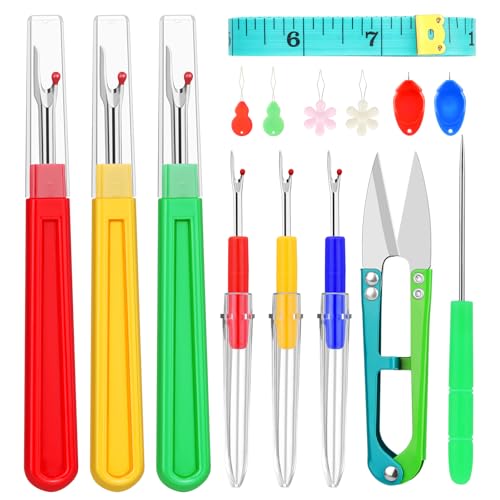
Best for: Beginners or hobby sewers assembling a collection of basic sewing tools. The kit includes three large 5.5-inch and three small 3.4-inch seam rippers, yarn scissors, a measuring tape, six threaders, and a sewing awl.
The product description says the large rippers are intended for thicker threads and fabrics, while the small ones suit delicate threads and labels. It also lists a red protective ball on the rippers. The extra accessories support measuring, threading, and other sewing tasks alongside stitch removal.
Why it stands out: This is the broadest accessory set among the picks. Limitation: Choose a smaller, simpler set if you only need a single seam ripper and do not need the additional tools.
Buying Guide: How To Choose A Seam Ripper
Which size works for your fabric?
A small seam ripper is generally easier to maneuver around fine stitching, labels, and tight areas. A larger ripper can be more comfortable for longer seams or thicker material. If you work on different fabrics, a set with both sizes offers more flexibility.
Do you need a protective ball or cap?
A ball at the forked tip is designed to help protect fabric as the tool slides beneath thread. A cap covers the blade for storage and carrying. These features can be useful, but they do not replace careful handling: cut stitches rather than forcing the blade through fabric.
Should you choose a basic tool or a kit?
Choose a two-piece set if your priority is a simple small-and-large ripper combination. A larger kit may be a better fit if you also need scissors, thread snips, needle threaders, a tape measure, or an awl. Check the listed contents so you do not select a kit based on accessories it does not include.
What should you check before removing stitches?
Work in good light and use the smaller tool for delicate work when appropriate. Lift or separate stitches carefully, and keep the blade angled away from the fabric. Store the ripper with its cap in place and out of children’s reach.
Frequently Asked Questions
What is a sewing tool for removing stitches called?
It is called a seam ripper or stitch ripper. Its forked blade is designed to cut thread so unwanted seams or stitches can be removed.
Can a seam ripper open a buttonhole?
Yes. A seam ripper can cut the stitches in a sewn buttonhole. Work slowly and avoid cutting the fabric at either end.
Is a small or large seam ripper better?
Neither size is best for every task. A small ripper is suited to fine, tight areas, while a larger one can be more convenient for longer seams or thicker material.
How do you reduce the chance of damaging fabric?
Use the ripper’s tip to lift and cut individual threads, keep the blade directed away from the material, and avoid pulling hard on stitches that have not been cut.