Looking for a sewing machine built for commercial use? This guide highlights five reliable options suited for heavy fabrics, high-volume projects, and professional repairs. The picks span industrial-grade models, heavy-duty home machines, and feature-rich computerized options. Each section explains who it’s best for, why it was selected, and a practical caution to consider before you buy.
The table below compares core strengths and ideal buyers at a glance.
| Product | Best For |
|---|---|
| VEVOR Industrial Lockstitch Sewing Machine | Small to mid-sized shops needing high-speed, multi-layer denim capability |
| Industrial Lockstitch Sewing Machine with Table Stand (Generic) | Upholstery and heavy-duty sewing with table-mounted stability |
| SINGER Heavy Duty 4452 | Thick fabrics and frequent seam projects in a workshop |
| Brother ST371HD | Rugged, all-purpose sewing with reliable stitching |
| Brother CS5055 Computerized Sewing Machine | Versatile stitches and automation for designers and makers |
VEVOR Industrial Lockstitch Sewing Machine

The VEVOR model uses a 550W servo motor, delivering up to 5000 stitches per minute and capable of sewing up to 10 layers of denim. Its metal frame and auto lubrication support long-term use, while an LCD panel and LED lighting help operators maintain precision. This choice is best for small- to mid-sized shops that require high-speed performance with quieter operation for a more comfortable workspace. A notable limitation is that it targets heavier fabrics; lighter fabrics may not showcase its full feature set as clearly as specialized lightweight machines.
- Best for: High-speed denim, canvas, and multi-layer projects in a small commercial setting
- Strength: Quiet operation, precise needle positioning, and soft-start control
- Consider: Larger footprint; may require dedicated space for table and maintenance
Industrial Lockstitch With Table Stand (Generic)

This model emphasizes an integrated workspace with a sturdy table stand and a 750W servo motor, suitable for upholstery and leather work where stability matters. The LCD touch panel supports easy speed control, needle position, and direction changes. It is best for users who need a robust, table-mounted sewing solution to keep fabric handling steady during long runs. A potential limitation is the sheer size and weight, which can constrain portability between job sites.
- Best for: Upholstery, denim, and leather projects in a warehouse or shop
- Strength: Table-mounted stability, clean threading, and quick stitching control
- Consider: Heavy and fixed setup; not ideal for frequent relocation
SINGER Heavy Duty 4452

The SINGER 4452 is designed to handle thick fabrics with a stronger motor that delivers 50% more power for multiple layers. With 1100 stitches per minute and 32 built-in stitches plus a one-step buttonhole, it’s a versatile workhorse for garment production and decor projects. This machine is a strong pick for shops needing reliable performance across a range of materials, but it’s more of a robust home-machine class than a full industrial unit. Consider space and maintenance needs for longer runs.
- Best for: Garment production and home décor projects requiring robust power
- Strength: High piercing power and broad stitch options
- Consider: May lack true industrial-grade longevity for continuous 8+ hour daily use
Brother ST371HD Sewing Machine
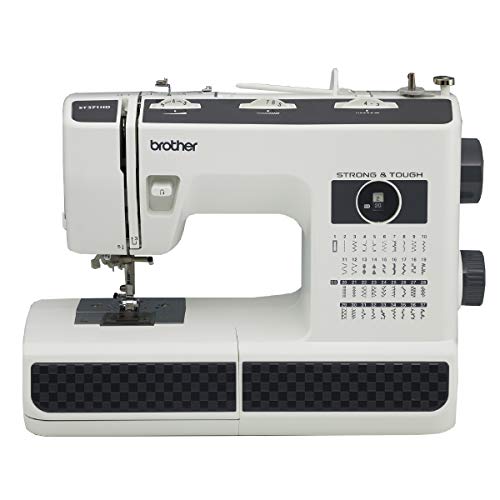
The ST371HD is described as a rugged, all-purpose machine with 37 built-in stitches and a heavy-duty build. It includes an automatic needle threader, a drop-in top bobbin, and six included feet for a broad range of projects. This model is best for shops that need a dependable, high-tolerance machine for everyday use and occasional thicker fabrics. The limitation is that it remains primarily a home-to-light-commercial class option rather than a full-scale industrial unit.
- Best for: Daily workshop use with versatile stitch options
- Strength: Auto needle threader and reliable top-loading bobbin
- Consider: Not designed for continuous industrial-level workload
Brother CS5055 Computerized Sewing Machine

The CS5055 brings 60 built-in stitches, an LCD display, and seven included feet for a broader creative range. Its automatic needle threader and jam-resistant top bobbin simplify workflow, while the triple-language manual adds versatility for diverse users. This option suits design studios or shops that value automated selections and digitized control for diverse tasks. A limitation is that, as a computerized machine, it relies on electronics that may require more maintenance over time than purely mechanical counterparts.
- Best for: Design-oriented work with a broad stitch library
- Strength: LCD display and easy automation streamline operation
- Consider: More electronics to maintain and service
Buying Guide
What’s the right machine for my shop size?
For smaller commercial spaces, choose a high-speed industrial model with table mounting and a compact footprint. Larger shops that handle upholstery or leather may benefit from heavy-duty or industrial-leaning systems with strong frames and more robust lifting mechanisms.
Do I need an LCD or computerized features?
LCDs and computerized stitches help with repeatability and advanced designs. If you regularly switch between stitch styles or produce precise finishes, a computerized model can reduce operator error and speed setup.
What about speed and fabric type?
Stitches per minute (SPM) matters for throughput. For denim, leather, or chambray, look for motors rated at 5000 SPM or higher with stable feed. If your workload includes light fabrics, ensure the machine can adjust speed smoothly and won’t overpower delicate materials.
Table mounting and space considerations
Industrial and table-mounted machines provide better fabric handling and stability. Ensure you have adequate workspace and ventilation for quiet operation and longevity of the machine’s components.
Maintenance and parts availability
Choose models with readily available spare parts, local service options, and user communities. This reduces downtime and keeps projects flowing.
What if I need flexibility across materials?
Models with a wide built-in stitch library and multiple presser feet offer the most versatility. If your aims include garment construction, upholstery, and repair work, prioritize machines with a balance of power, stability, and attachment options.
FAQ
- What is the best sewing machine for heavy fabrics in a shop? A high-torque, metal-frame machine with a strong motor (like 750W or higher) and a stable table setup is ideal for multiple layers of denim, canvas, and leather.
- Do I need a computerized sewing machine for commercial use? It depends on your workflow. Computerized models offer repeatable stitches and easier program changes, which helps in design-focused operations.
- Is a table-mounted unit better than a free-standing machine? For upholstery and long runs, a table-mounted unit provides stability and easier fabric control, though it requires dedicated space.
- Can a home sewing machine handle commercial tasks? Some heavy-duty home machines can manage light commercial projects, but for frequent use and thicker materials, industrial or heavy-duty models are recommended.
- What maintenance is essential? Regular oiling, needle changes, bobbin maintenance, and timely servicing help extend machine life and performance.
- How important are accessories? Included feet, needles, and bobbins improve versatility and reduce additional purchases; ensure the model you choose includes core attachments you’ll use.