Answering your search for paper-only cutting tools, this guide highlights safety-focused toddler and preschool scissors that are designed to cut paper and dough while avoiding skin or fabrics. Ideal for parents, caregivers, and educators, these selections emphasize blunt tips, plastic blades, and anti-pinch designs. They’re best for early learners, classroom use, and sensory play. The following table summarizes five suitable options to compare quickly.
| Product | Best For | Why Pick It |
|---|---|---|
| LOVESTOWN Toddler Safety Scissors (4 Pack) | Young classrooms, group activities | Bright colors, metal-free, safe ABS blades |
| Crayola Toddler Safety Scissors (3 Pack) | Parents and teachers seeking variety in blade styles | Ouch-free design with straight, wavy, and zigzag options |
| Channie’s Safety Scissors (2 Pack) | Small hands, beginner hand-eye coordination | Blunt tips, small handles, durable plastic |
| Leinuosen 15 Pack Preschool Scissors | Extensive color options for color coding | Anti-pinch, training lever with adjustable mode |
| Koogel Toddler Scissors Practice Kit | Structured practice with paper-dedicated kit | Two training blades, 120 sheets of patterned paper |
LOVESTOWN Toddler Safety Scissors (4 Pack)

Features: 4-piece set in Blue, Orange, Pink, and Green; 2.4×5.3 inches; ABS material with rounded tips; cuts only paper and doubles as playdough scissors. Ideal for small groups and early color recognition.
Who it’s best for: classrooms and parents who need multiple safe scissors for group activities without metal parts. Why selected: metal-free, injury-free design supports safety during arts and crafts.
Caution: ABS blades are designed for paper and dough; avoid cutting fabric or hair to maintain blade integrity.
Crayola Toddler Safety Scissors (3pk)

Features: Includes straight, wavy, and zigzag blades; blunt tips and plastic blades; designed for ouch-free paper cutting in preschool settings.
Who it’s best for: parents and teachers who want a variety of cutting styles for different art projects. Why selected: versatile blade styles support diverse crafts while maintaining safety.
Caution: Plastic blades may wear with heavy use; monitor for wear and replace as needed to preserve safety.
Channie’s Safety Scissors (2 Pack)
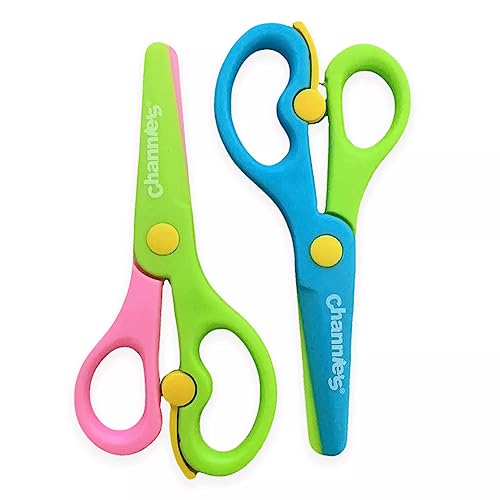
Features: Designed for ages 3-5 with blunt tip and small handles; durable plastic construction; supports hand-eye coordination development.
Who it’s best for: caregivers seeking a kid-sized option with secure grip and easy reopening after each cut. Why selected: focused on early motor skill development with safety in mind.
Caution: Plastic blades are best for paper and light crafts; avoid heavy-duty cutting to prevent blade damage.
Leinuosen 15 Pack Preschool Scissors

Features: Safe anti-pinch design; built to cut only paper and cards; ABS plastic with round tips; includes a training lever that reopens blades after each cut, which can be disabled over time.
Who it’s best for: homes or classrooms that want a longer-lasting set with a built-in learning aid. Why selected: adjustable lever supports gradual progression from training scissors to standard scissors.
Caution: The training lever is a feature to aid beginners; once disabled, supervise for consistent safe use with older kids.
Koogel Toddler Scissors Practice Kit

Features: All-in-one set with 2 training blades and 120 sheets of patterned paper; sized 2.4×5.3 inches; safety blades and rounded tips; makes a complete starter kit for early crafts.
Who it’s best for: parents and teachers who want a bundled kit to foster cutting practice from day one. Why selected: provides ample practice materials to reinforce skills in a structured way.
Caution: Ensure use on flat, clean surfaces to maximize safety and blade longevity; avoid abrasive surfaces that can wear blades faster.
Buying Guide: Key Considerations For Paper-Only Scissors
- Intended age and grip size: Choose scissors labeled for toddlers or preschoolers with small handles for easy control.
- Blade material and safety: Look for blunt tips, ABS plastic blades, and no metal parts to minimize injury risk.
- Cutting capability: Confirm they are designed to cut paper (and optionally dough) without tearing fabric or skin.
- Training features: Some sets include training levers or adjustable modes to ease beginners into open-close cutting motions.
- Durability and cleaning: Plastic-bodied scissors are easy to sanitize; avoid sharp metal edges in kid-focused designs.
- Color coding and visual appeal: Bright colors and fun shapes (like rabbit ears or animal designs) help engage children in practice.
- Package size and variety: If buying for a classroom, multiple pairs with color variety help staff manage availability and reduce mix-ups.
FAQ
- What counts as “scissors that cut only paper”? These are designed with safety-focused blades (often plastic or blunt metal tips) to ensure cutting action works on paper or dough but not on skin, hair, or fabric.
- Are these suitable for toddlers? Yes, most options target ages 3-5 with small handles and blunt tips to support safe practice.
- Can these blades cut fabric or hair? Best practice is to use them only for paper and lightly for dough, as intended; avoid fabric or hair to prevent dulling or damage.
- Should I buy a multi-pack or a single pair? Multi-packs are ideal for classrooms or family use, allowing color-coding and shared activities among children.
- Do any include teaching aids? Some kits feature training levers or adjustable modes to help children master the open-close motion gradually.
- Are these easy to clean? Most are plastic-bodied and designed for easy cleaning; avoid submerging any parts beyond manufacturer guidance.