Answer: This guide helps buyers choose the best royal blue fabric dyes for clothing, décor, and crafts. It highlights easy-to-use liquid dyes, concentrated powders, and natural-fiber formulas suitable for DIY projects, reviving faded pieces, and large-scale dye jobs. The top picks cover natural fibers, synthetics, and versatile color outcomes. Best for crafters, hobbyists, and small-scale designers who want consistent royal blue results with straightforward application.
| Product | Type | Best For |
|---|---|---|
| Rit Dye – Liquid Fabric Dye (Royal Blue) | Liquid | Crafters and DIY outfits |
| All Purpose Rit Dye Powder (Royal Blue) | Powder Concentrate | Projects on multiple fabrics |
| Rit Dye More (Sapphire Blue) | Liquid Fiber Dye for synthetics | Polyester, acrylic blends |
| TULIP Permanent Fabric Dye Powder (Royal Blue) | Powder Dye | Natural and blended fabrics |
| Jacquard iDye for Natural Fabrics (Royal Blue) | No-mess packet dye | Cotton, linen, silk, rayon |
The following sections describe each option, including who it’s best for, its key advantages, and when to choose or avoid it for royal blue results.
Rit Dye Liquid Royal Blue — Easy, Everyday Use

Best for beginners and quick projects, this liquid dye is straightforward to mix with hot water and a small amount of detergent. It provides predictable, even color coverage on a wide range of fabrics. Best for casual clothing, home décor accents, and craft items where you want a reliable royal blue shade. Caution: avoid heavy layering on very dark fabrics if you want maximum brightness in a single soak.
All Purpose Rit Dye Powder — Concentrated Royal Blue

Best for color control and fabric variety, this concentrated powder covers a wide range of clothing, décor, and crafts. It’s economical for dyeing up to a pound of fabric and supports multiple dyeing techniques like tie-dye and ombre. Choose this if you want to experiment with intensity by adjusting dye quantity. Limitation: requires careful dissolution to avoid clumps.
Rit Dye Powder Multi-Pack — Royal Blue (1 Pack)
Best for coordinated color projects, this single-pack powder supports various fabrics and items such as clothing, home décor, and crafts. It enables reliable royal blue results across different materials and techniques. Choose this if you’re dyeing a few items and want consistent color without mixing multiple powders. Caution: not ideal for large-scale industrial projects.
Tulip Permanent Dye Powder — Hot Dye Method

Best for natural fabrics seeking vibrant, long-lasting color, this dye uses hot water and salt to achieve thorough coverage. It’s great for reviving faded garments, shoes, bags, and home décor items. Most vibrant on natural fibers like cotton or linen. Choose this if you want strong, durable royal blue with high wash-fastness. Limitation: hot dye method requires careful temperature control.
Rit DyeMore Sapphire Blue — Synthetic Friendly

Best for synthetics and blends, this dye targets polyester, acrylic, and acetate. It offers broad coverage for clothing, décor, and crafts with vibrant royal-blue results. Choose this if your project involves synthetic fabrics or blends that standard dyes struggle to color evenly. Limitation: not ideal for 100% natural fibers when you need ultra-bright colors on cotton.
Jacquard iDye Natural Fabrics — No Mess Royal Blue
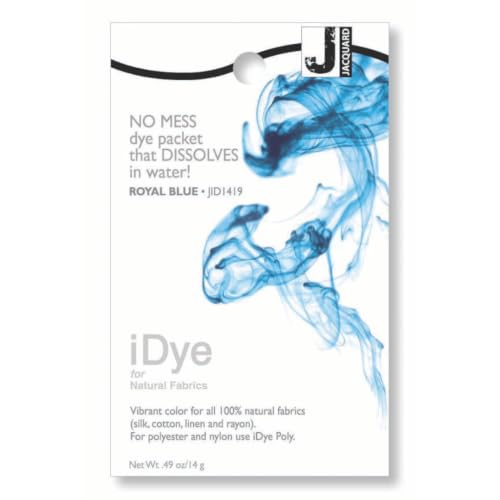
Best for natural fabrics with a clean, no-mess process, this dye uses a dissolvable packet that you simply add to water or a washing machine. It’s designed for cotton, linen, silk, rayon, and viscose, making it ideal for clothing restoration and DIY projects. Choose this if you want a convenient, low-mess method for natural fibers. Limitation: may be less convenient for large-scale or heavy dyeing tasks compared with bulk powders.
Buying Guide — Royal Blue Fabric Dye: Practical Considerations
What fabric will you dye? Natural fibers (cotton, linen, silk) typically take dye more evenly and vividly with natural-fiber formulas, while synthetics may require dye designed for polyester or blends. If you’re dyeing a mix of fabrics, a versatile all-purpose dye or a dedicated polyester dye can help you achieve consistent results.
What dye form fits your skill level? Liquids are often easiest for beginners; powders offer precise color control and bulk options; no-mess packets are convenient but may have limited batch sizes. Consider your comfort with hot-water methods and your available dyeing equipment, such as washing machines or stoves.
Do you want long-lasting color or special effects? Hot-dath methods and dye powders provide strong, durable color on natural fabrics, while some dyes excel at vibrant shadings on synthetics. If you’re after patterns like tie-dye, ombre, or shibori, choose a dye that supports multiple techniques and provides predictable color spread.
Is color accuracy important? Some dyes are formulated for crisp royal blue results with good fade resistance, while others emphasize bright saturation on specific fibers. For best results, test on a scrap sample before committing a large piece.
What about care and compatibility? Check fiber content, heat settings, and washing recommendations for dyed items. Some dyes require heat setting or post-dye rinsing to lock in color and reduce bleeding in subsequent washes.
Quick Comparison Snapshot
- Best for beginners: Rit Dye Liquid Royal Blue (easy mix and soak).
- Best for fabric variety and control: All Purpose Rit Dye Powder.
- Best for synthetics: Rit DyeMore Sapphire Blue.
- Best for natural fabrics: Tulip Hot Dye Method and Jacquard iDye for Natural Fabrics.
- Best no-mess option: Jacquard iDye No-Mess Packet.
FAQ
- What fabric can I dye with royal blue dye?
Most dyes are designed for natural fabrics like cotton, linen, and silk; some are formulated for synthetics such as polyester or blends. Always check the product label for fiber compatibility.
- Do I need to pre-wash fabrics before dyeing?
Pre-washing removes sizing and finishes that can hinder dye uptake, helping color more evenly.
- Can I dye multiple items at once?
Yes, but batch size should align with the dye’s recommended coverage and equipment. For consistent results, dye similar fabrics together.
- Will royal blue fade after washing?
Most dyes are designed to resist fading, but color longevity depends on fabric type, washing conditions, and dye formulation. Always follow care instructions provided with the dye.
- Is a no-mess dye packet recommended for beginners?
Yes, for simple projects and small batches, a no-mess packet provides a straightforward dyeing process with less cleanup.