Looking for a rotating cutting mat that makes quilting easier and more accurate? This guide highlights top rotating, self-healing cutting mats sized for quilting projects. Each pick is suited for different crafters—from beginners needing stable surfaces to seasoned quilters chasing precision with angles. The selections emphasize smooth rotation, durable surfaces, and clear grid guides to speed up fabric work and reduce fatigue. Below is a quick summary table of the chosen products to compare at a glance.
| Product | Size | Rotation | Best For |
|---|---|---|---|
| 14×14 in | Smooth rotation | Quilters needing 13″ grid for precise cutting | |
| 12×12 in | 360° rotation with locking option | Sewing and small-quilting projects | |
| 12×12 in | Rotates 360° | Small, intricate fabric layouts | |
| 14×14 in | 360° rotation | Large quilting sheets with grid guidance | |
| 12×12 in | 360° rotation with anti-slip base | Durable mat for long sessions |
Calibre Art Rotating Self Healing Cutting Mat 14×14
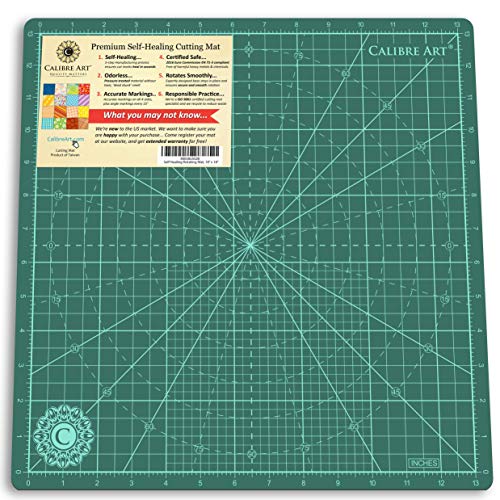
The Calibre Art 14×14 rotating cutting mat is designed for quilting and art projects. It features a smooth rotation mechanism with a non-detachable base, allowing the surface to spin easily. The self-healing surface reseals minor cuts, extending blade life and maintaining a smooth cutting area. The mat uses an EN 71-3 compliant compound for a safer surface. Best for quilters who want a reliable 14-inch workspace with a clearly defined 13-inch grid for precise fabric alignment. Caution: the base is fixed, so rotate is independent of lifting the mat during use.
The Quilted Bear Rotating Cutting Mat 12×12 (Blue)

This 12×12 rotating cutting mat from The Quilted Bear offers effortless 360° rotation and a locking mechanism for stability. It’s ideal for sewing, quilting, and general crafting on a compact workspace, helping reduce wrist strain during long sessions. The self-healing surface withstands repeated cuts while staying smooth, making it a practical choice for rotary cutters and quilting rulers. Best for hobbyists who need quick rotation between cuts and a reliable lock when they require a stationary position. Limitation: the smaller size may limit larger fabric layouts.
OLFA 12″ x 12″ Rotating Cutting Mat (RM-12S)

The OLFA RM-12S is a 12×12 rotating cutting mat featuring a 360-degree top layer and a non-slip bottom. It includes grid lines for precise cutting and a self-healing surface that reseals blade marks. This model is best for crafters working on small to mid-sized projects where frequent rotation improves efficiency. Choose this if you prioritize a well-known brand with reliable rotating action and a clear grid. Caution: heavier fabrics can require more force, potentially affecting rotation smoothness over time.
The Quilted Bear Rotating Cutting Mat 12×12 (Blue) – Locking
This blue variant of The Quilted Bear’s 12×12 rotating mat emphasizes a straightforward locking mechanism to keep fabric steady during precise cuts. It shares the 360° rotation feature and self-healing surface, making it a dependable option for small quilting tasks and scrapbooking. Best for crafters who want quick transitions between cuts with a stable locked-position option. Limitation: the 12×12 size may limit larger fabric layouts.
AMASEWART Rotating Self Healing Cutting Mat 14×14 Turquoise

AMASEWART’s 14×14 turquoise mat provides a clearly printed 13-inch grid and angle markings (30°, 45°, 60°) for precise fabric planning. Its 360° rotation works with a stable, non-slip base to streamline cutting workflows. The self-healing surface extends the mat’s life by resealing cuts. Best for quilters who want angle guides integrated into the mat for more complex shapes. Limitation: color preference may influence visibility of grid lines under certain lighting conditions.
Buying Guide: Key Considerations For Rotating Quilting Mats
What size do you need? For small-space studios, 12×12 mats are ideal. For larger projects or bigger fabric pieces, 14×14 mats provide more room to maneuver. Consider whether you want a locking mechanism in addition to rotation to keep fabric steady during cuts.
How important is grid clarity? Look for mats with clearly printed lines, angle markings, and high-contrast grids to minimize miscuts. Self-healing surfaces extend blade life and maintain smooth cutting conditions over time.
Is stability paramount? Anti-slip bases and durable materials reduce movement, reduce wrist strain, and improve precision. Some mats use a two-layer design to keep the top rotating while the bottom remains stationary.
Brand and compatibility matter. Reputable brands often deliver consistent rotation, longevity, and easier blade maintenance. Always verify grid layout compatibility with your typical quilting patterns and rulers.
Price versus durability. While inexpensive mats can work for casual projects, investing in a self-healing surface and robust rotation mechanism pays off with longer use and better accuracy for frequent quilters.
FAQ
- What is the main benefit of a rotating cutting mat for quilting?
It allows you to turn fabric without moving the workpiece or ruler, improving accuracy and reducing wrist movement. - Are self-healing surfaces worth it for quilting?
Yes, they reseal blade marks, keeping a smooth cutting area and extending blade life. - Should I pick 12×12 or 14×14 mats?
Choose 12×12 for compact spaces and simple projects; choose 14×14 for larger sheets and more complex layouts. - Is a locking mechanism necessary?
Locking helps keep fabric steady during precise cuts; specific projects benefit from a lock. - Do these mats work with all rotary cutters?
Most standard rotary cutters are compatible; always verify the mat’s grid precision with your tools. - Which brand is most reliable for quilters?
Well-known brands typically offer consistent rotation, durability, and durable surfaces.