Choosing the right resin can dramatically impact print detail, surface finish, and overall success rates in budget-friendly resin printers. This guide highlights five popular photopolymer resins from leading brands, focusing on accuracy, curing speed, and clarity. Whether you’re crafting miniatures, functional parts, or display pieces, these resins are designed to perform across common LCD and DLP printers. The following selections emphasize low shrinkage, stability, and ease of use to help you pick a resin that fits your project needs.
style=”font-weight:bold;”>Summary of Selected Products
| Product | Brand | Volume | Notable Strength |
|---|---|---|---|
| Upgraded Standard Resin (Clear) | ANYCUBIC | 1000 g | Improved accuracy and flow; lower viscosity for faster prints |
| 3D Printer Resin Grey | ANYCUBIC | 500 g | Low shrinkage; high precision and stability |
| High Clear 3D Printer Resin | ANYCUBIC | 1 kg | Excellent transparency; reduced yellowing |
| Upgraded 8K Standard Photopolymer Resin | ELEGOO | 1,000 g | Low shrinkage; fast curing for high-detail 8K/12K prints |
| Standard Photopolymer Resin | ELEGOO | 1,000 g | Low shrinkage; good color and stability |
ANYCUBIC Upgraded Standard Resin — Clear

ANYCUBIC Upgraded Standard Resin is a refined version of a classic UV resin formula designed for improved print success. It emphasizes higher printing accuracy and reduced shrinkage, moving from ±0.2 mm to ±0.1 mm to deliver finer details. Reduced viscosity (200 cps at 25℃) supports faster curing and better flow, which helps minimize printing time and resin waste. The formula also targets better adhesion and a balanced combination of hardness and toughness, aiming to produce durable prints with sharp edges and clear surfaces. Proper shaking before use ensures consistent color and performance across batches.
Key attributes include enhanced flowability, lower odor, and improved cleaning performance. The resin is suitable for 3D models requiring high detail, such as miniatures, jewelry prototypes, and detailed functional components. With upgraded class components, users can expect more reliable layer adhesion and fewer failed prints, especially on printers with standard panel resolutions. When selecting this resin, adhere to manufacturer-suggested exposure settings to maximize accuracy and edge fidelity.
ANYCUBIC Grey 3D Printer Resin

This resin emphasizes low shrinkage and high precision, helping ensure smooth surfaces and tight tolerances on printed parts. The resin’s formulation is designed to offer stable performance in varied environments, delivering reliable results even in moisture-prone or mildly humid settings. Its fluidity supports quick printing while maintaining structural integrity once cured. The combination of stability and accuracy makes it a practical choice for models requiring crisp features, such as mechanical prototypes or comparative test pieces.
Users benefit from good dimensional stability and predictable curing behavior, enabling repeatable results across multiple prints. The Grey color provides a neutral appearance that’s suitable for functional parts, testbeds, and applications where post-processing time should be minimized. As with all resins, shaking before use and careful post-curing will optimize surface finish and longevity of the printed objects.
ANYCUBIC High Clear 3D Printer Resin

High Clear resin is designed to resist yellowing and deliver lasting transparency. This makes it ideal for display pieces, light-guiding components, and models where translucency is important. The resin also emphasizes toughness and resilience, providing a balance that helps protect delicate features from breakage during handling or post-processing. The clear resin variant requires attention to light exposure to avoid over-curing, which can lead to slight hazing on fine details. It is compatible with a wide range of LCD and DLP printers.
In practice, users often apply a varnish or clear coat to extend clarity and reduce surface micro-scratches after curing. Following manufacturer guidelines for wash, cure, and post-processing will help preserve the resin’s optical properties while delivering robust, transparent parts for display or functional light-diffusion applications.
ELEGOO Upgraded 8K Standard Photopolymer Resin

ELEGOO’s 8K Standard Resin targets ultra-high-resolution printing, designed to minimize shrinkage and enhance dimensional accuracy across large-detail projects. The resin features fast curing and excellent stability, supporting smoother surfaces and strong layer adhesion in high-detail models. It’s formulated to deliver vibrant colors and a reliable cure curve, helping users achieve crisp edges and faithful reproduction of fine textures. This resin is especially suitable for 8K, 12K, or 14K LCD printers where precision is paramount.
The product line emphasizes a balance of hardness and flexibility, enabling prints that resist brittle failure while maintaining fine detail. For best results, adjust exposure settings to the printer’s specifications and ensure thorough cleaning prior to curing. The resin’s color consistency also supports accurate color rendering for visual prototyping and product design reviews.
ELEGOO Standard Photopolymer Resin Grey
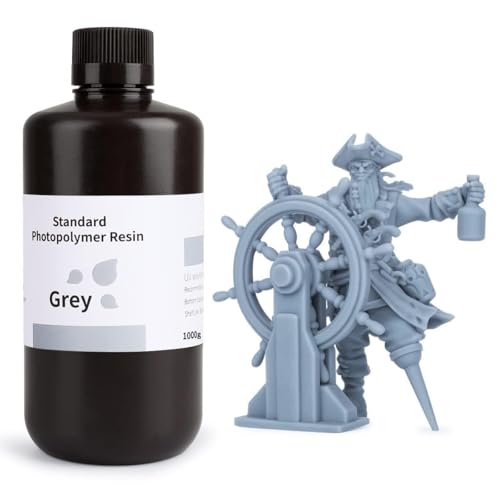
ELEGOO Standard Photopolymer Resin is designed for reliable, low-shrink printing with a focus on precise edges and smooth finishes. It’s optimized for fast curing, ensuring quick turnaround times on detailed models. The resin’s stability supports prints in varied environments, reducing warping and curling during post-processing. Users often report strong performance in miniature-scale parts and components with delicate features, making it a versatile option for hobbyists and professionals alike.
Color richness and even curing are hallmarks of this resin line. As with other photopolymers, the key to success lies in closely following exposure thresholds and washing techniques. The result is consistent, high-quality prints with minimal post-processing effort, suitable for rapid iteration in design workflows and model making.
SUNLU 3D Printer Resin — Grey

SUNLU’s standard resin emphasizes ease of use, fluidity, and a stable cure for novices and experienced users alike. The formulation aims for low shrinkage to preserve dimensional accuracy across prints. It’s designed for compatibility with a wide range of LCD and DLP printers and supports straightforward post-processing workflows. The resin’s good tolerance to common chemicals and mild acids helps maintain print integrity through washes and varnishing steps, making it a practical all-around option for diverse projects.
Overall, these resins offer a mix of low shrinkage, high fidelity, clear finishes, and robust post-processing behavior. When selecting a resin, consider your printer’s exposure settings, the required level of detail, and the intended application of the finished parts. Proper curing and handling will maximize durability and surface quality across projects.
Buying Guide: Key Purchase Considerations And Comparisons
- Printer compatibility: Confirm the resin’s viscosity, curing depth, and exposure recommendations align with your LCD or DLP printer’s specifications.
- Volume and cost per print: Larger volumes can reduce per-part costs, but ensure you won’t waste resin due to failed prints or mis-tuned exposure.
- Shrinkage and dimensional stability: Look for formulations that minimize shrinkage to improve accuracy for mechanical parts and assemblies.
- Clarity and color stability: For display pieces or light-guiding components, choose resins with high transparency and minimal yellowing over time.
- Drying and post-processing: Some resins require careful washing and post-curing; verify the recommended methods and any specialized varnishes or sealants.
- Odor and handling: Low-odor formulas improve indoor usability, especially in small workshops or classrooms.
- Strength vs. brittleness: Balanced hardness and toughness help prints resist impacts while preserving fine details.
- Brand ecosystem and support: Established brands often provide consistent formulations, documented exposure settings, and customer support for troubleshooting.
- Color options: Depending on the project, color choice can influence post-processing steps, especially if you plan to paint or varnish the model.
To maximize print success, start with manufacturer-recommended exposure settings, perform test prints to calibrate layer thickness, and maintain thorough post-processing routines. For high-detail or functional parts, consider a resin with low shrinkage, good edge fidelity, and stable mechanical properties. When comparing products, prioritize those that clearly document viscosity, cure times, and compatibility with your printer’s resin tray material.