When you want bold, textured designs that stand out, puff screen print transfers deliver dimensional, tactile results. This guide highlights five top options that work across fabrics, from cotton tees to blends, and explains who each product is best for. Whether you’re a hobby maker or a small business buyer, these picks balance ease of use, consistency, and puff potential.
| Product | Best For | Key Benefit |
|---|---|---|
| Speedball Puff Ink Modifier (4 oz) | Speedball ink users | Adds 30% puff for raised effects |
| Speedball Puff Ink Modifier (8 oz) | Frequent puff projects | Higher quantity with same puff level |
| HTVJOYDO Puff Vinyl (12 sheets) | 3D puff vinyl projects | Soft, stretchy puff with easy cutting |
| Printable Puff HTV (White, 20″ x 12″) | Printable puff designs | 3D puff on fabric via solvent printing setup |
| Jacquard Puff Additive (4 oz) | Ink-based puff on multiple surfaces | Heat-activated relief expansion |
Speedball Puff Ink Modifier 4 oz

Best for occasional puff projects and users already using Speedball inks. This modifier is specifically formulated to mix with Speedball fabric inks at about 30% by weight, yielding a raised, matte, opaque finish as the ink expands. It is not compatible with non-Speedball brands. Choose this if you want reliable puff results without changing your ink system.
Who it’s best for: crafters and small studios already invested in Speedball inks, seeking a simple puff upgrade to add dimension to designs.
Limitations: color shift occurs due to the expansion of pigment dispersion; expect less vibrancy in the final print compared to the original ink color.
Speedball Puff Ink Modifier 8 oz
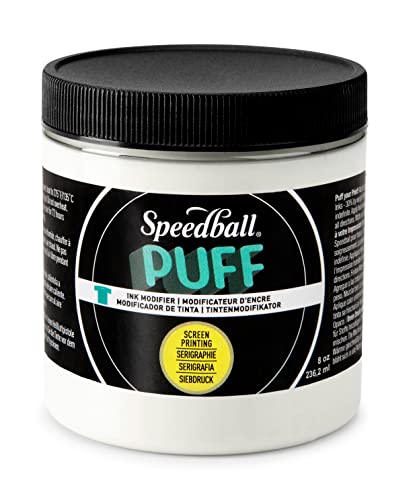
Better for higher-volume puff work, this 8 oz modifier offers the same 30% boost by weight for Speedball inks with a deeper dimensional result. It’s a practical choice for designers producing multiple puff runs or textile batches. The finish remains matte and opaque, with the puff expanding outward from the printed area.
Who it’s best for: studios and crafters needing more modifier volume without changing the ink system. Use when multiple designs require puffing across several garments.
Limitation: as with the 4 oz version, the final color will look different after puffing because of ink expansion.
HTVJOYDO Puff Vinyl Heat Transfer (12 Colors)

Best for vibrant, ready-to-cut puff designs on textiles via heat transfer. This 12-color set includes assorted puff vinyl that expands with heat into a matte, raised texture. It’s ideal for beginners and seasoned crafters who want to achieve bold, tactile graphics without ink additives. The vinyl is compatible with common cutters and transfers well on cotton, blends, and polyester fabrics.
Who it’s best for: DIY garment makers and small shops needing a complete puff vinyl solution with multiple color options.
Limitation: performance depends on heat settings and equipment; pre-test is recommended to optimize puff effect.
Printable Puff HTV (White, 20″ x 12″)

This printable puff HTV is designed for iron-on application and can be used with compatible eco solvent printing workflows to produce raised 3D designs. It’s easy to cut, weed, and transfer, with a recommended press range of 280°F–290°F for 8–10 seconds and a medium pressure. It works well on cotton, uncoated polyester, and blends, though testing is advised to ensure clean transfer on textured fabrics.
Who it’s best for: designers seeking a printable puff option that combines digital design flexibility with a tactile finish on apparel and accessories.
Limitation: requires careful temperature control; incorrect timing or pressure may reduce puffiness or cause fabric damage on some blends.
Jacquard Puff Additive Screen Printing Ink (4 oz)
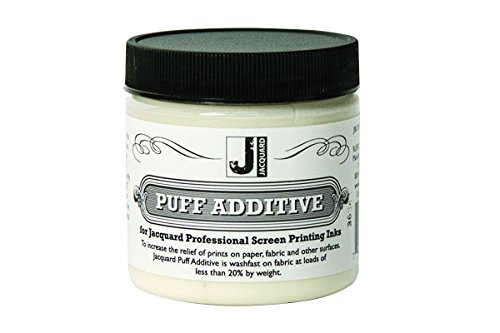
Best for ink-based puff across multiple surfaces, including paper and fabric. The microspheres in the Puff Additive expand with heat, producing a raised print after heating. Once puffed, the design is washfast and dry cleanable, making it suitable for garments and home textiles that require durability.
Who it’s best for: screen printers who want a flexible puff option beyond standard textile inks and who operate with heat-curing equipment.
Limitation: results depend on the ink system and heat application; ensure compatibility with your base inks before use.
Buying Guide: Puff Transfers For Different Workflows
What kind of puff transfer should you choose? Consider your workflow, fabrics, and production volume.
- Ink-based puff vs. vinyl puff: Ink-based puff (Speedball, Jacquard) works with screen printing and can be layered, while vinyl puff (HTVJOYDO, TORC, Tintnut) is usually easier for beginners and hot-peel friendly.
- Fabric compatibility: Cotton and cotton blends generally respond well to puff products. Some poly blends may require testing to ensure adequate puff and adhesion.
- Equipment requirements: Ink modifiers pair with screen printing inks; puff HTV requires heat presses or irons and compatible transfer sheets. Printable puff HTV needs a compatible solvent-based workflow or printer.
- Color and vibrancy: Puff expansion may alter color brightness. Plan color choices accordingly and test on sample fabric before full runs.
- Durability and washability: Most puff products claim washfast results after curing. Verify post-cure care instructions to maintain puff integrity.
FAQ
- What fabric is best for puff transfers?
Cotton and light blends generally deliver the most reliable puff effects and adhesion. Test on a sample swatch when using new materials. - Do puff inks require a special curing method?
Yes. Puff inks typically require heat activation; follow product-specific curing temperatures and times to achieve the raised effect. - Can puff vinyl be used on dark fabrics?
Yes, but ensure the base color provides adequate contrast, and test for visibility of the raised texture on darker backgrounds. - Is puff color affected by the expansion?
Puff expansion can shift color slightly; plan for this when selecting base ink or vinyl colors. - Are puff products compatible with low-temperature presses?
Most puff vinyls require higher temperatures to activate puff; check the product’s recommended heat settings for best results. - Can I mix puff additives with other screen printing inks?
Puff additives are usually brand-specific; mixing across brands is not recommended and may yield inconsistent results.