Screen printing puff inks and modifiers add dimension to designs by expanding during cure, creating raised, tactile textures. This article reviews five popular puff-related additives from reputable brands, highlighting how they work, recommended usage, and compatible fabrics. Whether you’re refining details on apparel or exploring bold, dimensional prints, these products provide controlled puff effects and reliable curing. Each entry includes quick specs and practical considerations to help you choose the right puff additive for your workflow.
| Product | Brand | Size | Key Benefit |
|---|---|---|---|
| Speedball Puff Ink Modifier | Speedball | 8 oz | Adds depth and dimension to Speedball inks with a matte, opaque puff |
| Jacquard Puff Additive Screen Printing Ink | Jacquard | 4 oz | Raises relief after heat curing for fabrics and paper |
| Rapid Cure Puff Additive (Pint) | Screen Print Direct | 16 oz | Low-temp cure, sharp puff with preserved fine detail |
| Rapid Cure Puff Additive (Quart) | Screen Print Direct | 32 oz | Easy-to-use, long shelf life, fast puff development |
| BEAUTYFLEX Puff Modifier | BEAUTYFLEX | 8 oz | Opaque puff without an underbase, fast 320°F cure |
Below are five product-focused sections detailing each option, including use cases, curing considerations, and fabric compatibility to help you compare them side by side.
Speedball Puff Ink Modifier
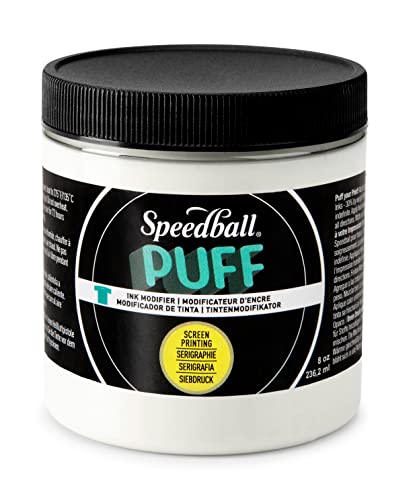
Used to raise prints by 30% by weight when mixed with Speedball fabric screen inks, this modifier is designed specifically for Speedball inks and is not compatible with other brands. It adds new levels of dimension and creates a matte, opaque puff effect that expands the pigment dispersion and ink flow. Expect some color shift due to expansion, with a softer feel after curing. Ideal for bold textures on cotton and blends when used with Speedball inks.
Jacquard Puff Additive Screen Printing Ink
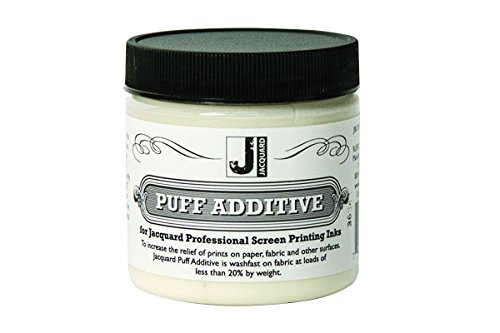
Jacquard’s Puff Additive increases print relief on fabrics and other surfaces. The microspheres expand with heat, creating a raised effect after curing. The puffed portions are washable and the print remains durable. This additive is versatile for textiles, paper, and mixed-media prints where a tactile accent enhances the design without sacrificing detail when used within recommended percentages.
Rapid Cure Puff Additive (Pint)

Rapid Cure Puff Additive is designed to work with plastisol inks to achieve a precise puff effect. By adding 10–20% by weight, you can create raised textures while preserving fine print details. The product cures at a low temperature around 270°F and gels at 220°F, making it suitable for heat-sensitive garments and low-temp ink systems. Compatible with a wide range of fabrics, this additive supports fashion-oriented prints with rapid production cycles.
Rapid Cure Puff Additive (Quart)
This quart-size Rapid Cure Puff Additive provides an easy-to-use option with similar low-temperature curing benefits. It’s formulated to work with plastisol inks and yields elevated puff textures quickly as the ink fully cures. The product emphasizes a long shelf life (over 12 months) and compatibility with multiple ink systems, making it suitable for small-run productions and studios seeking reliable puff results.
BEAUTYFLEX Puff Modifier

BEAUTYFLEX offers a Puff Modifier designed to deliver a 3D-looking texture with high opacity. It’s engineered to work with plastisol inks, allowing prints to pop on dark fabrics without needing an underbase. The formulation aims for quick cures around 320°F, resulting in flexible and wash-resistant finishes. This option favors bold, graphic-heavy designs that require strong contrast and durable puff textures.
Buying Guide: Key Considerations And Comparisons
Choosing the right puff additive depends on your workflow, substrate, and desired texture. Consider these factors to determine the best fit:
- Ink compatibility: Some puff modifiers are brand-specific (e.g., Speedball modifier with Speedball inks). If you mix inks and additives, test compatibility first to avoid adhesion issues.
- Cure temperature: Low-temp curlers are ideal for heat-sensitive garments, while others cure at standard plastisol temperatures. Confirm your curing equipment and garment limits.
- Puff density and texture: Microporous formulations create subtle puffs, while higher percentages yield more dramatic raised textures. Start with 5–10% and adjust gradually.
- Substrate range: Cotton, polyester blends, and synthetics can respond differently. Some additives perform best on natural fibers; others are versatile across fabrics.
- Color shift: Puff expansion can dilute color intensity. Plan for potential color changes and test on sample swatches before full runs.
- Shelf life and storage: Some offerings advertise long shelf life; store away from heat and direct light to maximize performance.
- Application method: Dry color, screen exposure, and curing times can vary with puff additives. Use manufacturer guidelines and conduct small tests to refine process parameters.
This selection emphasizes options that balance ease of use, cure practicality, and print durability. For studios focused on fashion and streetwear, rapid-curing puff additives can speed up production while preserving detail. If your work centers on textiles with darker backgrounds, highly opaque puff modifiers help maintain visibility without an underbase. Finally, always perform a controlled test print to verify puff behavior under your specific screen tensions, mesh counts, and flashing/drying equipment.