Finding the right plastisol ink is essential for bold colors, strong durability, and smooth prints on a range of fabrics. This guide highlights trusted inks and related supplies that screen printers in the United States rely on for consistent results, low bleed, and easier handling at lower cure temperatures. Read on to compare top picks and practical considerations for your setup.
| Product | Brand | Use |
|---|---|---|
| Rapid Cure White Ink (8 oz) | Screen Print Direct | Low-temperature curing, versatile |
| Speedball Fabric Ink (8 oz) | Speedball | Vibrant colors, broad fabric compatibility |
| Rapid Cure 6 Color Set (8 oz each) | Screen Print Direct | Starter kit, low-temperature curing |
| Ecotex Plastisol Press Wash (Quart) | Screen Print Direct | Ink remover and press cleaner |
| Rapid Cure Reducer (16 oz) | Screen Print Direct | Viscosity adjustment for easier printing |
Rapid Cure White Ink (8oz.) — Screen Print Direct

Rapid Cure plastisol ink cures at a lower temperature, around 270°F, which helps reduce pressing time and energy use compared to standard plastisol inks that typically cure near 320°F. The formula offers a longer shelf life, exceeding 12 months, aiding inventory planning for shops with seasonal demand. The ink is formulated for easy handling and consistent opacity, delivering bold designs with good finish on a variety of fabrics. It is suitable for traditional screen printing on cotton and polyester blends, and can also be used for plastisol heat transfers and cold peel transfers. The product emphasizes a short body that streamlines screen press work, allowing reliable layer-building without excessive clutching or dragging on the stencil. This makes it particularly appealing for beginners and seasoned printers seeking efficient curing and dependable color release.
Speedball Fabric Screen Printing Ink — White (8 oz)

Speedball offers vibrant colors with broad coverage and reliable workability across a wide range of fabrics, including cotton, polyester blends, linen, rayon, and other synthetics. The inks are designed to produce a soft hand once cured, contributing to comfortable wear for garments. They also perform well on paper and cardboard for proofs or packaging prints. The formulation prioritizes consistent consistency, helping printers maintain predictable behavior across runs. Proper heat setting ensures the color permanence and washfastness that users expect from screen-printed textiles.
Rapid Cure 6 Color Set — 8 oz Each
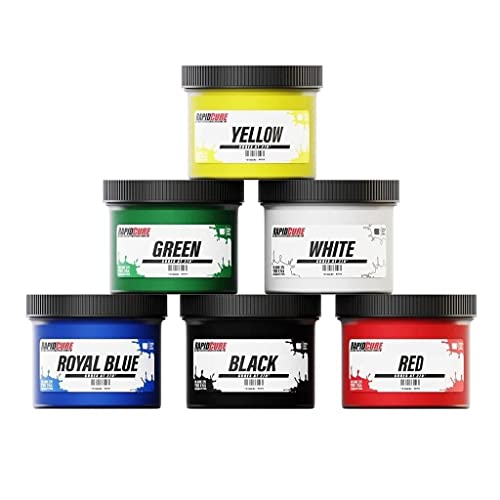
This six-color set provides a practical starting kit for shops wanting a low-temperature curing solution with immediate color options. The Rapid Cure system emphasizes bold, vibrant colors with high opacity, intended for durable finishes on a variety of fabrics. The kit is designed for easy mixing and layering, enabling designers to build complex graphics without sacrificing workflow speed. It suits hobbyists expanding into professional production and small studios seeking consistent, repeatable results. The low-temperature cure feature helps reduce energy use and accelerates turnaround times while preserving fabric integrity.
Ecotex Plastisol Press Wash (Quart)

Press wash is a crucial maintenance product for screen printing setups, helping remove plastisol ink from screens, squeegees, and related equipment. This cleaner leverages a soy-based formulation that emphasizes environmental friendliness while delivering effective ink removal. It is designed to minimize emulsion damage during cleanup and reduces the risk of mesh degradation when used as part of routine press maintenance. The cleaner is suitable for routine color changes and screen reclaiming, supporting ongoing production workflows with reliable cleanup performance.
Rapid Cure Plastisol Ink Curable Reducer — 16 oz

The curable reducer is designed to adjust the viscosity of plastisol inks, making them easier to print with and helping achieve the desired body and saturation. The reducer is recommended at a starting point of 2–5% by weight, with the option to increase up to about 10% while testing for bleed, color strength, and opacity. This additive provides printers with flexibility to match press conditions, screen tension, and squeegee speed, enabling smoother line work and consistent net print quality. It is especially helpful when printing on blends or fabrics that require adjustments for a crisp, clean finish.
Buying Guide: Plastisol Ink And Related Supplies
Key considerations
- Cure temperature and speed: Low-temperature curing inks save energy and reduce fabric distortion. Consider your curing equipment and heat press settings when selecting a formula.
- Opacity and color range: Higher opacity inks yield bolder designs on dark garments. A multi-color set helps build complex graphics with predictable outcomes.
- Texture and hand feel: A good plastisol ink should dry to a soft-hand finish that remains comfortable to wear after washing.
- Shelf life and stability: Inks with longer shelf life reduce waste and ensure consistent color matching across runs.
- Compatibility: Ensure the ink works well with the fabrics you print on (cotton, blends, polyesters) and your emulsions or pretreatments if used.
- Cleanup and maintenance: Cleaners and reducers should preserve screen integrity while enabling efficient ink removal and color changes.
Comparative perspectives
- Low-temperature cure inks offer energy savings and can extend fabric life on delicate materials, but you should verify substrate compatibility to avoid color bleed or poor adhesion.
- Ink sets and starter kits provide a straightforward path for new screen printers to establish color compatibility and curing workflows, reducing early trial-and-error costs.
- Maintenance products like press wash are essential for equipment longevity and color consistency, especially in busy shops with frequent color changes.
- Viscosity reducers give printers control over ink flow and laydown, helping to optimize squeegee pressure, mesh tension, and stroke speed for different designs.