Pinking shears are a handy tool for fabric projects, helping to prevent fraying while adding a decorative zigzag edge. The right pair combines sharp blades, comfortable grips, and durable construction for steady cutting across multiple layers. Below, we review five highly regarded pinking shears, summarizing what each offers and how they perform on common fabrics such as cotton, linen, blends, and lightweight synthetics. This guide helps sewers, quilters, and crafters choose a model that matches their project needs and budget.
| Product | Brand | Key Feature |
|---|---|---|
| Fiskars Gingher 7.5 Inch Pinking Shears | Fiskars | Sawtooth blades to prevent fraying |
| Fiskars Pinking Shears, Zig-Zag Edge | Fiskars | Easy Action spring; fabric flat for precision |
| JISTL Green Pinking Shears Comfort Grips | JISTL | Ergonomic ABS handles; versatile for crafts |
| Long Ying Pinking Shears For Fabric Cutting | Long Ying | Left/right hand suitability; serrated edge |
| YUQGAOP Pinking Shears 9” Zig Zag Scissors | YUQGAOP | Premium stainless steel; 5mm tooth spacing |
Fiskars Gingher 7.5 Inch Pinking Shears

The Fiskars Gingher 7.5 Inch Pinking Shears combine durable construction with a sawtooth blade design that helps prevent fabric fraying along the edge. Their compact size makes them suitable for detailed work on smaller projects, hems, and trims. The double-plated chrome-over-nickel finish provides corrosion resistance and long-term edge retention, while the ergonomic grip supports comfortable use across longer sewing sessions. These features align with common quilting and garment-making tasks where a decorative edge is desired without compromising fabric integrity.
Fiskars Pinking Shears, Zig-Zag Edge

These Fiskars pinking shears feature a zigzag edge to prevent fabric fraying and an Easy Action spring that reduces hand fatigue during extended use. The bent handle design helps keep fabric flat, enabling precise and consistent cuts. The combination of a spring-assisted action and a comfortable grip makes them a reliable choice for quilters and sewers working on larger projects, such as garments or home décor, where frequent trimming is required.
JISTL Green Pinking Shears Comfort Grips

The JISTL pinking shears are designed for versatile use across fabric, lining, paper, leather, PU, and crafts. They incorporate hardened stainless steel blades for a sharp edge and ergonomic ABS handles to reduce hand fatigue during extended cutting sessions. While the alignment screw is not adjustable, the manufacturer notes a focus on reliability and fast, convenient use, making them suitable for professionals and hobbyists who value comfort and efficiency.
YUQGAOP Pinking Shears 9” Zig Zag

The 9-inch YUQGAOP zigzag scissors are built from premium hardened stainless steel for a long-lasting sharp edge. The 5mm tooth spacing yields a clean zigzag cut that remains sharp through multiple fabric layers. They are described as suitable for fabrics, linings, paper, and leather, making them a versatile option for professional dressmakers and hobbyists alike. Ergonomic handles provide a comfortable grip to reduce fatigue during long projects.
Fiskars Pinking Shears, Zig-Zag Edge (8 Inches)
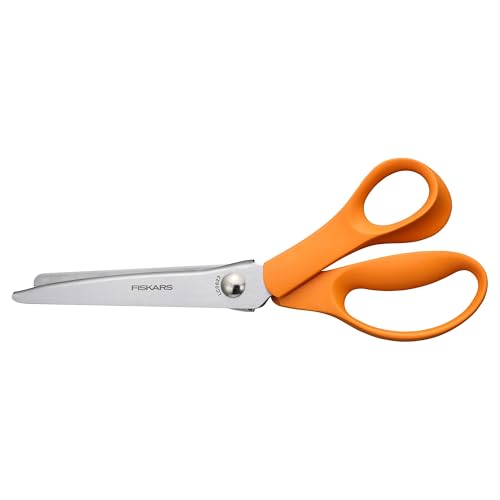
Fiskars offers another 8-inch option with a zigzag edge that helps prevent unraveling and fabric fraying. The blades are constructed from high-grade stainless steel for durable, precise cuts, and the ergonomic handle is designed to fit various hand sizes for comfortable all-day use. This model is well-suited for sewing, crafts, and any project requiring neat, decorative edges without sacrificing edge integrity.
Guggenhein Professional 8″ Pinking Shears

The Guggenhein Professional 8″ Pinking Shears are designed for tailors, quilters, and serious hobbyists. They emphasize precision cutting, with sharpened blades built to deliver clean results across many fabrics. Ergonomic comfort grips reduce hand strain during extended use, making them a solid choice for those who frequently trim edges while working on large sewing or quilting projects.
Buying Guide: Key Purchase Considerations
What to evaluate when choosing pinking shears:
- Blade quality and material: Stainless steel blades resist rust and stay sharp longer, supporting clean, consistent zigzag cuts across multiple fabrics.
- Tooth spacing and pattern: Common gaps around 5 mm offer balanced fray protection and edge visibility; smaller gaps create finer decorative edges, while larger gaps handle thicker materials.
- Edge design: Zigzag edges reduce fraying; some models include sawtooth blades for enhanced texture and durability.
- Ergonomics and comfort: Look for cushioned grips, bent handles, or spring-assisted action to ease cutting during extended use and prevent fatigue.
- Left/right-handed use: Some models are optimized for ambidextrous use, while others are tailored to a dominant hand; check grip design if you prefer one hand orientation.
- Project type: For delicate fabrics like lightweight cottons, finer tooth spacing and precision is key; for heavy fabrics or multiple layers, sturdier blades and higher cutting capacity matter.
- Maintenance: Regular cleaning and drying after use helps prevent corrosion and maintains blade alignment for consistent performance.
Comparison And Use-Case Scenarios
– For hobbyist quilters focusing on decorative edge finishing on cotton quilts, Fiskars Gingher 7.5 Inch and Fiskars 8 Inch models offer reliable blades and ergonomic grips for comfortable, long sessions. The sawtooth option may add durability against fraying on woven fabrics.
– For crafters who frequently trim fabrics, paper, and leather in mixed-material projects, the JISTL and Long Ying models emphasize comfort and versatility, with left-handed suitability and non-slip handles to support varied user preferences.
– For professionals handling multiple layers or heavier fabrics, the 9-inch YUQGAOP and Guggenhein options provide robust steel construction and precise cutting performance, albeit with considerations for weight and grip pressure during extended use.
When selecting, balance durability and comfort with the specific fabrics you work with, your typical project length, and the kinds of materials you cut most often. Consider trying a model with an ergonomic grip and spring-assisted action if you cut for extended periods, and choose a blade type that aligns with your preferred edge finish.