Looking for a pencil sharpener that fits an artist’s needs? This guide highlights five top options ideal for drawing, sketching, and color work. Each pick balances point quality, user comfort, and compatibility with common artist pencils. The best choice depends on your core task—fine details, broad shading, or classroom use. The list includes both manual and electric models to suit studio setups, classrooms, or mobile work. Below, you’ll find a quick comparison table to help you decide at a glance.
| Product | Brand | Type | Best For |
|---|---|---|---|
| Prismacolor Premier Pencil Sharpener | Prismacolor | Manual dual-blade | Detail work on Prismacolor pencils |
| STAEDTLER Double-Hole Tub Pencil Sharpener | STAEDTLER | Manual dual-hole | Standard and larger pencils, classroom use |
| AFMAT Rechargeable Long Point Sharpener | AFMAT | Electric, long-point | Long points for shading and coverage |
| AFMAT Long Point Manual Sharpener | AFMAT | Manual, long-point | Long points for sketching and drawing |
| Faber-Castell Grip Trio Pencil Sharpener | Faber-Castell | Manual 3-in-1 | Jumbo, standard, and colored pencils |
Prismacolor Premier Pencil Sharpener

Features include two sharp blades made from high-quality steel, enabling a wide point for coverage or a fine point for sharp details. This model is especially suited for Prismacolor colored pencils, delivering a consistent point to minimize breakage during long sessions. Best for artists who primarily work with Prismacolor products and require reliable point quality for both broad shading and precise line work. A potential limitation is that blades are tailored for Prismacolor leads; other brands may require more frequent sharpening or different sharpness expectations.
STAEDTLER Double-Hole Tub Sharpener

This dual-hole sharpener provides compatibility for both standard #2 pencils and slightly larger diameter pencils, with precision steel blades to reduce lead breakage. Built-in shavings container keeps workspaces tidy, making it a strong choice for classrooms, home studios, or busy studios. Best for artists who need quick, reliable sharpening across a range of pencils. Consider emptying the container regularly for best results, and note that it may require occasional blade care for optimal performance with very hard leads.
AFMAT Rechargeable Long Point Sharpener

An electric sharpener offering a super long point up to 17mm, suitable for shading and large-palette work. It includes two sharpness options (sharp and blunt) with USB charging for portability. Best for artists who frequently switch between detailed line work and broad shading or for those working with longer pencil points. A limitation is that it may not handle very soft core pencils well, and thicker cores require careful insertion to avoid lead breakage.
AFMAT Long Point Manual Sharpener

This manual sharpener is designed to deliver a long point (8mm-20mm) for φ6-8.2mm pencils, making it ideal for artists who want extended nibs on charcoal, drawing, or colored pencils. It features an adjustable nib with optional sandpaper for needle-sharp results. Best for artists seeking a cost-effective long-point tool, but not suitable for pastel pencils or very soft leads—confirm your pencil core type before use to prevent issues with point length and integrity.
Faber-Castell Grip Trio Pencil Sharpener
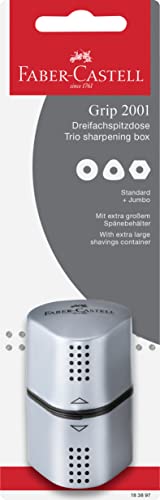
3-in-1 handheld sharpener designed for jumbo, standard, and colored pencils. Ergonomic triangular shape helps with grip, and high-quality steel blades aim to provide a clean, durable point after each sharpening. Best for artists who work across pencil sizes and brands and want a single compact tool. It may be less ideal for extremely soft cores or very large jumbo pencils if you need a broader set of sharpening options beyond the built-in trio blades.
Buying Guide
What should you consider when choosing a pencil sharpener for artists?
- Point needs: Do you prefer a long point for shading or a fine point for detail?
- Paper and medium compatibility: Are you using standard No.2, thick jumbo pencils, or colored pencils?
- Sharpening method: Manual sharpeners are simple and quiet; electric sharpeners save time for large sessions.
- Blade quality and maintenance: Steel blades with minimal lead fragments reduce breakage.
- Mess and cleanup: Built-in shavings containers help keep workspaces tidy.
- Portability: USB-powered or compact designs suit on-site drawing sessions or classrooms.
- Longevity and replacement parts: Some models allow blade replacements or extended use without performance loss.
FAQ
- What kind of sharpener is best for detailed color work? A manual dual-blade sharpener designed for colored pencils, like Prismacolor Premier, helps achieve a fine detail point with reduced breakage.
- Are electric sharpeners better for large classrooms? Yes, electric sharpeners with auto-stop can sharpen quickly and consistently, saving time in busy settings.
- Can I sharpen jumbo pencils with standard dual-hole models? Some dual-hole sharpeners accommodate larger pencils; verify hole sizes before purchasing.
- Do long-point sharpeners work with all pencils? Long-point sharpeners work best with pencils that have a sturdy core; very soft cores may not achieve the maximum point length.
- Is a 3-in-1 sharpener enough for variety pencils? For many artists, a 3-in-1 model covers jumbo, standard, and colored pencils, offering good versatility in one tool.
- Should I buy a sharpener with a shavings container? A built-in container helps keep your desk clean and reduces spill risk during use.