When shopping for nylon filament, choose options that balance strength, dimensional stability, and print reliability. This guide highlights five top nylon filaments ideal for engineering parts, prototyping, and durable consumer components. It helps buyers pick the right filament based on printer compatibility, moisture handling, and application needs. The top picks cover copolymer nylons, carbon-fiber reinforced nylon, and low-moisture variants to suit different use cases.
Summary of selected products:
| Product | Best For | Key Benefit | Limitations |
|---|---|---|---|
| OVERTURE Nylon Filament | General engineering parts | High strength and heat resistance up to 180°C | Moisture sensitivity requires proper storage |
| Polymaker Fiberon PA612-CF15 | High-performance parts | Carbon fiber reinforced, strong but manageable moisture | May require tuned printing settings |
| SUNLU Easy PA Nylon Filament Warp-Free | Large, complex parts | Low warp, good dimensional stability | Carbon fiber-free variant; standard wear considerations |
| YXPOLYER Nylon Filament PA6 | Automotive and industrial components | Very high toughness and temperature resistance | Moisture sensitivity and handling required |
| ELEGOO Carbon Fiber PAHT Filament | Rigid, high-temp applications | Carbon fiber reinforced for stiffness and heat resistance | Heavier, may require enclosure and careful cooling |
OVERTURE Nylon Filament 1.75mm

OVERTURE’s nylon candidate is a copolymer 1.75 mm filament designed for strength, durability, and heat resistance up to 180°C. It emphasizes odorless printing and low warping, making it suitable for engineering parts and prototypes. It reports good dimensional stability on a 1 kg spool, with practical design features that aid feeding and remaining filament tracking. Best for: general engineering parts, functional prototypes, and projects where robustness matters.
Why selected: This filament targets users who need strong, tough nylon with predictable performance in standard FDM setups. It’s suitable for gears, brackets, or lightweight structural components where heat resistance adds value. Caution: Nylon is moisture sensitive, so store in a dry bag and minimize exposure between prints to avoid dimensional changes.
Polymaker Fiberon PA612-CF15 Carbon Fiber Nylon

Fiberon PA612-CF15 is a carbon fiber reinforced nylon designed for high performance while maintaining manufacturability. It’s optimized for high-speed printing and offers strong mechanical properties with reduced moisture sensitivity compared to some PA6/66 blends. Best for: industrial tooling, automotive parts, and end-use components that demand stiffness and dimensional stability. Caution: Carbon fiber content can affect nozzle wear; check compatible hardened steel or ceramic nozzles if printing frequently.
SUNLU Easy PA Nylon Filament 1.75mm Warp-Free
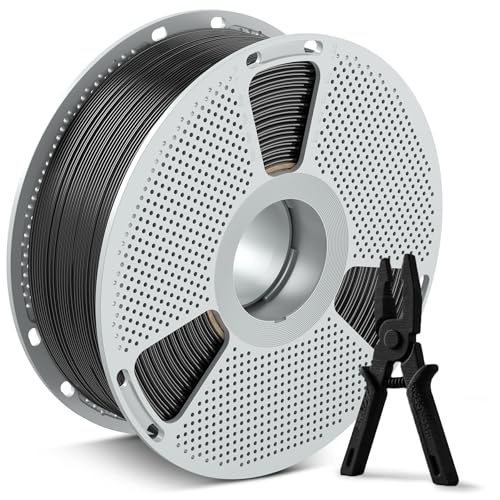
SUNLU Easy PA nylon filament emphasizes warp-free printing and good dimensional accuracy with a 1.75 mm diameter. It’s designed for engineering parts that require fine tolerances and reliable prints, with a focus on ease of use for a broad range of FDM printers. Best for: high-stress components like housings, gears, and mating parts that require consistent geometry. Caution: As with most nylon blends, manage moisture exposure to prevent dimensional drift.
YXPOLYER Nylon Filament PA6 White 1.75mm
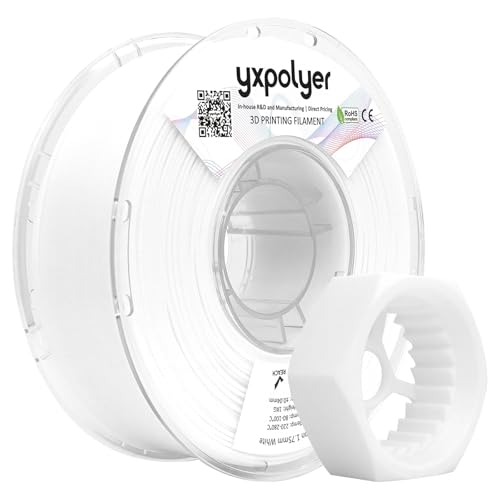
YXPOLYER PA6 nylon is a tough 1.75 mm filament with claimed toughness exceeding standard PLA and notable temperature resistance up to 194°C. It emphasizes low friction and high abrasion resistance, making it suitable for gears, bearings, and moving parts. Best for: industrial applications where durability and heat tolerance are critical. Caution: Moisture sensitivity remains a consideration; store properly to preserve mechanical properties.
ELEGOO Carbon Fiber PAHT Filament

ELEGOO PAHT is a carbon fiber nylon filament designed for high strength and heat resistance. It reports improved stiffness due to carbon reinforcement and is suitable for enclosed printers that can maintain stable temperatures. Best for: parts requiring rigidity and high-temperature performance, such as tool fixtures or durable housings. Caution: Carbon fiber composites can cause increased nozzle wear; consider a hardened nozzle and proper cooling strategies when printing long parts.
Buying Guide
What nylon type should I choose?
PA6 and PA6/66 copolymers are common because they balance toughness with printability. Carbon fiber reinforced nylons (PA6-CF, PA612-CF) boost stiffness and heat resistance, but can require careful extrusion settings and nozzle maintenance.
How does moisture affect nylon prints?
Nylon absorbs moisture from the air, which can cause print defects like poor surface finish, dimensional changes, and weaker layer adhesion. Use desiccant storage, sealed bags, and dry boxes or heat-dry the filament if needed before printing.
What printer features matter most?
A heated bed, enclosed build chamber, and higher bed temperatures support nylon printing. A nozzle with wear resistance (hardened steel or ruby) is advisable for carbon fiber blends. Layer cooling should be managed to avoid warping on larger parts.
How important is dimensional accuracy?
Dimensional tolerance influences fit between parts. Filaments with tighter tolerances (for example, +/- 0.02–0.03 mm) help ensure reliable mating and fewer post-processing adjustments. Consider test prints to verify your printer’s calibration with the chosen filament.
What about filament handling and spool design?
Filaments with easy-to-read gauges, interior spool diameters, and good feeding paths reduce tangles and jams. Filaments that offer clear orientation and a view window can help track remaining material for long print jobs.
Frequently Asked Questions
- Is nylon filament harder to print than PLA? Yes, nylon typically requires higher printing temperatures, a controlled environment to manage moisture, and careful calibration to avoid warping or stringing.
- Can I print nylon on a non-enclosed printer? It is possible but more challenging. An enclosure and proper temperature control improve print quality and minimize warping.
- Which nylon is best for functional gears? Carbon fiber reinforced nylons offer higher stiffness and wear resistance, making them suitable for gears and moving parts in demanding applications.
- Do I need a special nozzle for nylon filaments? For carbon fiber blends, a hardened nozzle is recommended to reduce wear. Regular nozzles can suffice for non-fiber nylon, but monitor for any wear signs.
- How should I store nylon filament? Store in a sealed bag with desiccant, in a cool, dry place to minimize moisture uptake and preserve dimensional stability.
- What is a good starting temperature range? Typical extrusion temperatures range from about 240°C to 260°C, depending on the specific nylon blend and printer. Refer to the filament manufacturer’s guidelines for best results.