Looking for the best nitrocellulose paint for guitars? This guide highlights top aerosol finishes that luthiers and serious players trust. These products are ideal for authentic vintage looks, clear aging, and professional refinishes. This overview targets players, luthiers, and hobbyists seeking reliable nitro finishes for instruments ranging from electric guitars to basses. The quick-reference table below summarizes the five recommended products and what they’re best for.
| Product | Best For | Finish Type |
|---|---|---|
| ColorTone Nitrocellulose Guitar Lacquer Spray – Black Gloss | Black gloss finishes on vintage-style builds | Gloss nitrocellulose |
| ColorTone Aerosol Guitar Lacquer, Olympic White | Classic white with vintage aging potential | Opaque nitrocellulose |
| ColorTone 50s Classic Colors Aerosol Guitar Lacquer, Aged Clear | Vintage-aged clear finishes for relic look | Aged clear nitro |
| ColorTone Nitrocellulose Guitar Lacquer Spray – Clear Satin | Low-gloss satin look for authentic aging | Satin nitrocellulose |
| Solo Guitars Oxford Aerosol Nitrocellulose Lacquer – Clear | Vintage clear lacquer with classic formulation | Clear nitrocellulose |
ColorTone Nitrocellulose Guitar Lacquer Spray – Black Gloss

This black gloss nitrocellulose lacquer is a fast-drying, buildable finish suitable for instrument refinishing. It provides a classic high-gloss black that is widely used by luthiers for a traditional look and tonal clarity. The aerosol format supports convenient, spray-ready application without professional equipment. Best for players and technicians who want a reliable black finish with quick turnaround and good moisture resistance. A potential limitation is color depth variation with multiple coats, so testing on a sample piece is advised before full application.
Who it’s best for: Builders seeking a proven gloss black finish and quick build coats; hobbyists refinishing to match a classic black instrument; professionals who value a ready-to-spray format.
ColorTone Aerosol Guitar Lacquer, Olympic White

Olympic White nitro lacquer delivers a classic white finish with a subtle vintage gray-blue undertone that recalls late 1950s–early 1960s aesthetics. The nitrocellulose formula ages naturally, preserving tonal transparency while developing character over time. This option is well-suited for vintage-inspired builds and refinishing work where maintaining color authenticity matters. It’s best for those who want a historically accurate white with reliable coverage in a user-friendly aerosol can. A consideration is ensuring consistent color across multiple coats to achieve uniform depth.
Who it’s best for: Players chasing a Fender-era white look; luthiers restoring period-correct finishes; technicians prioritizing tonal transparency and aging behavior.
ColorTone 50s Classic Colors Aerosol – Aged Clear

This aged clear finish is designed to mimic the look of vintage aged nitro finishes. The product allows an authentic aging process and a clear protective layer without altering underlying color. It’s a reliable choice for players seeking a transparent, vintage-ready topcoat that ages gracefully. The limitation to watch is the potential for subtle ambering over time, especially in environments with strong UV exposure. Apply in a well-ventilated area and test exposure effects on sample pieces first.
Who it’s best for: Players pursuing a vintage look with clear aging; technicians refinishing instruments to age naturally; builders who want a hassle-free way to achieve a relic-like finish.
ColorTone Nitrocellulose Guitar Lacquer Spray – Clear Satin
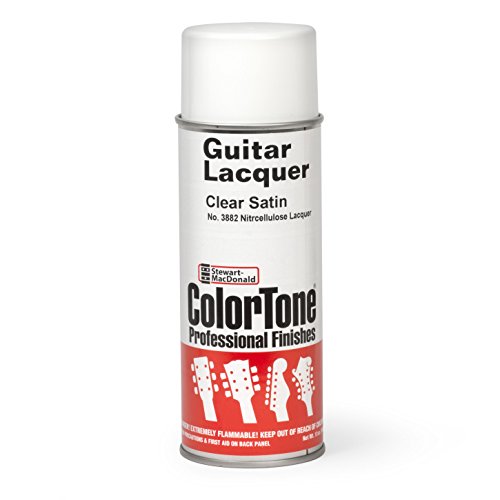
The clear satin nitro finish provides a low-gloss look that still preserves the natural aging behavior of nitrocellulose. This option is ideal for players who want a subtle, vintage-inspired shine that avoids high reflectivity. It dries quickly and builds smoothly, with resistance to moisture and alcohol. A potential drawback is that satin finishes can require more careful buffing to maintain even sheen across the entire instrument, especially on larger surfaces.
Who it’s best for: Players seeking a restrained, vintage satin look; refinishing projects where a low-gloss aesthetic is preferred; technicians prioritizing buildable coats in a spray format.
WANJAO Guitar Shielding Paint

While not a guitar finish, this conductive shielding paint is included because shielding can influence tone and noise when using nitro finishes in opaque cavities. It creates a conductive barrier to reduce hum and RF interference in electronics, making it a practical complement for electric guitar builds or refinishing projects with active electronics. It is water-based, easy to wash, and can be diluted if needed. A limitation is that it should be applied precisely to shielded areas to avoid coverage outside intended spaces.
Who it’s best for: Electric guitar builders who want improved noise performance; technicians shielding pickup cavities and control routes; players seeking a clean signal with reduced interference.
Solo Guitars Oxford Aerosol Nitrocellulose Lacquer – Clear

This Oxford line offers a clear nitrocellulose lacquer designed for traditional finishes with a vintage feel. It’s described as a classic formulation that instrument makers value for its aging characteristics. The acrylic-free formula is geared toward those who want a straightforward clear coat without introducing color. A noted limitation is sensitivity to cold or humidity, which can impact application consistency for some climates. Always perform test sprays to gauge behavior under local conditions.
Who it’s best for: Builders seeking a traditional clear nitro finish; players aiming for a classic look without color variation; technicians emphasizing straightforward coverage in aerosol form.
Buying Guide: Key Considerations For Nitro Guitar Finishes
What finish should I choose: gloss, satin, or aged clear?
Gloss nitro provides a bright, reflective surface and strong color depth; satin offers a more vintage, subdued sheen; aged clear replicates natural aging for relic-style looks. Choose based on the instrument’s era mimicry, the desired sheen, and how much it will be buffed and polished over time.
How does spray format affect results?
Aerosol cans are convenient and require minimal equipment, but they can be pressure-variable. Practice on scrap pieces to achieve even coats and avoid runs. If you’re building multiple coats, consider tests to calibrate spray distance and overlap for uniform color and gloss level.
How important is aging behavior?
Nitrocellulose finishes age and check differently than modern poly finishes. If you want authentic vintage aging, select formulations marketed for clear aging or vintage color palettes and follow recommended drying times. UV exposure and heat accelerate ambering in certain finishes.
How should I prep and apply for best results?
Prepare the guitar surface properly: clean, sand to an even base, and remove dust. Apply light, even coats, allow curing between coats, and finish with a controlled buffing plan if needed. Temperature and humidity influence dry times and the final appearance, so climate-controlled environments yield more consistent outcomes.
What about shielding and electronics?
When finishing near electronics, consider protective masking and optional shielding paints for cavities to minimize hum and RF interference. Pair nitro finishes with compatible hardware and testing to ensure the finish does not impact electronics performance.
Safety and environmental notes
Nitrocellulose products require good ventilation and appropriate respirators. Follow label guidance for disposal, storage, and environmental considerations. Avoid open flames while spraying and allow full curing before heavy handling or assembly.
Which product to start with?
For classic black gloss projects, start with ColorTone Nitrocellulose Guitar Lacquer Spray – Black Gloss. For vintage white or aged looks, ColorTone Olympic White and ColorTone 50s Classic Colors Aerosol provide authentic options. If you want a subtle modern-to-vintage transition, ColorTone Clear Satin offers a low-gloss alternative, while Solo Guitars Oxford provides a clear finish with traditional makeup. WANJAO shielding paint is a practical add-on for electronics-conscious builds.
FAQ
- Q: Do nitro finishes require special ventilation?
A: Yes. Work in a well-ventilated area and use appropriate respiratory protection as directed on the product label. - Q: Can I overcoat multiple times in a day?
A: Many nitro products dry quickly enough for multiple coats, but follow manufacturer guidance and test on a sample panel. - Q: Will nitro yellow over time?
A: Some nitro finishes yellow with UV exposure; aging can contribute to ambering, depending on the formula and environment. - Q: Is shielding paint necessary for all guitar builds?
A: Shielding is recommended where electronics are sensitive to hum or RF interference, especially in crowded cavities or high-noise environments. - Q: Can I mix or dilute nitro products?
A: Dilution is sometimes possible with water-based or compatible reducers per product instructions; test compatibility first. - Q: How should I store leftover nitro lacquer?
A: Store upright, away from heat and flames, in a well-ventilated area as per label directions.