Choosing the right miniature pulleys can improve the precision and reliability of model cars, RC devices, robotics projects, and small-scale mechanisms. This guide highlights five carefully selected pulleys and pulley sets that combine durability, size variety, and ease of installation. Each entry includes key features to help you compare compatibility with your build and shaft requirements.
| Product | Brand | Key Feature |
|---|---|---|
| EUDAX 2mm Hole Plastic Belt Pulley Kit | EUDAX | Multiple pulley sizes; 2mm shaft compatibility |
| 46PCS Belt Pulley Set | URIMPAVIDO | Large assortment; rubber bands included |
| uxcell V623 V-Groove Pulley Bearings | uxcell | High-quality steel bearings; low noise |
| TEHAUX 9.3mm Pulley Kit | TEHAUX | 9.3mm diameter; easy installation |
| 20Pcs 2MM Hole Pulley Set | URIMPAVIDO | Compact 2mm shaft pulleys; rubber belts included |
EUDAX 2mm Hole Plastic Belt Pulley Kit
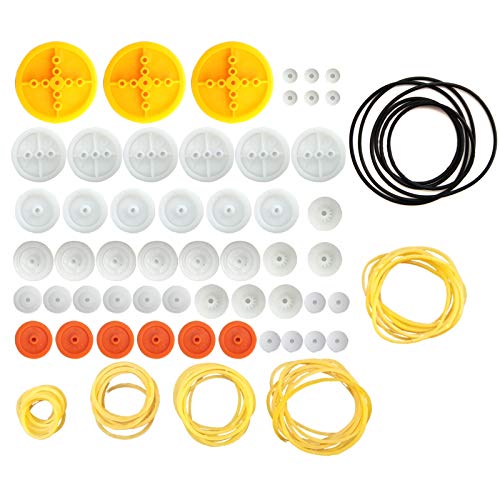
The EUDAX kit offers a range of pulley diameters with 2mm shaft compatibility, making it suitable for compact model projects and small robotics. The set includes nine pulley sizes and seven belt options, allowing for flexible gear ratios across various assemblies. Plastic construction keeps weight down while providing adequate strength for hobby-grade applications. Assembly typically requires a modest amount of alignment precision, but the included options help you tailor drive systems for airplanes, cars, or micro robots.
Key considerations include the balance between pulley diameter and belt length, plus the compatibility of CDD belt sizes with your specific motor shaft. Users should inspect tolerances to ensure smooth rotation and minimal wobble. For educational kits and DIY experiments, this kit delivers a broad size range in a single purchase, simplifying inventory for small projects or classrooms.
46PCS Belt Pulley Set With Rubber Bands

This URIMPAVIDO bundle provides a large assortment of pulleys and matching rubber bands, ideal for multi-robot projects or comprehensive workshops. The set includes 24 pulleys and 22 rubber bands of approximately 3.8 cm in diameter, with random color options. The diverse sizes support hobby builds requiring a variety of drive ratios, from small gear trains to mid-size transmissions. Plastic pulleys keep weight low, while rubber bands add grip and vibration dampening for smoother operation in toy robots and RC toys.
Consider the compatibility of the included belts with your motor shafts and whether the rubber bands’ elasticity suits the drive requirements. The collection is particularly effective for teaching concepts of speed, torque, and mechanical advantage in a classroom or maker space environment.
uxcell V623 V-Groove Pulley Bearings

The uxcell V623 set pairs miniature V-groove pulleys with carbon steel bearings designed for durability and long service life. Each bearing is shielded on both sides, helping retain lubricant and reduce contaminants. With an I.D. of 3 mm and O.D. of 10 mm, these compact bearings fit tight spaces in model trains, RC aircraft, or small conveyor-like mechanisms. The combination of steel construction and shielded design yields low noise operation and reliable rotation under a range of temperatures and loads.
When selecting these bearings, consider the load expectations and the alignment tolerance of your project. Proper lubrication and clean mounting surfaces improve lifespan and reduce stalling or binding in tight assemblies. These are well-suited for precision micro-motion systems in hobbyist robotics.
20PCS 2MM Hole Pulley Set With Rubber Belts

This compact set by URIMPAVIDO includes 20 pulleys designed for 2 mm shafts, paired with rubber transmission belts. The combination supports small-scale drive systems in RC planes, micro cars, and educational kits. The pulleys vary in diameter from compact to slightly larger to offer multiple gear ratios without requiring additional hardware. The rubber belts provide adequate friction and resilience for transient accelerations typical in model projects, while the plastic pulleys minimize weight in airborne or hand-held builds.
Key considerations include ensuring the shaft diameter matches your motor or servo stubs and verifying belt lengths suit your frame geometry. These pulleys are particularly useful for introductory pulleys in hands-on projects and small-scale mechanical demonstrations.
70PCS Belt Pulley Set With Rubber Bands

This URIMPAVIDO 70-piece kit emphasizes variety and scale, offering 44 pulleys and 26 rubber bands across two diameter options (20 mm and 38 mm). The assortment enables more complex drive systems, including stepped pulley arrangements and multi-gear transmissions for RC models or robotic assemblies. The mix of plastic pulleys with rubber bands helps damp vibrations and maintain grip under varying loads. The broad size range makes it a solid choice for hobbyists who frequently reconfigure projects or build prototypes.
When evaluating such a set, assess whether the included belts align with your motor outputs and whether the frame can accommodate larger pulleys without interfering with other components. This kit supports experimentation with speed control and torque distribution in small-scale mechanisms.
TEHAUX 100Pcs 9.3mm Pulley Gear Kit
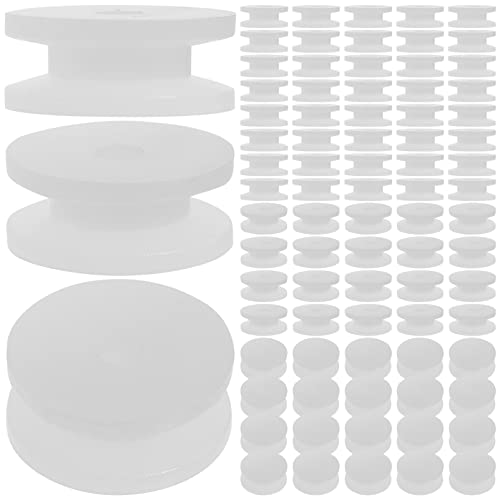
TEHAUX offers a substantial 100-piece assortment of 9.3 mm diameter plastic pulleys designed for DIY model projects, labs, and RC toys. The 2 mm shaft compatibility supports compact mechanisms common in educational kits and micro RC setups. The plastic pulleys are designed for durability in low-to-moderate load applications, while the kit’s breadth enables quick prototyping of different gear ratios and drive configurations.
Consider the ease of installation, tolerance to misalignment, and compatibility with your belt choices. Since the kit emphasizes educational and experimentation contexts, it’s a practical option for classrooms, hobbyists, and makers who regularly explore new configurations and drive systems.
Buying Guide: How To Choose Miniature Pulleys For Models
- Shaft compatibility: Confirm shaft diameter (commonly 2 mm or 3 mm) and whether the pulley’s bore matches your motor or axle. Adapters or sleeves may be necessary for non-standard sizes.
- Material and weight: Plastic pulleys keep weight down, which is beneficial for flight or portable models. Steel or coated bearings offer durability and lower wear in heavier setups.
- Belt type and size: Ensure the belts included or compatible with the pulleys match your transmission needs. Check belt length, cross-section, and stretch properties to prevent slippage.
- Size variety: Sets with multiple pulley diameters enable a range of gear ratios, allowing precise tuning of speed and torque for different model configurations.
- Bearing quality and noise: Bearings that are shielded or sealed reduce contamination and maintenance. Low-noise operation is desirable in quiet environments or around educational settings.
- Install ease: Look for pulleys with straightforward mounting, alignment features, and clear tolerances to minimize setup time during builds or demos.
- Application fit: Match pulley type (V-groove, flat, or toothed) to your drive belt system and load profile. For science experiments, consider compatibility with educational kits and measurement tools.
- Durability vs. cost: For frequent prototyping, a larger assortment may save time and money long-term. For a single project, a focused selection can reduce unnecessary purchases.
- Maintenance needs: Shielded bearings and plastic materials simplify upkeep. Check for corrosion resistance if exposed to moisture or certain reagents in lab contexts.
- Compatibility with accessories: Verify that belts, mounts, and drivers available in your kit work with the pulleys chosen to avoid compatibility issues.
In sum, selecting miniature pulleys involves balancing shaft size, diameter options, belt compatibility, and the intended operating environment. The highlighted products represent a spectrum from compact, educationally friendly kits to larger, diverse sets suitable for RC vehicles and hobby robotics. By evaluating these factors, you can optimize for performance, reliability, and ease of use across model-building projects.