The following selection focuses on screen printing meshes that deliver high tension, precise mesh openings, and durable substrates for cotton, polyester, and blended fabrics. Each option is suited for different design needs—from fine lines to bold fills—while maintaining stability under ink and tension. Below you’ll find a quick product summary followed by in-depth sections and a practical buying guide to help you compare options side by side.
| Product | Mesh Count | Material | Use Case |
|---|---|---|---|
| MS WGO Silk Screen Mesh (43T/110 Mesh) | 110 | Polyester | General purpose, durable for high-tension frames |
| MS WGO Silk Screen Mesh (64T/160 Mesh) | 160 | Polyester | Finer detail and smoother squeegee passes |
| Speedball Screen Printing Frame (110 Monofilament) | 110 | Polyester | Accurate designs and easy frame tightening |
| ETPUVIUMBE Silk Screen Mesh (White 40T/100M) | 40/100 | Polyester | Wide width, versatile for various sizes |
| VEVOR 230 Mesh Aluminum Frame Kit | 230 | Nylon/Polyester mesh | High-tension, professional kit for DIY presses |
Note: Product availability and specifications can vary. The table above highlights representative mesh counts and primary material types, helping you compare tension, detail capability, and frame compatibility at a glance.
MS WGO Silk Screen Mesh 110 Mesh 3 Yards

MS WGO offers polyester monofilament screen printing mesh yarn produced with precision manufacturing. The 110 mesh (43T) variant emphasizes high tension stability and even mesh formation, enabling accurate registrations and reliable ink transfer. It is suitable for thicker inks and standard graphic designs, with a balance of durability and print fidelity. This mesh type is commonly used for textiles and apparel, supporting consistent performance across repetitive prints.
MS WGO Silk Screen Mesh 160 Mesh 3 Yards

The 160 mesh (64T) variant provides finer openings for detailed artwork while maintaining high tension. This mesh improves edge sharpness, reduces ink bleed, and is ideal for prints with intricate line work, halftones, and smaller type. It’s compatible with standard 10×14 inch frames and similar DIY setups, delivering reliable results for small to medium runs.
Speedball Screen Printing Frame Kit (110 Monofilament Mesh)

Speedball’s 10 x 14 inch frame is paired with 110 monofilament polyester mesh, offering professional-grade print stability and precise registrations. This kit features a cord-locked mesh system for easy tightening or replacement, supporting consistent tension during long runs. The solid wood frame construction helps resist warping, which is important for durable inks and repeated use in shop environments.
ETPUVIUMBE Silk Screen Mesh 100M / 40T White

This wide-width silk screen mesh is sized at 50 inches by 1 yard with a 40T count, plus options up to 100T. The 100% polyester monofilament construction provides good dimensional stability, sun resistance, and abrasion resistance. The broad width makes it suitable for larger frames or multi-color layouts, enabling efficient production for bulk runs while maintaining ink transfer fidelity.
EQUTY BAYMERS 110 Mesh Silk Screen Fabric

The 110 mesh (approximately 43T) variant from EQUTY BAYMERS emphasizes dimensional stability under tension and resistance to deformation. It is designed to withstand high-tension environments while maintaining accurate mesh for ink deposition. The material is non-toxic and suitable for a range of screen printing frames, making it a practical choice for hobbyists and small shops alike.
GoldUpUSAInc Aluminum Screen Printing Frames (10 x 14 Inch, 200 Yellow Mesh)
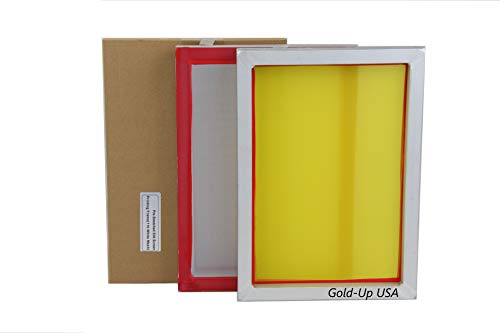
These pre-stretched aluminum frames combine a 10 x 14 inch frame size with a 200 count/inch yellow monofilament mesh. The sandblasted mesh side and solvent-resistant glue enhance durability and ink adhesion. The frame’s rigidity helps sustain high-tension conditions, facilitating precise prints with reliable ink laydown for textiles and graphic projects.
MS WGO Silk Screen Mesh 120 Mesh 3 Yards
The 120 mesh (48T) option from MS WGO offers a middle ground between finer detail and print durability. It is suitable for moderate-detail designs or runs requiring reliable ink deposition with manageable tension. This mesh type is well-suited for apparel and textile projects where consistent registration and ink transfer are essential.
Buying Guide
Key purchase considerations help you choose the right mesh for your screen printing needs. Each factor includes practical implications for setup, production speed, and print quality.
- Mesh count and thread thickness: Higher counts (160–230) produce finer detail but can slow ink flow and require more controlled squeegee pressure. Lower counts (110–120) transfer thicker inks more easily and are forgiving for beginners.
- Material and construction: Polyester monofilament meshes are durable and stable under tension. Nylon and mixed materials can offer different stretch and ink compatibility. Choose a frame and mesh that suit the ink system (plastisol, water-based, discharge).
- Frame compatibility and tension: Ensure the mesh is compatible with your frame size and that you can achieve uniform tension to prevent print misalignment.
- Ink compatibility: Some meshes perform better with specific ink types. Check whether the mesh meets the viscosity and drying requirements of your ink system.
- Print size and production volume: For large-format or high-volume runs, wide rolls or larger frames with high-tension mesh help maintain consistency and reduce reprints.
- Durability and reuse: Pre-stretched aluminum frames with solvent-resistant bindings tend to last longer under daily use and repeated exposure to solvents or cleaners.
- Cost and availability: Consider budget constraints and lead times, especially when ordering in bulk or sourcing specialty mesh for unique designs.
In practice, match your project goals to mesh count, frame quality, and ink type. For crisp lines and halftones, a higher mesh count (160–230) with a rigid frame is often ideal. For solid fills and faster production, a 110–120 mesh offers dependable coverage with simpler maintenance. Wide-width meshes are useful for large formats and multi-color layouts, while pre-stretched aluminum frames reduce setup variability.