Answering the common buyer question: which matte varnish is best for acrylic painting? This guide compares five top Amazon options to help artists protect finishes without glare. Ideal for decorative canvases, miniature figures, and mixed-media artwork, these matte varnishes vary in sheen control, drying time, and application method. For hobbyists, look for easy brush-on formulas; for professionals, consider archival and UV-resistant options. The table below highlights each product at a glance.
| Product | Brand | Best For | Finish Type | Drying/Notes |
|---|---|---|---|---|
| Liquitex BASICS Matte Varnish, 250ml | Liquitex | Beginners to intermediate painters seeking a clear matte coat | Matte | Dries clear, non-yellowing |
| MCTRHG Clear Matte Varnish for Acrylic Painting | MCTRHG | Protecting finished paintings with minimal haze | Matte | Protects against dust, UV, and yellowing |
| Vallejo Permanent Acrylic Varnish, Matte | Vallejo | Miniatures and mixed-media on various surfaces | Matte | Weather and scratch resistant, flexible |
| GRANOTONE Matte Finish Varnish for Acrylic Painting | GRANOTONE | Pro artists and hobbyists needing a durable matte | Matte | Non-yellowing, anti-crazing |
| Liquitex Professional Matte Varnish, 237ml | Liquitex | Professional projects requiring archival matte protection | Matte | Archival, non-yellowing, non-tacky when dry |
Liquitex BASICS Matte Varnish, 250ml

The Liquitex BASICS matte varnish is a permanent varnish designed to protect finished acrylic paintings. It can be mixed with gloss varnish to adjust final sheen and dries to a clear, non-yellowing finish. Best for artists who want a straightforward, predictable matte coating that won’t alter the artwork’s color significantly.
Who it’s best for: Beginners and students seeking reliable protection with easy application. This varnish offers a simple path to a uniform matte look without complex layering. Limitation: Mixing with gloss requires careful testing to achieve the desired shine level.
MCTRHG Clear Matte Varnish
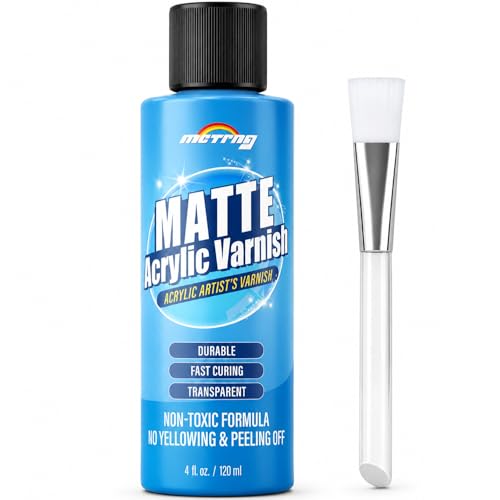
This matte varnish from MCTRHG is designed to permanently protect finished artwork with a soft matte finish. It dries clear and smooth, preserving texture and fine details while avoiding cloudy haze or visible brush marks. It also claims to resist yellowing and UV exposure, helping colors stay true over time.
Who it’s best for: Artists wanting a non-glossy seal that preserves texture. Limitation: Some users report variance in finish consistency with app methods; test on a small area first.
Vallejo Permanent Acrylic Varnish, Matte
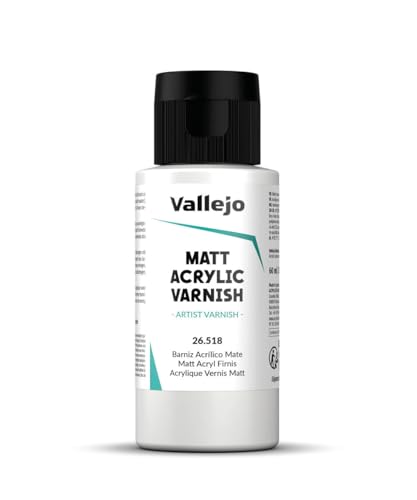
Vallejo’s matte varnish is a water-based product designed to protect canvases, primed wood, metal, resin, and some plastics. It dries quickly, remains highly transparent, and offers flexibility and UV resistance. It is suitable for both interior and exterior use on various varnishable surfaces and can be applied by brush or airbrush.
Who it’s best for: Hobbyists and professionals who work on models, miniatures, or mixed-media projects and need durable, non-yellowing protection. Limitation: A dedicated matte finish may require multiple thin coats for maximum protection on textured surfaces.
GRANOTONE Matte Finish Varnish for Acrylic Painting

GRANOTONE’s matte finish varnish is designed for both professional artists and hobbyists, offering a durable, crystal-clear matte look. It is promoted for reducing crazing and resisting yellowing, making it suitable for long-lasting acrylic projects and crafts that require a refined matte seal.
Who it’s best for: Artists seeking strong protection and a true matte finish without glare. Limitation: The product line emphasizes compatibility with a range of media; ensure your specific acrylic medium is compatible before full-scale use.
Liquitex Professional Matte Varnish, 237ml

The Liquitex Professional Matte Varnish is an archival, permanent varnish that dries to a non-tacky, hard, flexible surface. It is non-yellowing and water-resistant when dry, and specifically marketed as a longer-lasting matte option for professional artwork, providing a stable, protective layer without compromising image sharpness.
Who it’s best for: Professional artists needing archival protection with minimal impact on color. Limitation: Higher price point compared to student-grade varnishes; use when archival quality is a priority.
Buying Guide: Matte Varnish For Acrylics
- Intended use: Choose based on whether you need indoor display, outdoor exposure, or hobbyist wear-and-tear protection. For UV resistance, prioritize products that explicitly mention UV stability.
- Finish control: If you want options, select varnishes that offer interchangeable finishes or can be mixed with gloss for custom sheen.
- Application method: Brush-on formulas are common; spray versions can provide even coats but may require ventilation and masking.
- Drying and handling: Look for non-tacky, non-yellowing finishes. Archival claims indicate longer-lasting protection and color fidelity.
- Surface compatibility: Most matte varnishes suit canvas and wood; some mention metals, plastics, or models—match to your artwork type.
- Safety and cleanup: Water-based varnishes generally clean with soap and water and tend to have lower odor than solvent-based options.
FAQ
- What is the main benefit of a matte varnish for acrylics? It provides a protective coating that reduces glare and preserves color while allowing the painted surface to appear true to the original without shine.
- Can I apply matte varnish over a still-wet painting? Most matte varnishes require a fully dry paint layer to prevent bleeding or streaking; follow product-specific instructions.
- Is matte varnish UV-resistant? Some products advertise UV resistance, which helps prevent fading; verify in the product description before purchase.
- Should I brush or spray matte varnish? Brush-on varnishes are common and easy for canvases; sprays can yield smooth coats but require ventilation and masking.
- Will matte varnish yellow over time? High-quality, non-yellowing formulations minimize discoloration; archival options offer the strongest long-term stability.
- How many coats are recommended? Generally, 1–2 thin coats are sufficient; heavy application can cause cloudiness or brush marks, so apply slowly and evenly.
For best results, test a small area or a sample swatch with your chosen varnish and painting medium before applying to the entire work. The right matte varnish will depend on your project type, finish preference, and long-term display considerations.