Looking for the best marker set for glass painting? This guide spotlights five top markers that work well on glass, wine glass surfaces, and other non-porous materials. Each option suits different buyers—from hobbyists crafting decorative pieces to teachers or crafters seeking durable, fade-resistant ink. The selections emphasize pre-activated markers, dual-tip versatility, and multi-surface performance to help you choose with confidence. Below is a quick comparison and why each product stands out for glass art projects.
| Product | Best For | Why It Stands Out |
|---|---|---|
| ARTISTRO 24 Glass Acrylic Paint Markers | Glass, Windows, and Wine Glasses | Pre-activated, dual tips, fade-resistant acrylic ink |
| ARTISTRO 36 Acrylic Paint Markers | Multi-surface DIY | Two tips, opaque, quick-drying ink |
| ARTISTRO 36 Precision Dual-Tip Markers | Detail + Bold Color | 1 mm fine tip + 1–5 mm dot tip, ready to use |
| Artecho Acrylic Paint Markers, 72 Colors | Comprehensive color range | Water-based, quick-drying, versatile on many surfaces |
| Betem Dual Tip Acrylic Paint Pens, 24 Colors | General craft and glass projects | 1–5 mm brush tip + 1 mm fine tip, water-based |
ARTISTRO 24 Glass Acrylic Paint Markers

The ARTISTRO 24 Glass markers blend a flexible brush tip with a precise fine tip. This dual-tip setup supports both broad strokes and fine lines on glass, mirrors, and even ceramic and plastic surfaces. The markers arrive ready-to-use with pre-activated nibs, allowing immediate smooth, even application. The acrylic ink delivers rich, fade-resistant color that adheres well to non-porous surfaces.
Who this is for: crafters painting wine glasses, DIY decorators, and classroom projects needing clean, bold lettering on glass. Caution: colors may require sealing on certain glossy surfaces to reduce wear over time.
Why selected: Best for glass projects that demand immediate usability, reliable coverage, and dual-tip flexibility in a compact kit.
ARTISTRO 36 Acrylic Paint Markers
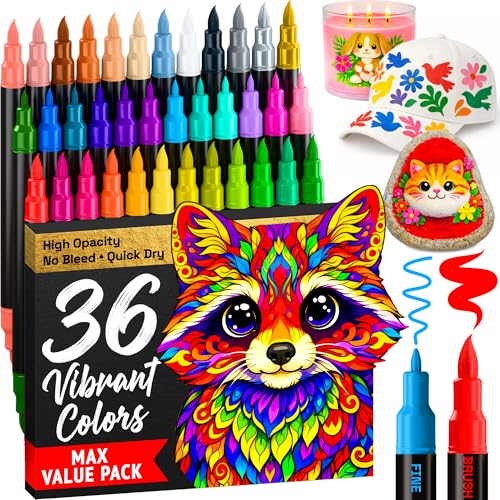
These markers pair a 1–5 mm brush tip with a 1 mm fine tip, enabling both calligraphy-style lines and small, precise details. The acrylic ink dries opaque, reducing the need for multiple coats. They’re designed for multiple surfaces, including glass, wood, rock, and fabric, making them a versatile choice for mixed-media glass projects.
What this is for: ideal when a project transitions between glass and other materials. Better for those who want a broad color range and easy layering. Caution: some colors may require a secondary layer on very smooth glass for full opacity.
ARTISTRO 36 Precision Dual-Tip Markers

This set features a 1 mm fine tip for precise outlines and a 1–5 mm dot tip for bold areas. Pre-activated nibs mean no shaking or pressing before use. The fast-drying acrylic ink resists smudging, enabling clean glass art and lettering with minimal touch-ups.
Who should buy: crafters who value sharp edges and big color blocks on glass and other surfaces. Choose this if you need both detail work and vibrant fills in a single toolset. Limitation: the dot tip may not be ideal for ultra-fine background textures on very dark glass without layering.
Artecho Acrylic Paint Markers, 72 Colors

Artecho offers a large color range with dual tips: a 1 mm fine tip and a 0.5–5 mm brush tip. The water-based ink dries quickly and is water-resistant after drying, providing durable coverage on glass, ceramics, and more. This set is well-suited for artists who want extensive color options and flexible application styles.
Best for: color-rich glass art, mixed-media projects, and educational settings needing a broad spectrum. Caution: with 72 colors, organization helps reduce marker cap confusion and ensures color consistency on glass projects.
Betem Dual Tip Acrylic Paint Pens
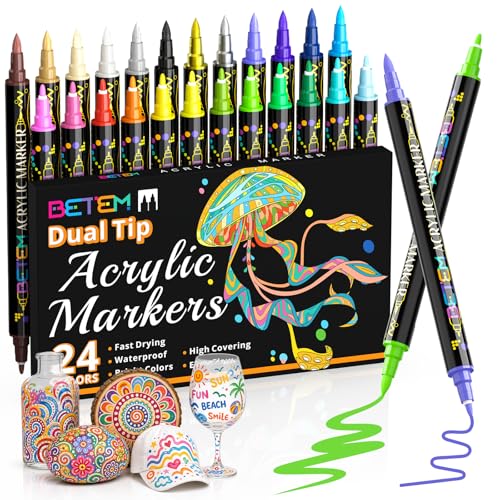
Betem markers combine a 1–5 mm brush tip with a 1 mm fine tip. The water-based, opaque ink dries quickly and resists smudging, making these pens suitable for glass, ceramic, and paper projects. The range supports outlining and broad painting on glass surfaces while staying color-true over time.
Best for: beginners and hobbyists who want an affordable yet capable set for glass painting and general crafts. Caution: color density may vary between markers; layering can help achieve fuller opacity on slick glass surfaces.
Buying Guide: Key Considerations For Glass Painting Markers
- Surface compatibility: Look for markers labeled as multi-surface or specifically suitable for glass, ceramic, and mirrors.
- Tip configuration: Dual tips (fine + brush/dot) enable both precise lines and broad fills, aiding glass design versatility.
- Ink characteristics: Prefer water-based acrylic ink for quick drying, fade resistance, and easy cleanup from glass surfaces.
- Pre-activation: Pre-primed markers start smoothly without shaking, reducing frustration for beginners.
- Opacity and layering: Some markers require multiple coats; opacity varies by color and surface gloss.
- Durability: If your glass art is handled or washed, seek ink that dries to a water-resistant or durable finish after cure time.
- Color range: A broad color selection helps with shading, highlighting, and intricate patterns on glass.
- Organization: Large sets benefit from caps and color indexing to prevent color bleed and misplacement.
FAQ
- Can these markers be used on all glass types?
Most markers are designed for glass, windows, and mirrors, but performance may vary with very smooth or coated glass. Test a small area first.
- Do the inks dry waterproof on glass?
Many acrylic inks dry water-resistant but not permanently waterproof until fully cured. Follow product guidance for curing times.
- Are the markers odorless?
Most water-based acrylic markers have mild to low odor, but it varies by brand. Use in a well-ventilated area if sensitive.
- Is pre-activation important for beginners?
Yes. Pre-activated markers start smoothly without shaking, which helps especially for first-time users.
- Can these markers wash off glass easily?
Xylene-free and water-based inks may be washable with soap and water before curing. After curing, durability improves.
- Which marker is best for fine details on glass?
Markers with a 1 mm fine tip are typically best for precise lines and small letters on glass surfaces.