Yes, there are dedicated liquid paints that work well on plastic. This guide highlights five reliable options, focusing on ease of use, finish, and suitability for plastic surfaces. Each product is explained with who it’s best for, plus a practical note to help you decide. The included summary table helps compare core capabilities at a glance.
| Product | Best For | Key Benefit |
|---|---|---|
| FolkArt Acrylic Craft Paint for Plastic | Crafters; indoor/outdoor projects | Vivid color on plastic; 2 oz bottles |
| Vallejo Liquid Mask Acrylic Paint | Detail masking; intricate plastic pieces | Protective masking layer for precise painting |
| SENVEN Liquid Gold Leaf Paint | Metallic plastic surfaces | Wide compatibility; fast-drying metallic finish |
| FusionFirm Liquid Leaf Paint | Chrome-like finishes on plastic | High-gloss, durable metallic look |
| Clear Acrylic Paint Sealer for Plastic | Protection and gloss | Crystal-clear, UV-resistant sealant |
Buyer tip: choose water-based options for ease of cleanup and lower odor, and consider masking or sealing if you need clean edges on plastic surfaces. The following sections explain why each selected product fits common plastic painting scenarios and who should choose them.
FolkArt Acrylic Craft Paint for Plastic

Best for: Crafters and hobbyists who work on plastic projects both indoors and outdoors. FolkArt’s Shaved Ice color is designed for plastic surfaces, offering consistent coverage in a compact 2 oz bottle. The product description emphasizes suitability for arts and crafts projects involving plastic materials.
Why selected: It provides a straightforward, color-rich option that adheres to plastic with minimal prep, well-suited for DIY decorations, kid-friendly crafts, and display pieces. The 2 oz size balances cost with the need for multiple colors. Caution: avoid heavy applications on very smooth or coated plastics where adhesion could be uneven without a primer.
Vallejo Liquid Mask Acrylic Paint

Best for: Detail-oriented painters and model-makers who need clean paint lines on plastic. The Vallejo Liquid Mask functions as a protective film over areas you don’t want painted, enabling precise color separation on plastic models or layered craft pieces.
Why selected: Its masking capability helps protect complex plastic geometries, making it ideal for multi-step projects. It can be rubbed away after drying to reveal unpainted areas, which is useful for sharp edges. Limitation: masking films can be brittle on very flexible plastics; test a small area first.
SENVEN Liquid Gold Leaf Paint

Best for: Projects requiring a luxurious metallic accent on plastic surfaces, from home decor to crafts. This gold leaf paint is designed to work on multiple substrates, including plastic, delivering a rich metallic finish.
Why selected: The wide application and fast-drying formula provide a vibrant, reflective look without a heavy primer. Caution: metallic finishes can be prone to fingerprints or scuffing before fully cured; handle gently during the first drying phase.
FusionFirm Liquid Leaf Paint

Best for: Artists seeking a chrome-like, high-gloss finish on plastic surfaces for models, crafts, or decorative items. This alcohol-based airbrush paint aims to provide a durable metallic film on plastic, metal, wood, or ceramic.
Why selected: Its formula emphasizes a seamless liquid metal effect with minimal thinning and ready-to-use convenience. Limitation: alcohol-based products may require good ventilation and can dry quickly, so practice steady spraying to avoid runs.
Clear Acrylic Paint Sealer for Plastic
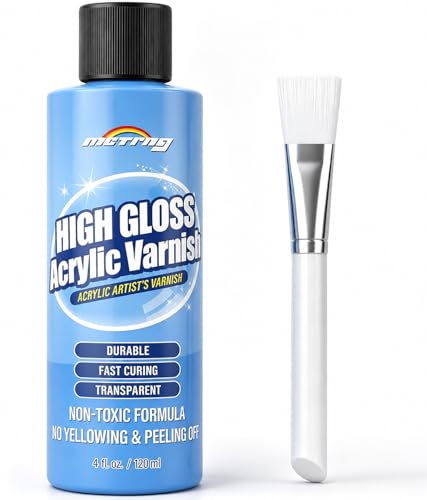
Best for: Finishing coats to protect painted plastic projects, including crafts, models, figurines, or decorative items. The sealer adds a high-gloss, glass-like finish while sealing color and reducing yellowing over time.
Why selected: It provides a clear, durable gloss that enhances color depth and protects against dust, UV exposure, and weathering. Caution: apply in thin, even coats to avoid brush marks or pooling on flat surfaces.
Buying Guide: Key Considerations For Plastic Painting
- Surface compatibility: Confirm the product is designed for plastic, and note if it works on specific plastics (PVC, ABS, polystyrene, etc.).
- Finish type: Decide between metallic, transparent, opaque, or masking-friendly paints based on your project needs.
- Drying and curing: Consider dry time, ventilation requirements, and whether a topcoat sealer is recommended for durability.
- Application method: Some paints suit brushes, others work best with airbrushes or spray techniques; plan according to your equipment.
- Safety and cleanup: Water-based options are easier to clean and have lower fumes, while solvent-based formulas may require ventilation and solvents for cleanup.
Frequently Asked Questions
- Can I paint plastic without priming?
Many plastics accept paint directly, but primer improves adhesion on smooth or glossy surfaces. Test a small area first. - Are gold or metallic paints suitable for plastic models?
Yes, metallic paints on plastic can provide chrome-like or gold finishes, but ensure compatibility with the base plastic and topcoat. - Is masking liquid necessary for plastic painting?
Masking liquids are useful for sharp edges and complex patterns on plastic. They simplify clean lines during multi-color designs. - How should I seal painted plastic pieces?
A clear acrylic sealer protects colors and improves durability. Choose gloss or matte based on desired final appearance. - Do water-based paints work well on plastic?
Water-based paints are common for plastic crafts and are easier to clean, with fewer fumes, though some plastics may require sealing for durability. - What is the best option for a chrome-like finish on plastic?
Alcohol-based metallic paints, like FusionFirm, can provide a glossy metal look when used correctly with proper spray technique.