Answering the need for precise, fabric-friendly laser engraving, this guide highlights five laser engravers that perform well on textiles, leather, felt, and similar materials. It focuses on options suited for hobbyists, crafters, and small businesses seeking reliable results without a steep learning curve. The selections emphasize fabric-compatible settings, safety features, and practical workflows. For each product, you’ll find who it’s best for, why it stands out, and a clear caveat to consider before you buy.
Summary table of chosen products
| Product | Best For | Key Benefit | Limitations |
|---|---|---|---|
| ACMER S1 (6000mW) | Detail-oriented crafters | High power for crisp engravings on fabric and leather | Higher power may require careful heat management |
| xTool M2 (10W) Color Craft | Users wanting color printing on fabric | CMYK printing plus laser engraving | Color module sold separately |
| LaserPecker LP1 Plus | Beginners and portable makers | Pocket-sized with adjustable stand for versatile angles | Requires power bank for outdoor use |
| ACMER S1 (2500mW) | Budget-conscious fabric projects | Solid engraving with economical power | Lower power than the 6W model |
| Artilume T1 | Small businesses and travelers | Foldable, app-controlled portability | Connectivity requires WIFI; range limits may apply |
ACMER S1 Laser Engraver 6000mW

The ACMER S1 6000mW laser engraver combines high power with precise control, making it suitable for fabric, leather, and thin materials. It includes AcmerTool engraving software and supports other popular platforms, helping you adapt to existing workflows. This model emphasizes speed and repeatable accuracy, which is valuable when you’re crafting repeating fabric patterns or intricate designs on textiles.
Best for: Crafters and small studios that need detailed fabric engravings and occasional cutting. The higher 6W diode power can deliver strong, vivid marks on various fabrics with careful power and speed settings.
Why selected: It offers a powerful, versatile setup with software compatibility out of the box, enabling efficient production on fabric projects and small batches.
Caution: High power requires good ventilation and material-testing to avoid scorching delicate fabrics.
xTool M2 10W Laser Engraver

The xTool M2 10W is a versatile laser engraver with built-in dual cameras and options for a color-print workflow. While the CMYK inkjet module is separate, this machine is designed for precise placement and easier material handling, which is helpful when engraving fabrics with pattern alignment or multi-part projects. The dual-camera setup reduces waste by previewing the cut path before you engrave.
Best for: Crafters who want accurate placement on fabric and the option to expand into color printing via add-ons. It’s well-suited for projects that blend laser engraving with decorative fabric designs.
Why selected: The combination of real-time workspace preview and potential for color compatibility makes it a strong all-around choice for fabric-focused makers.
Caution: The color printing module is sold separately, so total capability depends on future add-ons and investment.
LaserPecker LP1 Plus Mini Laser Engraver

The LP1 Plus is a compact, pocket-sized option that’s ideal for beginners who want to experiment with fabric engraving on the go. It includes an adjustable stand for stable angles and supports simple, small-run fabric projects. Its portability makes it convenient for storefront demos or craft fairs where fabric samples are displayed.
Best for: Beginners and mobile crafters who want a low-barrier entry into fabric engraving. It’s a solid first-step device for learning engraving basics and creating small textile items.
Why selected: Its portability, quick setup, and straightforward workflow help new users achieve quick results on fabric without heavy upfront investment.
Caution: The LP1 Plus may be less suited for high-volume production or large fabric panels compared with larger desktop machines.
xTool M2 Color Craft Laser Engraver
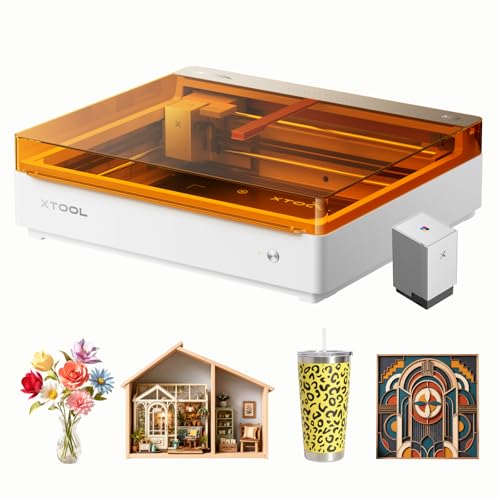
The xTool M2 Color Craft combines CMYK inkjet printing with laser engraving in one machine. It enables printing and engraving on a wide range of fabrics, including felt and cotton blends, opening the door to full-color textile designs. The dual-camera system supports real-time previews to align designs precisely on fabric stocks.
Best for: Fabric crafters who want to add color printing to their laser-engraved textiles and run mixed-media projects in one setup. This model suits print-to-cut workflows on fabric materials where color is essential.
Why selected: It provides a unique blend of color printing and engraving in a single platform, which is especially appealing for custom fabric products and personalized gifts.
Caution: The color module is integrated with add-ons, so plan for the full feature set when budgeting.
Artilume T1 Laser Engraver

The Artilume T1 is a foldable, portable laser engraver with a dedicated app control system. It offers a compact 200 x 150 mm working area and a 0.04 x 0.04 mm compressed spot, delivering precise detail on fabric and leather. Its portable design makes it convenient for small business use or travel demonstrations at markets and craft fairs.
Best for: Small businesses or hobbyists who prioritize portability and app-driven control for fabric engraving. The foldable design aids storage and transport with minimal setup.
Why selected: It brings modern app connectivity and a compact footprint to fabric-focused projects, enabling quick setup and remote monitoring of jobs.
Caution: Connectivity relies on a stable WIFI connection; manual safety checks are always recommended before starting a project.
Buying Guide: How To Choose A Fabric-Friendly Laser Engraver
- Power vs. fabric type: Higher wattage can burn or discolor delicate fabrics. Consider mid-range power for cotton, felt, and light synthetic blends, and test on scrap fabric first.
- Enclosure and safety: Enclosed units minimize fumes and dust; look for proper shielding, airflow, and protective features when engraving textiles that shed fibers or release fumes.
- Software and workflow: Native software compatibility with common formats (SVG, PNG) and support for alternative workflows saves time. If color on fabric matters, assess available color modules or inkjet add-ons.
- Working area: For textiles, a 200–300 mm square area is often sufficient for small to medium fabric projects; larger panels may require a bigger bed or tiling approach.
- Precision and repeatability: Look for a model with consistent positioning accuracy (often listed in specs as 0.01–0.02 mm). This helps with multi-step patterns on fabric.
- Portability vs. production: Beginners may prefer compact, portable units for demos and small runs, while studios aiming for higher throughput may choose larger desktop machines.
- Safety considerations: Check for eye protection standards, fire-safety guidance, and proper operation manuals to minimize accidents during fabric engraving.
Frequently Asked Questions
- What material is best for testing a fabric laser engraver? Answer: Start with scrap cotton or felt to calibrate power and speed before working on your final project.
- Can I engrave fabric with all these machines? Answer: Most can engrave fabric, but results vary by power, focal length, and material. Always perform test passes on similar fabric.
- Do I need an enclosure for fabric engraving? Answer: An enclosure improves safety and reduces dust and fumes; it’s recommended for any home workshop with fabric work.
- Is color printing on fabric possible with a laser engraver? Answer: Some models, like CMYK-enabled machines, offer color printing modules or add-ons. Check module compatibility and installation requirements.
- What maintenance is required for fabric engraving machines? Answer: Regularly clean the lens, verify focusing, inspect fans and air paths if you have air assist, and store with protective covers to prevent dust buildup.
- Can I expand capabilities later with add-ons? Answer: Many manufacturers offer add-ons like inkjet modules, rotary accessories, or extra lenses. Plan for future upgrades when evaluating a purchase.