Short answer: for developing fine motor skills, color and shape recognition, and creative patterning, the best lacing bead sets provide a mix of durable materials, easy-to-thread holes, and a variety of shapes and colors. This guide highlights five top options suitable for toddlers and preschoolers, with clear guidance on who each is best for and why. Ideal buyers include parents, teachers, and therapists seeking open-ended, educational activities that support hands-on learning.
| Product | Best For | Key Benefit |
|---|---|---|
| BMTOYS 70pcs Lacing Beads | Young children, OT-friendly play | Extensive color and shape variety for patterning |
| Melissa & Doug Primary Lacing Beads | Beginner beading, toddlers | Simple shapes, wooden build, easy threading |
| Blu Jay Wooden Lacing Beads (125 pcs) | Preschoolers, group play | Large set with storage, multiple colors/shapes |
| BMTOYS Montessori Threading Toys | Montessori-inspired learning | Animal, fruit, vegetable beads for thematic play |
| KUTOI Plastic Lacing Beads (70 pcs) | Travel-friendly, early learners | Bright shapes/colors, easy stringing |
BMTOYS 70pcs Lacing Beads for Kids
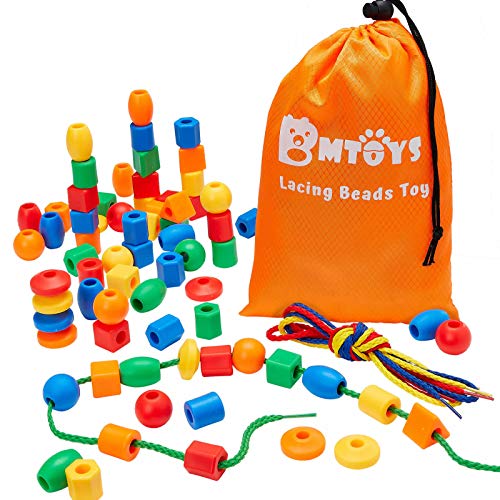
Product highlights include a large set of 70 beads in varied colors and shapes with four laces. These beads support fine motor skills, color recognition, and spatial patterning, making this a strong choice for both independent play and guided activities. Best for parents and OT-friendly routines, especially when you want lots of beads to sort, count, and string into patterns. One potential limitation is the larger assortment that may overwhelm a new user; start with a few colors first.
Who this is best for: children who benefit from a broad, colorful assortment and repeated stringing practice. Why selected: the 70-piece variety promotes extended play and pattern creation, aligning well with early math and color activities.
Caution: ensure supervision for younger toddlers due to small parts, and use with age-appropriate laces to prevent choking hazards.
Melissa & Doug Primary Lacing Beads

This set features 30 brightly colored wooden beads, two laces, and a wooden storage case. The shapes are straightforward and easy for little hands to grasp, making it a gentle entry point for beginners. It supports fine motor development, hand-eye coordination, and basic counting—without screens. Best for toddlers starting lacing activities; better for compact storage and simple projects, though it offers fewer beads than larger sets.
Who this is best for: beginners and toddlers who benefit from a tactile, wooden build. Why selected: reliability and simplicity make it a dependable starter kit for early lacing play.
Caution: wooden pieces may require occasional checks for splinters; supervision recommended for very young kids.
Blu Jay Wooden Lacing Beads (125 pcs)

This is a premium wooden bead set with 120 beads across six colors and five shapes, plus four plastic-tipped laces and a storage container. The assortment supports color sorting, shape recognition, and pattern creation, with holes sized for easy threading. Best for group play or families seeking more bead quantity for varied activities; better for longer activities due to its larger size.
Who this is best for: families and classrooms that need ample beads for multiple children or extended stations. Why selected: the large selection and included storage make it a versatile, long-lasting choice.
Caution: ensure laces are used with adult supervision to prevent improper threading or accidental tangling.
BMTOYS Montessori Educational Threading Toys
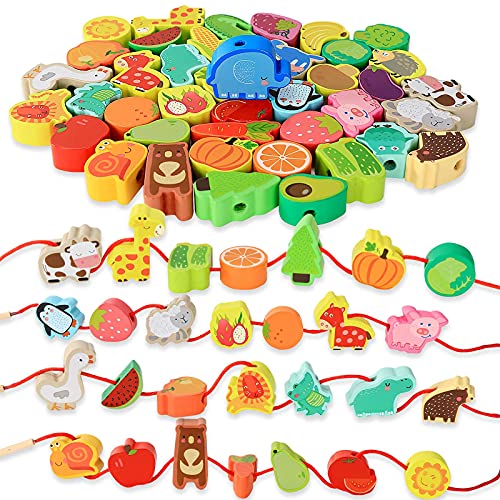
This wooden threading set features animals, fruits, and vegetables with simple laces and sticks. It emphasizes Montessori-style learning, combining threading with thematic exploration. Best for preschoolers who enjoy narrative play and practical life skills, better for kids who benefit from recognizable shapes and real-world themes. A caveat is that the assortment is themed, which may limit sheer variety for some users.
Who this is best for: children who enjoy thematic, real-world objects and structured patterns. Why selected: the themed beads support language development and conceptual learning alongside motor practice.
Caution: wooden materials require gentle handling to maintain smooth surfaces and long-term durability.
KUTOI Plastic Lacing Beads for Kids

This set offers 70 plastic beads in 13 assorted shapes and bright colors, with long strings and a focus on environmental safety. It supports shape sorting, color recognition, and early pattern creation, with portability for travel. Best for on-the-go learning and younger toddlers who need larger holes for easier threading. Better for short, frequent sessions than long, intensive activities.
Who this is best for: families seeking a travel-friendly option with a broad shape mix. Why selected: lightweight plastic beads with clear shapes entice early learners and simplify threading.
Buying Guide: How to Choose The Right Lacing Beads
- Age and safety: For ages 2–3, select larger beads with easy threading and sturdy laces. For older preschoolers, a larger color/shape variety adds challenge.
- Material: Wooden beads offer durability and a tactile feel; plastic beads are lighter and often brighter, and easier to clean.
- Hole size and threading: Choose sets with wide holes for small hands; multiple laces or longer cords support longer sessions.
- Educational value: Look for color and shape variety, counting and patterning opportunities, and optional theme elements (animals, fruits) for engaging lessons.
- Storage and organization: Sets with a storage container simplify cleanup and encourage repeated use without clutter.
- Portability: Travel-friendly sets are ideal for car trips or classroom rotation stations.
- Therapy alignment: OT or classroom settings benefit from larger assortments and modular activities that target fine motor skills, hand-eye coordination, and cognitive sequencing.
Frequently Asked Questions
- What age should kids start lacing beads? Generally around 2–3 years, depending on hand strength and coordination. Start with larger, easier-to-thread beads.
- Are wooden or plastic beads better for beginners? Wooden beads provide a tactile experience and durability; plastic beads are lighter and often more color-saturated for visual interest.
- How can beads support learning beyond motor skills? Beads facilitate color and shape recognition, early math concepts through counting, sorting, and pattern creation, and language development through storytelling with bead sets.
- Is supervision recommended? Yes, especially for younger children who may put beads in their mouths. Choose sets with fewer small parts if needed for safety.
- Can these beads be used in classrooms or therapy sessions? Yes. Look for sets with many pieces, organized storage, and durable construction to withstand frequent use and cleaning.
- What makes a bead set “Montessori-inspired”? It emphasizes hands-on, self-directed exploration with simple, tangible materials that support independent learning and logical sequencing.