Looking for heavy duty fabric scissors that stay sharp through multiple layers and tough materials? This guide highlights five top options, with clear recommendations for different buyers. Ideal for sewers, crafters, leather workers, tailors, and workshop professionals, these selections balance blade durability, comfort, and cutting confidence. The top picks are best for multi-layer fabric, leather projects, upholstery, and general heavy-duty crafting. See the quick comparison table below to identify which model fits your needs at a glance.
| Product | Best For | Key Benefit |
|---|---|---|
| LIVINGO Premium Tailor Scissors (9.5 Inch) | General sewing and dressmaking | Titanium-coated blades, rust resistance |
| Fabric Scissors Professional (Proshear, 10 Inch) | Multiple fabric layers | High carbon steel, ergonomic grip |
| Fiskars RazorEdge Fabric Scissors (8 Inch) | Precision cuts to the tip | Ultra-sharp blades, smooth action |
| Wteehn Fabric Scissors (8 Inch) | Leather and heavy fabrics | Forged manganese steel, ergonomic handle |
| PRO-MASTER SMART & SIMPLE (9 Inch) | Industrial sewing and crafting | Forged high-carbon steel, 32-layer capability |
LIVINGO Premium Tailor Scissors Heavy Duty
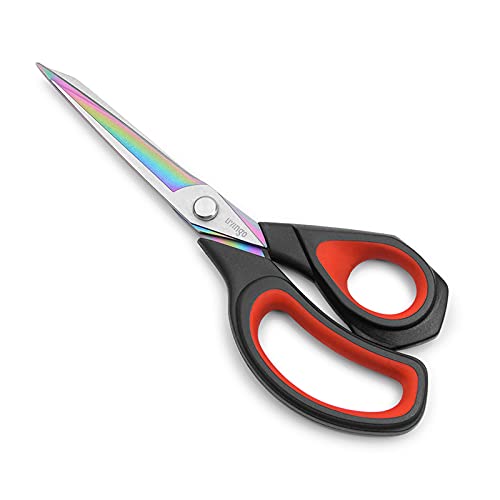
Best for: professional dressmaking and heavy-duty general sewing projects. These scissors feature durable stainless steel blades finished with a multi-color titanium coating to resist rust and adhesives. The forging process yields higher-density steel, claimed to be three times harder than standard stainless steel, enabling smooth cuts through multiple fabric layers. The blades are described as ultra-sharp and versatile for patterns, alterations, and craft work.
Why selected: The combination of rust resistance, claimed blade density, and broad all-purpose utility makes this a strong option for sewers who regularly handle thick fabrics or multiple layers. The titanium coating adds durability in workshop environments where adhesives or finishes are common.
Limitation: Data notes three-times-harder steel but does not specify exact layer-cut performance across all fabrics. Consider test-cutting thick materials before high-volume use.
Fabric Scissors Professional (Proshear) 10 Inch

Best for: cutting through multiple fabric layers with clean edges. These high carbon steel scissors promise edge retention and a sharp cut, with a bent handle to keep materials flat and a chamfered head to minimize fabric snagging. The ergonomic, rubberized handles aim to reduce hand fatigue during longer sessions.
Why selected: The high carbon steel composition and ergonomic design support precise, comfortable long cuts, making them suitable for tailors, quilt makers, and crafters who work with dense fabrics. The adjusted blade angle aids accuracy and reduces accidental snips.
Caution: High carbon steel can require care to prevent corrosion; keep blades dry and lightly oiled after heavy use.
Fiskars RazorEdge Fabric Scissors (8”)

Best for: precise, tip-to-tip cutting with a focus on smooth action. The RazorEdge line uses premium stainless steel and a refined edge to deliver clean cuts to the tip, complemented by an ergonomic grip that supports controlled handling.
Why selected: For users who prioritize a sharp, long-lasting edge and confident control on fine fabrics as well as leather accents, this option provides reliable performance and a comfortable feel during detailed work.
Limitation: 8 inches may be slightly short for very wide or bulky fabric layers; consider a longer model if you frequently work with large swaths of material.
Wteehn Fabric Scissors 8 Inch

Best for: cutting leather and heavy fabrics in craft or professional settings. These scissors combine high-quality galvanized manganese steel with hand-forged craftsmanship, delivering sharp edges and rust resistance. The 45° blade angle is designed for smooth, accurate cuts with less effort.
Why selected: The ergonomic aluminum handle with a non-slip wrap helps reduce fatigue during extended sessions, making them a good match for tailors, leather workers, and artisans working on thicker materials.
Caution: As with all high-carbon or manganese steel tools, proper care prolongs life; avoid dropping blades or exposing to harsh moisture without drying.
PRO-MASTER SMART & SIMPLE 9 Inch Scissors

Best for: industrial sewing, upholstery, and heavy-duty fabric projects. These scissors claim to cut through leather, denim, canvas, burlap, rope, and more, with a claimed 32-layer capability and forged high-carbon steel for durability and edge retention. Ergonomic, rubberized handles offer a comfortable grip for prolonged use.
Why selected: The combination of industrial-grade construction, extreme layering capability, and comfortable handling makes this option a strong pick for users who need reliable performance across demanding materials and longer sessions.
Limitation: The manufacturer emphasizes a broad capability range; users should verify edge maintenance needs for specific fabrics and consider occasional blade sharpening for maximal results.
Buying Guide
What material and blade type should you choose?
Heavy-duty fabric scissors come in high-carbon steel, stainless steel, and titanium-coated blends. High-carbon blades are very sharp and hold an edge well but may require more care to prevent rust. Stainless steel blades resist corrosion but can dull faster on very thick or abrasive materials. Titanium coatings improve rust resistance and reduce sticking when using adhesives.
Which handle design matters?
Ergonomic, non-slip handles reduce fatigue during long sessions. For extended cutting, consider models with cushioned grips or contoured finger loops to maintain control without pinching.
What size is best for you?
8- to 10-inch scissors are common. Shorter blades provide precision for small patterns and detail cuts, while longer blades offer more leverage for thick fabrics or leather. Choose based on your typical project scale and preferred cutting style.
How important is edge retention?
For frequent use across multiple fabrics, look for hardened or forged blades and consider models marketed for multi-layer or leather cutting. Regular maintenance, such as cleaning and oiling, helps preserve edge quality.
What about maintenance?
Keep blades dry after use to prevent rust. Wipe away glue, tape residue, or adhesive build-up, and sharpen when performance declines. Store in a dry place to extend lifespan.
FAQ
- Are heavier scissors better for thick fabrics? Yes, heavier-duty blades and longer blades can provide more leverage for dense materials, but choose based on your comfort and pattern size.
- Is titanium coating worth it? Titanium coatings improve rust resistance and reduce sticking, which helps when using adhesives or cutting through varied materials.
- Can I use fabric scissors for leather? Some heavy-duty models handle leather, but blades with forged steel and thicker edges perform better for leather work. Check product specs.
- How do I sharpen fabric scissors? Use a dedicated sharpener or have them professionally serviced if the blades wear down unevenly.
- What is the best budget option? Look for high-carbon steel models with ergonomic grips; balance cost with blade durability and your typical projects.
- How should I store fabric scissors? Keep them dry, in a sheath or dedicated drawer to prevent damage to blades and other tools.