Looking for hard plastic quilting templates that deliver clean lines and reusable results? This guide highlights five reliable options that suit different quilters—from beginners needing simple shapes to seasoned crafters pursuing intricate motifs. Each product is evaluated for who it’s best for, plus practical pros and a small caution to help you choose confidently. A quick comparison table is provided below to speed up your decision.
| Product | Best For | Key Benefit | Limitations |
|---|---|---|---|
| Dritz 3414 Non-Slip Vinyl Template Sheets | Beginner to intermediate quilters | Durable vinyl with grid layout and non-slip surface | Vinyl, not hard acrylic |
| Quilting Template Plastic Sheets, LikeLion | Templates of various sizes | Large 12 x 18 sheets for bigger designs | Matte translucent; may require careful cutting for precision |
| HONEYSEW Free Motion Template Series 5 | Domestic machine free-motion quilters | Multiple internal patterns for FMQ frames | Ruler coverage limited to included templates |
| CYCHIRV Quilting Rulers, 4mm Transparent | Quilters focusing on meander and stipple | Transparent, precise edge guidance | Smaller set; needs compatible apparatus |
| BSGOGO Quilting Rulers Set | All-purpose quilting block layouts | Multiple square sizes in one set | Acrylic; may scratch with rough handling |
Dritz 3414 Non-Slip Vinyl Template Sheets

The Dritz template sheets are made from matte vinyl, designed to resist tearing, warping, shrinking, or stretching. They include four sheets with a 1/4 inch grid and two plain sheets, making them versatile for creating reusable patterns. Best for quilters who want durable, flexible templates that can be traced and used repeatedly without distortion. A potential limitation is that vinyl is not as rigid as acrylic, which can affect precise edge control on very detailed designs.
Quilting Template Plastic Sheets, LikeLion
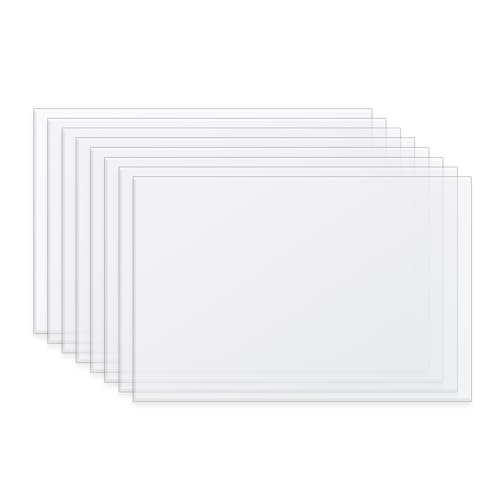
LikeLion’s translucent 12 x 18 inch sheets offer a generous work surface for creating large templates. They’re designed to withstand fraying and curling, making them suitable for repeated tracing and cutting. Best for quilters who frequently work with bigger blocks or patterns that require clear visibility over the fabric. A caveat: translucence helps placement, but precise alignment may require careful handling with a straightedge and knife for clean cuts.
HONEYSEW Free Motion Quilting Template Series 5

The HONEYSEW series focuses on free-motion quilting with internal templates that guide a domestic machine’s path. This set is best for quilters who aim to expand their FMQ repertoire with swirls and related internal patterns. Choose this if you want ready-to-use templates that work well with standard FMQ feet. A limitation is that it relies on compatible free-motion hardware to get the most from the patterns.
CYCHIRV 4mm Transparent Quilting Rulers

CYCHIRV offers a compact 4mm thick transparent quilting ruler designed for precise meander and stipple patterns. The ruler’s clarity helps visualize fabric beneath, aiding accurate stitching along the template edge. Best for quilters who value visibility and a stable edge during free-motion work. It’s a good fit when you want a reliable edge guide without bulk. Note that this is one ruler in a set often used with a compatible FMQ foot, which may limit versatility if you’re not using that setup.
BSGOGO Quilting Rulers Set

This 4-piece acrylic square ruler set covers common block sizes: 3.5″ x 3.5″, 5″ x 5″, 6.5″ x 6.5″, and 10.5″ x 10.5″. The transparent acrylic makes fabric patterns visible underneath, aiding precise cuts and alignment. Best for quilters seeking a versatile starter kit for block layouts and straight-edge work. A limitation is that acrylic edges can scratch with rough handling, so store and handle with care to preserve accuracy over time.
Buying Guide: Hard Plastic Template Essentials
What material should you choose?
Acrylic and other hard plastics offer rigid edges that reduce distortion on long lines. They’re typically more durable and provide crisper cuts than vinyl templates, making them ideal for precise quilting designs and repeated use.
What size matters most?
Consider your typical project size. Large templates (like 12 x 18 inches) are great for blocks and borders, while smaller rulers excel for intricate motifs. A mix of sizes in a set often provides the best flexibility.
Transparency and visibility
Templates with clear visibility let you position patterns over fabric easily. Translucent sheets and clear acrylic rulers help you trace or quilt with confidence, especially when aligning seams or motifs.
Ease of use with machines
For free-motion quilters, choose templates designed for machine guidance. Some sets include internal patterns that match common FMQ motifs, while others pair with specific quilting feet. Ensure your sewing machine supports your chosen template style.
Durability and care
Rigid templates resist warping or bending with repeated use. Handle edges with care to avoid chipping. Store templates flat or in a protective case to maintain accuracy over time.
What should you avoid?
Avoid templates that require sharp, repeated cuts on delicate fabrics without a steady hand or appropriate cutting tools. If you’re new, start with larger, simpler shapes before moving to fine detail work.
How to compare options quickly
- Best for beginners: vinyl or simple grid templates with clear guidelines
- Best for large projects: oversized 12 x 18 inch sheets
- Best for FMQ: internal templates designed for domestic sewing machines
- Best for precise meanders: 4mm transparent acrylic rulers
- Best value set: multi-size square ruler kits
Frequently asked questions
- Are hard plastic templates compatible with all sewing machines? Answer: Most are compatible with standard domestic machines, but check your machine’s free-motion capabilities and foot compatibility.
- Do I need special tools to use these templates? Answer: Basic scissors or a craft knife is usually enough; some designs may require a ruler, rotary cutter, or straightedge.
- Can you reuse templates after washing fabric? Answer: Yes, most hard plastic templates resist moisture and wear, though some finishes may show marks over time.
- Which template should a beginner start with? Answer: A simple square or grid template set is ideal to learn control before progressing to curves and meanders.
- What’s the advantage of transparency? Answer: It helps you align edges and view underlying fabric for accurate stitching along the template.
- Do these templates affect fabric stretch or distortion? Answer: Reusable rigid templates can help minimize distortions when used correctly, especially on larger blocks.