Discover top gold glazes that deliver brilliant, durable metallic finishes for ceramic pieces. This guide highlights select options known for reliable firing, ease of use, and rich gold tones. Each product includes practical application notes to help you choose the right glaze for your clay body and firing schedule.
| Product | Brand |
|---|---|
| Pasler Gold Glaze for Ceramic Pottery Bisque | Pasler |
| Colorobbia Liquid Bright Gold 8% Overglaze | Hobby Colorobbia |
| Amaco Potters Choice Glaze, Saturation Gold PC-02 | AMACO |
| Plaid Glaze, Classic Gold | Plaid |
| Mayco Stoneware Classic Glaze – Fool’s Gold | Mayco |
Note: Each glaze has unique firing requirements and application techniques. Always perform compatibility tests with your clay body and investigate cone ranges before firing to ensure optimal results.
Pasler Gold Glaze For Ceramic Pottery Bisque
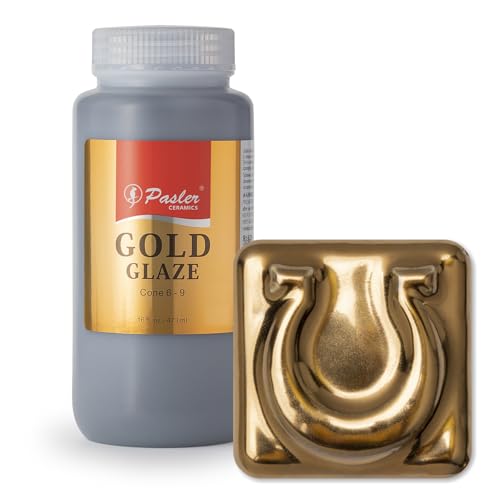
Pasler Gold Glaze offers versatile application, including sponging, dipping, or pouring. It is designed for glaze firing within the cone 6 to cone 9 range (1222°C – 1280°C). Direct firing is advised, and it should not be used with a clear glaze. The glaze can be used directly or mixed with water for desired consistency. These options make it suitable for varied ceramic projects seeking a rich gold finish.
Colorobbia Liquid Bright Gold 8% Overglaze

Colorobbia’s Liquid Bright Gold is an 8% gold overglaze manufactured by a company with decades of experience in liquid metallics. It fires at about 1166°F and yields a film typically in the 18–23 karat range. The 2‑gram bottle provides roughly 8% gold by weight, promising bright, even coverage when applied precisely and allowed to mature through the kiln cycle.
Amaco Potters Choice Glaze, Saturation Gold PC-02

AMACO’s Potters Choice Gold PC-02 is an opaque glaze designed for cone 5–6 firing and conforms to ACMI standards. It provides a rich gold saturation suitable for decorative accents and overall vessel coverage. As with most Potter’s Choice glazes, it’s important to test glaze thickness and firing temperature to achieve the intended metallic glow on your particular clay body.
Plaid Glaze Classic Gold 6110

Plaid’s Classic Gold Glaze provides a traditional gold finish with one-step application. This glaze is designed for simple, reliable coverage, making it a practical choice for studio users seeking consistent gold accents or a full glaze layer. The product is presented as a craft glaze, with straightforward usage for beginner to intermediate ceramicists.
Mayco Stoneware Fool’s Gold Glaze

Mayco Stoneware Fool’s Gold is a decorative glaze formulated for stoneware surfaces, producing a distinctive Fool’s Gold effect. While it’s marketed for stoneware, it’s widely used for high-fire applications where a luminous metallic gold finish is desired. Consider glaze compatibility with your clay body and firing schedule to ensure the best metallic sheen and durability.
Buying Guide: Gold Glazes For Ceramics
Firing Range And Compatibility
Gold glazes vary in firing temperatures. Some are suitable for cone 5–6 while others are designed for higher cone ranges (cone 6–9). Check your kiln’s capabilities and the glaze’s recommended firing range. Always perform test tiles to confirm bond, gloss, and metallic look before committing to a large project.
Application Methods
Common methods include dipping, brushing, sponging, and pouring. Some glazes can be used directly or thinned with water. Consider your technique preferences and the effect you want—even coverage, brush-pool textures, or subtle shimmering accents.
Finish And Longevity
Gold glazes can yield bright metallic surfaces or warm, rich tones depending on formulation and firing. Some products require a clear glaze overcoat or direct application, influencing gloss level and durability. Evaluate your desired finish (bright vs. warm), plus the piece’s use (functional ware vs. decorative).
Clay Body And Substrate
Compatibility with your clay body is essential. Certain glazes interact differently with porcelain, stoneware, or earthenware. For example, some overglazes perform best on bisque-fired surfaces, while others are formulated for glaze-on-glaze layering. Perform small tests on your typical clay body.
Safety and Handling
Follow manufacturer instructions for handling, storage, and disposal of glaze components. Some glazes require kiln firing to maturity, and vapors or dust can be hazardous if not handled properly. Use appropriate PPE and ensure adequate kiln ventilation during firing.
Cost-Effectiveness And Availability
Consider bottle size, coverage yield, and reusability when comparing glazes. Some brands offer robust color options and extensive support materials, which can influence overall cost per project. Availability may vary by region and retailer.