Find the right PVC sheet glue for durable, flexible bonds. This guide highlights top-performing cements suited for PVC sheets, tarps, pool liners, and inflatable items. Best for professionals and serious DIYers, these selections balance strength, flexibility, and underwater or outdoor performance. Each product includes who it’s best for and why, along with a practical note on limitations.
| Product | Best For | Why It’s Recommended |
|---|---|---|
| ARVYNE PVC Cement 4 oz | Heavy-duty PVC and vinyl repairs | Industrial strength, underwater capable, flexible after cure, good for high-pressure applications |
| Oatey 30246 4 oz Pack | PVC pipe and fittings, potable water workflows | All-purpose cement with purple primer; widely used where code verification is required |
| HH-66 Vinyl Cement 4 oz | Tarps, pool liners, inflatable and marine vinyl | Original professional vinyl adhesive; versatile, bonds many substrates; underwater capable |
| HH-66 Toluene Free 1 oz | Safer alternative for sensitive environments | Same performance as HH-66 without toluene; good for indoor use and safer handling |
| JAOJAO PVC Cement 125 ml | PVC pipes and quick, leak-proof joints | Fast curing and strong seal; suitable for pressure-resistant applications |
ARVYNE PVC Cement 4 oz

Features include industrial-strength bonding that works from 40 °F to 110 °F and can be applied underwater. Once cured, it remains flexible and can handle pressures up to 200 psi. Best for professionals and heavy-duty PVC or vinyl repairs that require a robust, water-resistant bond.
Best for: heavy-duty PVC/vinyl repairs in tough environments. Choose this if you need underwater adhesion and long-term flexibility. Caution: longer cure times may be required at colder temperatures or larger pipe sizes.
Oatey 30246 4 oz Pack

Includes one 4 oz. can of all-purpose PVC cement and one 4 oz. can of purple primer. It’s commonly used for potable water, pressure piping, and DWV systems. The purple primer helps with code verification and ensuring a proper bond before cement sets.
Best for: plumbing projects requiring code-compliant primer verification. Caution: not exclusively designed for tarps or fabric-based PVC sheets; primarily for pipe and fittings.
Titebond 4 Oz PVC Trim Joint Adhesive

Ideal for PVC joints and column wrap installations. Suitable for PVC trim miters, shiplap, scarf joints, and related wrap work. This is a high-strength, permanent bond designed for trim and decorative PVC applications where a neat, durable seam matters.
Best for: trim work and decorative PVC joints. Caution: not the first choice for high-pressure water systems or tarps that must flex under load.
HH-66 Vinyl Cement 4 oz

HH-66 is a professional-grade vinyl adhesive designed for harsh conditions. It bonds from 35 °F to 95 °F and remains flexible from -30 °F to 150 °F after curing. It’s versatile for tarps, pool liners, inflatable items, and many flexible PVC/vinyl fabrics.
Best for: rugged outdoor repairs and projects requiring enduring flexibility. Caution: like many vinyl cements, surface prep improves results; avoid using on surfaces with contamination or oils for best adhesion.
HH-66 Toluene Free Vinyl Cement 1 oz
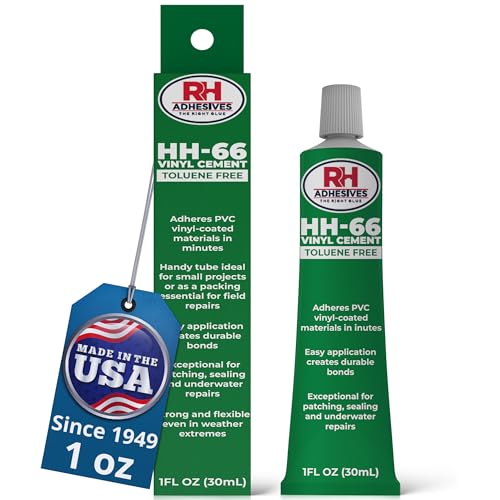
This is the toluene-free version of the classic HH-66, offering the same strong vinyl bond without toluene. Bonds across a wide temperature range and can be used underwater. Post-cure flexibility extends to high-temperature conditions.
Best for: safer indoor use and environments sensitive to solvents. Caution: slightly smaller package; may require more frequent replacements for large repairs.
JAOJAO PVC Cement 125 ml
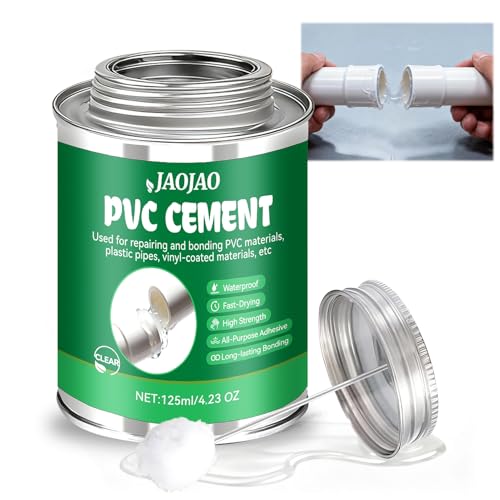
Designed for PVC pipe, it offers quick curing and a strong, leak-proof seal. Initial adhesion is fast, with firm setting within 15 minutes and full bond by 24 hours. Suitable for pressure-resistant piping applications.
Best for: quick-turn PVC pipe projects with reliable water-tight seals. Caution: primary use is pipes and fittings; patching large sheet areas may require broader surface coverage.
Buying Guide
What to consider when choosing PVC sheet glue
- Bond strength and flexibility: Look for cements that remain flexible after curing to avoid cracking on vinyl sheets and tarps.
- Temperature range: Consider typical use environments; some glues perform best below or above room temperature.
- Underwater or water exposure: If repairs may occur in wet conditions, choose underwater-capable formulations.
- Substrate compatibility: Ensure the adhesive supports PVC, vinyl, and fabric-coated materials common in sheets and tarps.
- Safety and solvents: Toluene-free options reduce exposure risk, especially indoors.
- Code requirements: For plumbing or potable-water projects, primer and cement compatibility with codes may matter.
How to apply PVC cement for best results
- Prepare surfaces by cleaning and drying to remove oil or dust.
- Apply primer if required, especially for rigid PVC pipes and fittings.
- Apply a thin, even coat of cement to both surfaces; join quickly and hold steady.
- Allow recommended cure times before pressure or use; consider environmental temperature in cure planning.
Common limitations to expect
- Not all cements suit all fabric types; check compatibility with vinyl-coated fabrics and canvas.
- Some products are optimized for pipe work rather than sheet repair; choose accordingly.
- Over-application can cause messy joints or improper curing; follow labeled guidance.
FAQ
- What is the best PVC cement for tarps? — A vinyl cement designed for flexible vinyl and tarp materials, such as HH-66 or HH-66 TF, offers strong adhesion and flexibility for outdoor use.
- Can PVC cement be used underwater? — Yes, several options (including ARVYNE and HH-66) are specified as waterproof and can seal under submerged conditions.
- Is toluene-free safer for indoor use? — Yes, toluene-free variants (like HH-66 TF) reduce solvent exposure indoors while maintaining bond strength.
- Do I need a primer with PVC cement? — Some products include primer or are designed to be used with a separate purple primer; follow product instructions and local codes for pipe work.
- How long before a bonded PVC sheet can be stressed? — Cure times vary; some bonds reach handling strength in minutes but full strength may take hours. Refer to product-specific guidance.
- Is glue suitable for inflatable items? — Yes, many vinyl cements are designed to bond PVC and vinyl surfaces used in inflatables, pool liners, and tarps.