The best gloss varnish for oil paintings provides a clear, durable surface that protects color brilliance without yellowing. This guide highlights five top options, noting who each is best for and why. Suitable buyers include students, professionals, and hobby artists seeking quick-drying, UV-resistant, or archival-quality finishes. Read on to find the right match for oil, alkyd, or acrylic works and learn practical buying tips.
| Top Pick | Best For |
|---|---|
| Winsor & Newton Professional Gloss Varnish | High-quality protective coat for oil and mixed media |
| Gamblin Gamvar Picture Varnish | Archival, fast-drying final varnish |
| Tusc & Pine InstaVar Gloss | Archival, nearly odorless finish with depth |
| Liquitex BASICS Gloss Varnish | Budget-friendly, versatile gloss option |
| Liquitex Professional High Gloss Varnish | Permanent, durable gloss with non-yellowing finish |
Winsor & Newton Professional Gloss Varnish, 75ml

This final clear, non-yellowing varnish offers a gloss finish to protect oil, alkyd, and acrylic paintings. It is UV-resistant and removable with white spirit or distilled turpentine, allowing for later changes or conservation. Quick-drying and resistant to blooming or cracking, it suits artists who need a reliable, easy-to-remove protective layer. Best for: oil painters seeking a professional gloss finish that remains stable over time. Limitation: removal requires solvent handling and ventilation.
Winsor & Newton Artisan Gloss Varnish, 250ml
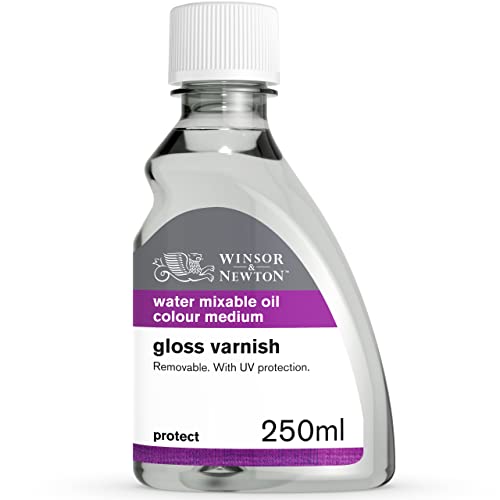
Designed as a final varnish, this non-yellowing option is best used when the painting is completely dry (6–12 months). It provides a durable gloss layer without altering the original hues. Best for: artists who want a stable, non-yellowing finish after a long drying period. Caution: apply only after full dryness to avoid tackiness or incomplete curing.
Gamblin Gamvar Picture Varnish – 8.5oz

This synthetic resin varnish is similar to Damar and can be used sooner than many alternatives. It provides a clear gloss finish and is suitable for oil and alkyd works. Best for: artists seeking a faster, archival final varnish with a traditional look. Limitation: information about specific curing times is not provided here; check product details for recommended timelines.
Tusc & Pine InstaVar Gloss, 16.9oz

Archival-quality, crystal-clear, nearly odorless glaze that saturates color and adds depth. It can serve as a retouch varnish and protective coat, with a nearly odorless formula that remains non-yellowing over time. Best for: artists who value rich color saturation and a stable gloss across oils, alkyds, and acrylics. Limitation: some users may prefer a dedicated retouch varnish for conditioning underpaintings.
Liquitex BASICS Gloss Varnish, 250ml

This permanent gloss varnish protects finished paintings and can be mixed with matte varnish to vary sheen. It dries to a clear, non-yellowing finish and is noted for being lightweight and non-toxic. Best for: artists seeking an economical, reliable gloss finish with potential sheen control. Caution: BASICS formulations may differ from professional lines; verify compatibility with your medium before use.
Gamblin Gamvar Picture Varnish, Clear, 4.2oz
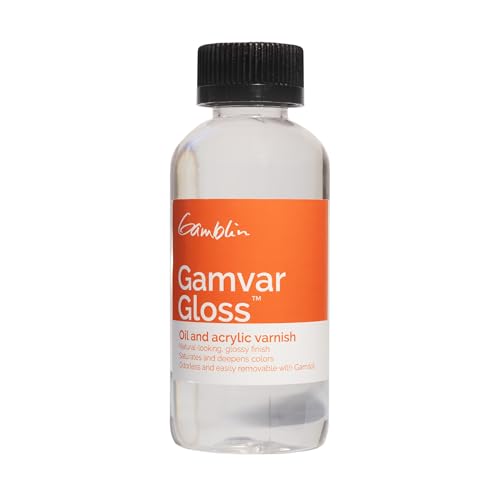
Gamvar Picture Varnish provides a clear gloss finish and is intended for final varnish use. It is part of Gamblin’s varnish line and aims for durable protection with a traditional gloss look. Best for: artists who want a straightforward final varnish that pairs well with Gamblin oil colors. Limitation: the product page lists general identifiers rather than detailed spec notes.
Buying Guide
What finish do I need? Gloss varnishes offer bright, reflective surfaces that enhance color saturation. If you want softer light reflection or less glare, consider a satin or matte finish instead.
Drying time and curing“Some varnishes dry quickly, while others require long drying periods. Plan around your painting’s complete dryness before applying a final gloss layer to avoid issues like cracking or bloom.
Removability and conservation“If you expect future conservation or changes, choose a varnish that is removable with suitable solvents. UV resistance helps protect colors from fading.
Medium compatibility“Ensure the varnish is formulated for oil, alkyd, or acrylic media. Some products are multi-media friendly, while others remain best for specific paints.
Health and workspace“Consider odor, toxicity, and ventilation needs. Some gloss varnishes are nearly odorless, while others may require well-ventilated areas during application.
FAQ
- Can I apply gloss varnish over a still-damp painting? No. Wait until the painting is fully dry to avoid issues like tackiness or poor film formation.
- Is gloss varnish always removable? Not all gloss varnishes are designed to be easily removable. Check the product spec for removability guidance.
- Will gloss varnish yellow over time? High-quality gloss varnishes are formulated to be non-yellowing, but verify the product’s aging characteristics with the manufacturer.
- Can I mix gloss with matte varnish? Yes, some varnishes permit blending to adjust sheen, but follow the manufacturer’s mixing recommendations.
- Which varnish dries fastest? Some chemically formulated varnishes advertise quick-drying; drying times vary by brand and layer thickness.
- Is there a safe option for non-toxic studios? Look for water-based or non-toxic formulations and use protective gear as needed.