Find the best glitter PLA filaments for vibrant, sparkling 3D prints. This guide highlights top 5 glitter filaments, explaining who they’re best for, printing notes, and where they excel. Ideal buyers include hobbyists creating decorative pieces, cosplay prop makers, and students testing color-shifting or galaxy effects.
| Product | Best For | Why It Stands Out | Limitations |
|---|---|---|---|
| ELEGOO PLA Sparkle | Artistic designs and decorations | Premium glitter, smooth extrusion, tight diameter tolerance | Plastic glitter may clog at low temps |
| ZIRO Diamond Series | High-glitz, dense glitter effects | Ultra-fine glitter, neat winding, strong enough for detail | Higher cost; stricter storage to prevent moisture |
| EONO3D Glitter PLA Bundle | Color experiments and color-shift projects | Four-color bundle with double-layer extrusion for smoother prints | Outer layer complexity may affect beginners |
| HP3DF Glitter PLA | Functional parts with toughness needs | Enhanced toughness and good bed adhesion | Limited color options in some batches |
| iSANMATE Clear Multicolor Glitter | Transparent transition effects | Transparent gradient with glitter for nebula-like looks | Glitter can cause stringing if settings aren’t tuned |
ELEGOO Sparkle PLA Filament
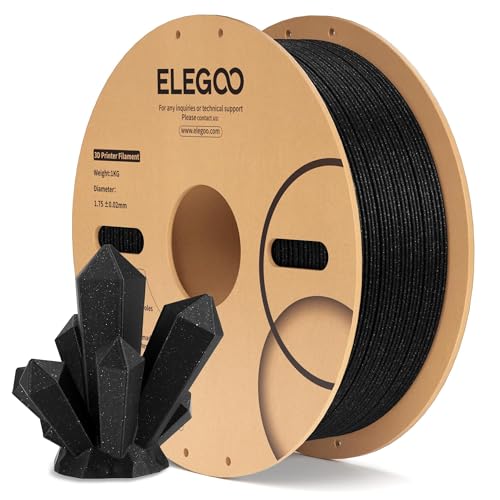
Best for artistic, decorative prints that benefit from a twinkling surface. The filament is 1.75 mm with a tight tolerance of +/- 0.02 mm, delivering smoother, more accurate extrusion. Made from premium PLA, it prints easily on standard settings with a shiny glitter finish. This option suits crafters, gift item makers, and students designing eye-catching models. A potential caution is glitter particles can contribute to nozzle wear if print temperatures are too low or if retractions are excessive.
ZIRO Diamond Series Filament

Best for high-glitz, dense glitter with a neat wound spool. This series emphasizes finer glitter powder for a striking, diamond-like sparkle. It uses 1.75 mm filament with dimensional accuracy around +/- 0.05 mm, supporting easier, more stable prints. Suitable for jewelry-inspired models and display pieces. Note that the more intense glitter may require careful nozzle temperature and travel settings to minimize stringing.
EONO3D Glitter PLA Filament Bundle
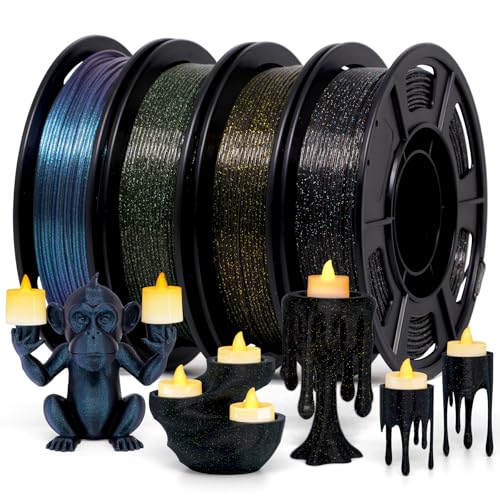
Best for color-testing and multi-color projects. This 4-color bundle uses a double-layer extrusion approach to seal pigments and glitter inside, reducing clogging. It prints well on standard 3D printers with a recommended 0.4 mm nozzle or larger. Ideal for galaxy effects, props, and gift boxes. A caveat is the more complex extrusion may require proper tuning to prevent color bleed or minor stringing compared to single-color filaments.
HP3DF Glitter PLA Filament

Best for prints needing tougher, reliable PLA with glitter. HP3DF emphasizes toughness, good bed adhesion, and bubble-free performance. It uses USA-sourced PLA and color additives designed to minimize warping, making it suitable for functional parts or display pieces that endure handling. The caveat is that some batches may offer fewer color options, so users seeking a specific hue should verify availability before purchase.
iSANMATE Clear Multicolor Glitter PLA

Best for gradient and transparent-transition glitter effects. The filament features a clear multicolor transition with silver glitter, delivering nebula-like visuals. Print temperature ranges from 190–220°C, with 1.75 mm diameter and +/- 0.03 mm accuracy. While ideal for visually striking prints, glitter can cause stringing if retractions or temperature settings are not optimized, so users should tune accordingly.
Buying Guide
What should I look for in glitter filament?
Diameter tolerance, glitter particle size, and nozzle compatibility are key. A tighter tolerance reduces extrusion variation, while finer glitter provides a more even sparkle. Ensure your nozzle and hotend can handle glitter without clogs.
Which printing settings help glitter filaments?
Use a moderate printing temperature within the filament’s recommended range, avoid excessive retraction, and consider a larger nozzle (0.4 mm or bigger) for smoother flow. For gradient or color-change filaments, calibrate layer height and print speed to reduce stringing and color bleed.
How should I store glitter filaments?
Store in a dry, sealed bag with desiccant. Glitter flakes and moisture can affect print quality and cause bubbling or popping, especially on longer prints.
Which filament is best for beginners?
Filaments with good bed adhesion and forgiving print behavior, such as some standard PLA glitter blends, are easier for beginners. Start with a single-color option before attempting complex color-shift or multi-color bundles.
What safety considerations exist?
Glitter particles are generally cosmetic-grade or inert but keep prints away from children who might ingest small pieces. Work in a well-ventilated area and follow printer manufacturer guidelines for filament handling.
Comparative quick tips
- Best for sparkle and decoration: ELEGOO Sparkle PLA
- Best for dense glitter and premium finish: ZIRO Diamond Series
- Best for color testing: EONO3D Glitter PLA Bundle
- Best for toughness with glitter: HP3DF Glitter PLA
- Best for gradient, transparent glitter: iSANMATE Clear Multicolor Glitter
Frequently Asked Questions
- What is the difference between glitter types in filaments? Glitter types range from fine to dense; finer particles create subtle sparkle, while denser glitter yields brighter effects.
- Can glitter filaments clog my nozzle? Yes, glitter may clog if temperatures are too low or if retractions are excessive. Use appropriate settings and nozzle sizes.
- Do glitter filaments require special storage? Yes, to prevent moisture and maintain print quality, store with desiccants in a sealed bag.
- Are there color-shifting glitter filaments? Some bundles feature multi-color or gradient effects that shift color under light or at different viewing angles.
- Is glitter filament compatible with all FDM printers? Most 1.75 mm glitter PLA works on standard FDM printers, but verify diameter tolerance and bed adhesion for your model.
- How should I calibrate for best results? Calibrate nozzle temperature, bed temperature, and print speed. Consider tuning retractions to minimize stringing with glitter.