Choosing the right glass grinder for stained glass projects involves balancing power, precision, and cost. This guide highlights five versatile options that cover budget-friendly starters to dependable professional-grade tools. Each product section includes key features that influence edging, shaping, and drilling tasks, helping hobbyists and professionals select the best fit for their studio workflow.
| Product | Brand | Key Strength |
|---|---|---|
| Inland Craft WizCG Glass Grinder | Inland Craft | Budget-friendly, two-diamond-bit set, 115V power |
| Inland Craft WizlingCG Glass Grinder | Inland Craft | Lightweight, portable, strong torque for pros and hobbyists |
| Godora Stained Glass Grinder (Mini Kit) | Godora | Dual-bit system (5/8″ & 1″), automatic water feed |
| 2025 Upgrade Stained Glass Grinder Kit (Zlshmoee) | Zlshmoee | Five diamond bits, dual-layer worktable, self-cleaning water system |
| The Grinder 3 by Techniglass | Rainbow Art Glass | Classroom-friendly, compact, large work surface |
Inland Craft WizCG Glass Grinder

The WizCG is a budget-friendly stained glass grinder made in America, designed for newcomers and hobbyists. It supports stained glass and lapidary projects, delivering reliable edge shaping and grinding performance. The machine arrives with two diamond bits (3/4″ and 1/4″ diameter) that enable seamless transitions between tasks without frequent bit changes, improving workflow efficiency. A 115V motor provides steady torque and control for precise detailing on glass edges.
Features include:
– Budget-friendly, American-made design ideal for beginners and budget-conscious crafters
– Dual-diameter diamond bits (3/4″ and 1/4″) for versatile edging and shaping
– 115V motor delivering around 30 oz-in torque for steady performance
Inland Craft WizlingCG Glass Grinder

The WizlingCG focuses on an economical profile without sacrificing essential performance. It is suited for professionals and serious hobbyists seeking a cost-effective option with dependable edging capabilities. Its torque, rated at 16 oz-in with a 3,500 rpm motor, equips it to handle a wide range of glass shaping tasks. The grinder is built from lightweight, rustproof ABS material, offering portability and durability for busy studios or on-the-go projects.
Key points:
– Economical choice with adequate power for most stained glass tasks
– 3,500 rpm motor and 16 oz-in torque for precise finishing
– Lightweight, portable, and durable ABS construction
Godora Stained Glass Grinder (Mini Kit)
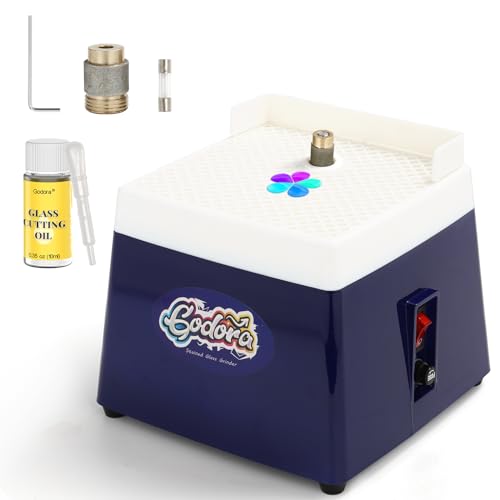
This Godora mini kit emphasizes user-friendly automation, including a spiral base that automatically draws water toward the grinding head after water is added. The kit ships with two grinder bits (5/8″ and 1″) to accommodate various material sizes. With a 4200 RPM DC motor, it delivers efficient shaping for stained glass projects, and the integrated water feed simplifies cleanup during operation.
Highlights include:
– 4200 RPM DC motor for fast, precise shaping
– Automatic water feed minimizes sponge use and debris
– Two grinder bits to cover common edge sizes
Godora Stained Glass Grinder, Mini Kit

Another Godora option emphasizes an efficient workflow with a 4200 RPM DC motor and an automatic water management system. The kit offers two bit sizes (5/8″ and 1″) for adaptable cutting profiles across different glass types. It stresses ease of use and operation, making it suitable for classroom settings and DIY enthusiasts who want consistent results with minimal setup.
Important aspects:
– Strong 4200 RPM motor for rapid material shaping
– Automatic water feeding reduces cleanup time
– Dual-bit compatibility for varying edge requirements
2025 Upgrade Stained Glass Grinder Kit (Zlshmoee)
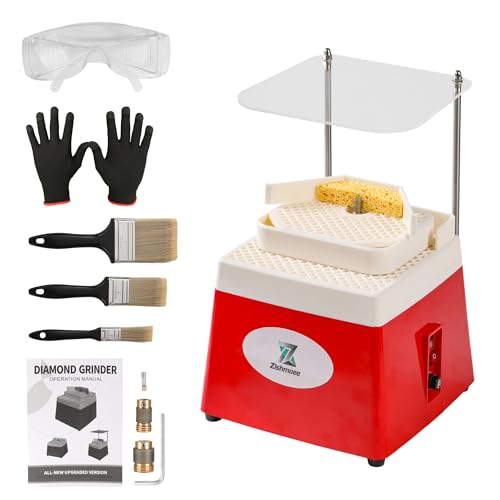
This upgrade kit combines versatility with a robust feature set. It includes five diamond bits (5/8″, 1″, 3 sizes) to handle a range of shapes and materials, plus a dual-layer worktable that improves stability during grinding. A self-cleaning screw-pump system continuously feeds water to the bits, reducing debris buildup and increasing efficiency. The 65W motor runs up to 4200 RPM, delivering solid performance for glass, ceramic, and crafts.
Notable features:
– Five-diamond-bit set for expanded capability
– Dual-layer worktable for enhanced stability
– Self-cleaning water system to minimize maintenance
The Grinder 3 by Techniglass

The Grinder 3 from Techniglass emphasizes classroom usability and compact design without compromising power. It provides a substantial work surface (11″ W x 9″ D) and features a Water Wave Stabilizer to help control water movement during tray transport. This setup is suited for teaching environments and hobbyists who require a reliable grinder with a focus on ease of use and consistent results.
Key considerations:
– Classroom-friendly design with a sizable work area
– Water stabilization feature to minimize spills
– Sleek, compact profile for limited spaces
Buying Guide: Key Purchase Considerations
- Power and torque: Higher torque supports faster material removal and more consistent shaping, especially on thicker or tougher glass. Look for motors in the range of 16 oz-in to 30 oz-in and RPM around 3,500–4,200 for most stained glass tasks.
- Bit variety: Systems that include multiple diamond bits or allow easy bit swaps expand your capabilities for planes, curves, bevels, and tight corners. A kit with 5/8″ and 1″ bits covers common needs.
- Water delivery: An automatic or screw-pump water feed helps keep bits cool and reduces dust and debris. Self-cleaning feeds can cut maintenance time significantly.
- Portability vs. stability: Lighter models are easier to move between spaces, but heavier units often provide better vibration control and steadier grinding. Choose based on your workspace and mobility needs.
- Durability and materials: ABS or high-strength housings balance weight and longevity. Rust resistance and waterproofing are valuable for daily use in humid environments.
- Table design and ergonomics: A stable worktable, including dual-layer or larger surfaces, improves control when shaping complex edges. Look for features that reduce splash and improve workflow.
- Intended use: For classroom settings or hobby projects, a compact, user-friendly grinder with ample safety features is ideal. For professional studios, prioritize power, bit versatility, and durability to handle frequent use.
- Maintenance: Easy cleaning, accessible replacement parts, and clear instructions help minimize downtime between projects.