Finding the right stabilizer is essential for crisp seams, clean embroidery, and durable finished projects. This guide evaluates popular fabric stabilizers, from lightweight iron-ons to water-soluble toppers, to help American sewists choose confidently for a variety of fabrics and techniques. Each product below is selected for relevance to common sewing tasks like hemming, collars, embroidery, and crafting with delicate or bulky materials.
| Product | Brand | Size | Type |
|---|---|---|---|
| Medium Weight 12″ X 30 Yards Fusible Interfacing | EWVVSS | 12″ x 30 yd | Fusible Interfacing |
| ZOMONETI Light Weight 17″ x 30 yd | ZOMONETI | 17″ x 30 yd | Iron-On Interfacing |
| New brothread Sticky Tear Away Embroidery Stabilizer | New brothread | 12″ x 10 yd | Sticky Tear-Away |
| Medium Weight 11.8″ x 30 yds Fusible Interfacing | Merrian Living | 11.8″ x 30 yd | Fusible Interfacing |
| Superpunch Wash-Away Stabilizer 9″ x 10 Yard Roll | Superpunch | 9″ x 10 yd | Wash-Away |
The following sections spotlight five top choices, focusing on materials, application tips, and best-use scenarios to help you pick the right stabilizer for your project.
EWVVSS Medium Weight Fusible Interfacing
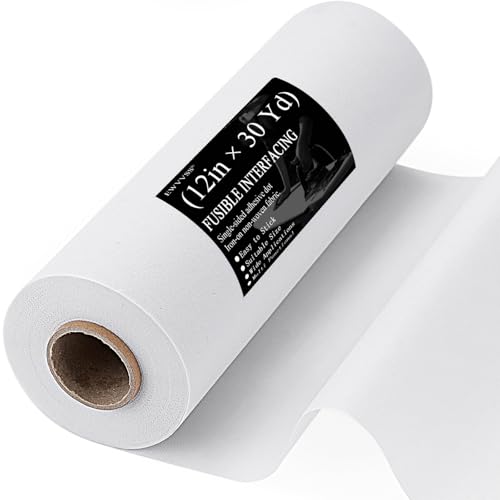
The EWVVSS medium-weight, single-sided fusible interfacing provides robust fabric reinforcement for stitching and structure around collars, facings, cuffs, pockets, and waistbands. Designed from polyester, it fuses easily with a hot iron, offering a stable base for light to medium-weight fabrics. It’s well-suited for quilting, handbags, and everyday garments made from voile, broadcloth, knits, and even some linen blends. A 12″ x 30-yard roll offers ample material for medium to large projects, reducing the need for frequent replacements.
Key considerations: choose when you need lasting shape and durability in structured areas without adding excessive weight. For best results, place the interfacing adhesive side down and press with a dry iron, using a cotton cloth as a protective layer to prevent scorching. It can stabilize delicate fabrics without compromising drape in tailored pieces.
ZOMONETI Light Weight Iron-On Interfacing

This ZOMONETI light-weight, non-woven interfacing adds structure to collars, facings, and other areas that require mild stability. It’s made from polyester-based materials with a single-sided adhesive, designed for easy application on the wrong side of fabric. The 17″ x 30-yard size is ideal for medium-to-large projects, and it can be trimmed to fit smaller garments. The light weight maintains fabric softness while providing enough rigidity to hold shape in delicate shirts, blouses, and light suiting fabrics.
Considerations: ideal for fabrics that need gentle support without stiffening. It’s particularly useful for dress shirts, blouses, and light outerwear where a crisp outline is desired yet fabric luster isn’t compromised. Always test on a scrap swatch to confirm heat settings and adhesion before committing to a full project.
New brothread Sticky Tear Away Stabilizer

This self-adhesive tear-away stabilizer is ideal for fabrics that are difficult to hoop or too small to fit a hoop. It tears away cleanly after stitching, leaving no residue. It’s especially useful for embroidery on towels, cuffs, collars, socks, and other bulky or delicate fabrics where hooping is impractical. For best results, reduce stitch speed to prevent glue buildup on needles, and follow recommended needle types and lubrication practices to minimize gumming. A versatile choice for cap, pockets, and edges in a wide range of projects.
Use cases: suited for embroidery on knits, fleece, velvet, and other textured fabrics where hooping is challenging. The sticky backing helps keep fabric flat, while easy removal helps protect fabric surfaces after finishing.
Merrian Living Medium Weight Fusible Interfacing

This Merrian Living interfacing is designed to stabilize thinner fabrics and create crisp shapes around collars, shoulders, and cuffs. The polyester base with one-sided adhesive is easy to iron on, and it can be machine washed or hand washed after application. The 11.8″ x 30-yard roll provides plenty of material for multiple projects such as suits, jackets, skirts, bags, and crafts. The recommended iron temperature is around 280-300°F, with a protective cloth over the stabilizer to prevent overheating.
Considerations: choose for projects that require a reliable stiffening effect without compromising fabric feel. It’s well-suited for tailored garments and craft items that benefit from a structured silhouette. Always test heat settings on a scrap sample to ensure adhesion and avoid scorching the fabric.
Superpunch Wash-Away Stabilizer

Superpunch Wash-Away Stabilizer is a water-soluble stabilizer ideal for embroidery on high-pile fabrics, terry cloth, towels, fleece, and other soft knits. This American-made stabilizer dissolves completely in water, ensuring no residue remains after washing. The product is sized 9 inches wide by 10 yards per roll, making it a practical choice for projects that require clean stitch definition on resilient fabrics or for toppers on nappe fabrics to prevent distortion during stitching.
Best-use notes: ideal for embroidery on fabrics that require removal of stabilizer after stitching, especially in projects where hooping is impractical. It pairs well with multiple needle types and can be used as a top stabilizer to protect delicate fabrics during embroidery, leaving only the stitches visible on the final item.
Buying Guide: Key Purchase Considerations
- Fabric type compatibility: Lightweight and delicate fabrics benefit from lighter-weight stabilizers, while stable fabrics like denim or wool blends require medium-weight interfacing for structure without stiffness.
- Application method: Fusible interfacing is convenient for quick projects, but sew-in stabilizers like hair canvas can provide durable stability for tailored garments. Consider whether you need iron-on adhesion or sew-in support.
- Embroidery needs: Water-soluble and tear-away stabilizers are essential for embroidery on stacky or stretchy fabrics. Tear-away options are ideal when you don’t want a visible stabilizer on the back of the fabric.
- Project size and yardage: Larger projects benefit from bigger rolls (e.g., 30 yards) to reduce interruptions and waste. Small crafts can use narrower widths and shorter lengths.
- Care and washability: If the fabric will be laundered frequently, choose stabilizers that withstand washing without tearing or leaving residue.
- Heat settings: For fusible interfacing, verify the recommended ironing temperature and use a protective cloth to avoid scorching. Some fabrics tolerate higher heat better than others.
- Removal ease: Wash-away and tear-away stabilizers vary in how easily they remove from different fabrics. Consider testing on a scrap before proceeding with a full project.
- Made in USA or global sourcing: Some sewists prefer domestic production for perceived quality and consistency; others prioritize price and availability from international suppliers.
Across these options, users gain a spectrum of stabilization solutions—from light weight to heavy duty, and from fusible to tear-away and wash-away. Selecting the right stabilizer depends on fabric, project type, and finishing preferences, ensuring clean stitches, crisp edges, and durable results.