Find the right cutting shears for fabric with confidence. This guide highlights five top options, each suited to different needs—from professional tailoring to crafts and classroom use. Choose based on blade strength, ergonomic grip, and how many layers you typically cut. The featured picks are ideal for sewers, dressmakers, hobby crafters, and anyone handling heavy or multi-layer fabrics. Below, you’ll see who each pair is best for and why, along with practical trade-offs to consider before you buy.
| Product | Best For | Key Benefit |
|---|---|---|
| Fabric Scissors Professional, 8″ Heavy Duty | Tailors and leather craft | 45° blade angle for precise, smooth cuts |
| LIVINGO Premium Tailor Scissors (9.5″) | Sewing, quilting, multi-layer fabrics | Titanium coating for rust resistance and durability |
| Fiskars RazorEdge Fabric Scissors (8″) | Precise, clean cuts to the tip | Ultra-sharp blades with a smooth pivot for easy motion |
| H HILITING GOBOS & PROJECTORS Tailor Scissors (9″) | Heavy-duty fabric and multiple layers | High carbon steel with comfortable, ergonomic grip |
| LIVINGO 8″ Professional Heavy Duty Tailor Scissors | General dressmaking and home crafting | Bent design and durable forged blades |
Fabric Scissors Professional, 8″ Heavy Duty

Best for professional tailors and leather crafters who need robust, precise cuts. The Wteehn scissors use galvanized manganese steel, forged for high hardness and rust resistance. A 45° blade angle and adjustable bolt lock help ensure smooth, accurate lines across multiple fabric layers. The ergonomic aluminum handle with a soft exterior reduces hand fatigue during extended use. This pair is a solid choice when precision and durability are priorities, especially for thick or multi-layer fabrics. Caution: may be heavier than entry-level scissors for first-time users.
LIVINGO Premium Tailor Scissors (9.5 Inch)
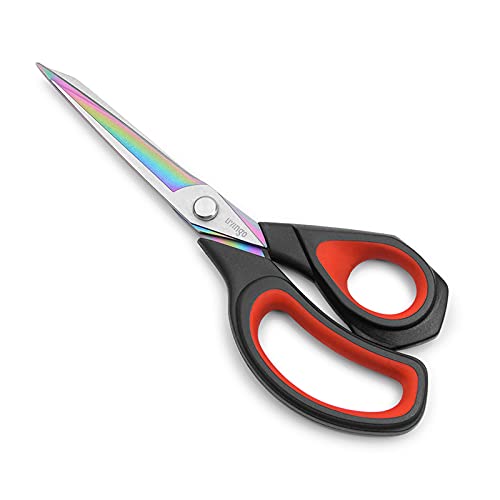
Better for hobbyists and professionals cutting many layers. The LIVINGO pair features a forged stainless steel body with a titanium coating that resists rust and adhesives. It remains sharp through heavy fabrics and layered projects, making it ideal for sewing, quilting, and dressmaking. The ergonomic, multi-color blade design helps with long sessions. Limitation: heavier handle mass may be less comfortable for very small hands.
Fiskars RazorEdge Fabric Scissors (8”)

Best for clean, consistent cuts with minimal effort. The RazorEdge line uses premium stainless steel blades with a honed edge designed for the tip, delivering smooth action across fabrics. The ergonomic handles reduce fatigue, making it suitable for long tailoring sessions. Caution: may be less effective on very thick leather compared with heavier-duty models.
H Hilting Gobos & Projectors Tailor Scissors (9”)

Choose this if you work with heavy fabrics or multiple layers. The high-carbon steel offers strong edge retention and clean cuts. The rounded, ergonomic handle reduces hand fatigue, and the bent design keeps materials flat for precise tabletop cutting. Limitation: may require occasional alignment checks due to practical, bent-handle design.
LIVINGO 8″ Professional Heavy Duty Tailor Scissors

Best for general dressmaking and multi-purpose crafting. The bent design helps keep fabric flat during cuts, while the forged stainless steel blades offer durability and smooth action. The mirror finish adds a touch of refinement, and the ergonomic grip supports longer cutting sessions. Caution: may be slightly heavier than lighter, standard-model scissors.
Buying Guide
What should you consider when choosing fabric cutting shears?
- Blade material and hardness: High-carbon steel blades stay sharp longer and handle multiple fabric layers, but may require more maintenance to prevent rust.
- Blade geometry and angle: A 45° blade angle can improve leverage and reduce strain, especially for thick materials.
- Ergonomics and grip: Look for padded or soft-grip handles, especially if you cut for long periods or have a sensitive wrist.
- Durability versus weight: Heavier blades feel robust but can be tiring; lighter options are easier for beginners or intricate work.
- Left- or right-handed use: Ensure the design suits your dominant hand for better control and precision.
- Special features: Bent handles keep fabric flat; chamfered blade heads reduce fabric snagging; bolt locks help maintain alignment over time.
Frequently Asked Questions
- What cutting shears are best for multiple fabric layers?
Look for forged stainless or high-carbon steel blades with a robust hinge and a comfortable grip. Models with an ergonomic design and a reinforced bolt are typically better for layered fabrics.
- Why is a bent handle important?
A bent handle helps hold materials flat on the cutting surface, improving accuracy on tabletop cuts and reducing fabric drift.
- Are titanium-coated blades worth it?
Titanium coating improves rust resistance and reduces sticking from adhesives, which is useful for craft and sewing tasks.
- How do I know if scissors will be comfortable long-term?
Check for soft-grip or ergonomic handles and a balanced weight that minimizes fatigue during extended sessions.
- Can fabric scissors cut leather effectively?
Heavy-duty models with high-carbon steel blades are typically better suited for leather cutting compared with standard fabric shears.
- How should I maintain fabric scissors?
Keep blades dry, wipe after use, and occasionally oil the pivot to maintain smooth cutting action and prevent rust.