Find the right self-healing cutting mat for rotary cutters with durable protection, precise grids, and generous working spaces. This guide focuses on mats that pair well with rotary blades, ideal for sewing, quilting, scrapbooking, and general craft projects. The top picks below are best for quilters and hobbyists who need large, stable cutting surfaces and reliable longevity. For smaller projects, consider compact options; for heavy-duty sewing rooms, opt for thicker, double-sided mats with clear measurement grids.
| Product | Brand | Size | Notes |
|---|---|---|---|
| Density-upgraded 24″ x 36″ Large Self Healing Sewing Mat | Idemeet | 24″ x 36″ | High-density 2600g; thick buffer layers; anti-cut interlayer |
| Self Healing Sewing Mat 12″ x 18″ | anezus | 12″ x 18″ | Double-sided; 5-ply construction; compact for small projects |
| Self Healing Cutting Mat 24″ x 36″ | Fiskars | 24″ x 36″ | Extra large surface; clear grids; double-sided |
| Self Healing Cutting Mat 23″ x 35″ | Tujurich | 23″ x 35″ | Double-sided grids; A1 size; stable surface |
| Ecraft Large Self Healing Cutting Mat 24″ x 36″ | ecraft | 24″ x 36″ | Double-sided; 5-ply; grey/black |
Note: This summary highlights mats with rotary-cutter compatibility and large working areas.
Idemeet Density-Upgrade 24×36 Self-Healing Mat

Best for: large-range fabric cutters and serious crafters needing long, uninterrupted cut lines. This mat features a high-density 2600g core and thick buffer layers to cushion blades and protect work surfaces. It uses a white anti-cut interlayer for enhanced blade protection and crack resistance.
Why selected: Its premium density and layered construction aim to extend mat life, making it a strong choice for frequent rotary cutter use on large projects. The mat is compatible with both rotary cutters and straight blades, helping maintain blade sharpness over time.
Caution: Heavier weight may be less convenient for portable use; ensure the cutting area is flat to maximize self-healing performance.
anezus Self Healing Sewing Mat 12×18

Best for: hobbyists with limited workspace or pursuing small-scale sewing and precision work. This mat is double-sided with a 5-ply PVC construction that helps the surface reseal after cuts and protect blade sharpness.
Why selected: Its compact 12″ x 18″ size is ideal for small craft tables, quilting projects, and scrapbooking, while maintaining a self-healing surface suitable for rotary blades.
Caution: The smaller size may require repositioning for large cuts; not ideal for full-width fabric cutting without repositioning.
Fiskars Self Healing Cutting Mat 24×36

Best for: quilters and garment makers who cut full widths of fabric and need easy-to-read grids with bias lines. This mat offers a durable self-healing surface with clear measurement grids and angle lines for precise cuts.
Why selected: The large 24″ x 36″ size and integrated angle guides support accurate layout for long fabric strips and multiple project types. The double-sided surface enhances longevity under heavy use.
Caution: Grids can fade with heavy use; consider labeling with an add-on tool for extended grid visibility.
Tujurich Self Healing Cutting Mat 23×35
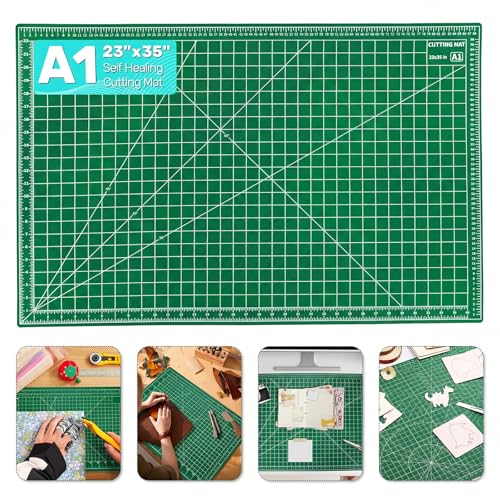
Best for: crafters seeking a stable double-sided mat with clear inch grids and alignment guides for sewing and quilting. The surface is designed to absorb light cuts and stay smooth over time.
Why selected: The 23″ x 35″ footprint strikes a balance between cutting area and table space, with reliable self-healing properties compatible with rotary cutters.
Caution: Slightly smaller than the 24″ x 36″ mats; plan layout accordingly for very wide fabric pieces.
ecraft Large Self Healing Cutting Mat 24×36

Best for: extensive sewing and crafting projects that require a robust, double-sided cutting surface with 5-ply construction. The mat features inches and metric gridlines with clear angle guides for precise cuts.
Why selected: Its grey/black dual-color design helps reduce glare and protects work surfaces. The mat’s thickness and layered build contribute to longer blade life and better cut accuracy.
Caution: Large mats may require a larger workspace and stable mounting to avoid shifting during cut tasks.
Buying Guide: How To Choose The Right Rotary Cutter Mat
- Size matters: For full-width fabric cuts, aim for 24″ x 36″ mats. For small craft work, 12″ x 18″ or 18″ x 24″ mats can be enough.
- Material depth and layers: Look for 5-ply construction with a self-healing top layer and a supportive interlayer to extend blade life and cushion cuts.
- Grid clarity and angles: Choose mats with clear inch and metric grids, plus 30°, 45°, and 60° bias lines for accurate trimming and pattern matching.
- Double-sided use: Mats that are self-healing on both sides provide longer life and more cutting surfaces, especially in busy studios.
- Surface protection: A good mat protects tables and blades, reduces wear on rotary cutters, and minimizes cut-through on delicate fabrics.
- Weight and portability: Heavier mats stay in place; lighter mats are easier to move but might shift during cutting. Consider your workspace and handling needs.
Frequently Asked Questions
- What size mat is best for home sewing? A 24″ x 36″ mat is commonly favored for home sewing due to its balance of cutting area and manageability.
- Are double-sided mats worth it? Yes, they double the usable life and provide more cutting surfaces, especially in busy craft spaces.
- Can rotary blades damage the mat? A proper self-healing mat protects blades by distributing pressure and resealing cuts over time.
- Do I need measurement grids on both sides? Grids on both sides help when you flip the mat for different projects or when working from different orientations.
- Is there a risk of the mat slipping during use? Choose a mat with a stable, non-slip backing or place it on a non-slip surface to minimize movement.
- How do I extend mat life? Store mats flat, avoid cutting through the edges, and rotate uses between sides if applicable.