Crystals and glass chips add depth, texture, and color to resin art. This guide highlights five top options, detailing who they’re best for, how they’re best used, and practical considerations to help you choose confidently. Whether you’re a hobbyist creating geode coasters or a professional crafting showpieces, these selections cover a range of styles—from bold metallics to glow-in-the-dark accents.
| Product | Best For | Key Benefit |
|---|---|---|
| DIYICO 12 Box Crushed Glass | Colorful resin projects and nail-art style embellishments | 12 colors in convenient jars |
| Armas Kodu Crushed Glass | Geode art and bold, solid-color resin pieces | 3-6mm pieces with no color bleeding |
| Ceya Gold Metallic Chips | Metallic accents for glam resin pieces | 2-4mm irregular metallic chips |
| T4U Crystal Chips Quartz Glass | Natural quartz look for vases and mixed media | 1LB bulk irregular chips |
| fuceury 24 Colors Crushed Glass | Vibrant, multicolor resin decorations | 24 metallic colors, 240g+ |
DIYICO 12 Box Crushed Glass Craft Glitter
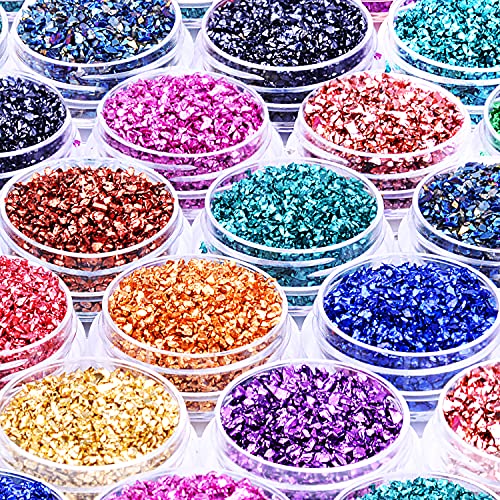
The DIYICO kit provides twelve color options in 2-4 mm crushed glass, totaling 110g. This makes it well suited for resin art projects that require a bright, varied palette or for use as vase fillers and decorative edges. The jars with screw lids aid storage and transportation, which is practical for crafters who move between workspace setups. Best for: color-forward resin designs and nail-art style inlays. A potential limitation: color accuracy can vary between batches, so test mixes before committing to a large piece.
Armas Kodu Crushed Glass For Resin Art

This option ships 1.5 pounds of 3-6 mm crushed glass, designed for easy handling by both beginners and pros. The pieces are described as 100% solid color with no bleeding, making them ideal for crisp geode looks or mosaic-style resin art. Best for: reliable color fidelity and eye-catching 3D textures in epoxy and geode artwork. Caution: ensure the resin weathers temperature changes without cracking; the product is designed to withstand typical curing temperatures, but extreme heat should be avoided.
Ceya 5.3oz Gold Metallic Crushed Glass

Ceya offers irregular 2-4 mm metallic chips with a shallow gold finish. The metallic color is achieved through electroplating, which promises shine and reduced fading. Edges are described as non-sharp for safer use, making them suitable for nail art, jewelry, and resin projects that require a luxe metallic effect. Best for: adding a luxurious, reflective gold accent. Limitation: metallic chips may show wear with heavy UV exposure; store away from prolonged sunlight to maintain vibrancy.
T4U Crystal Chips Stone Crushed Quartz Glass

T4U provides a 1-pound bulk lot of natural quartz crystal chips in irregular shapes, ranging roughly 0.1″ to 0.5″ in size. The stones are described as resist fading and suitable for a variety of settings, including indoor decor, vase filling, and plant top dressing. Best for: natural-looking textures and earthy tones in resin pieces or terrarium-inspired crafts. Limitation: natural stones can vary in color and size between batches, so plan spacing and texture accordingly.
fuceury 24 Colors Crushed Glass

This set offers 24 metallic colors, with 10g+ per color and a total of 240g+. The glass pieces are described as reliable, fade-resistant, and non-deforming, making them a dependable choice for resin crafts that require a wide color range. Best for: detailed resin art with complex color schemes. Caution: metallic tones may show wear in very sunny displays; use UV-protective storage if possible to preserve color integrity over time.
Buying Guide
What should you consider when choosing crushed glass for resin art?
- Color range and colorfastness: Do you need a broad palette or specific tones? Consider whether colors are solid or metallic, and whether they may bleed or fade over time.
- Size and texture: Are you after small, delicate chips or larger, chunky pieces? Irregular shapes create more texture in resin surfaces.
- Material safety: Confirm glass quality and any non-toxic claims, especially for projects that involve skin contact or kids’ crafts.
- Storage and packaging: Jars with lids help keep colors organized and prevent spills between sessions.
- Application compatibility: Some sets are designed for nail art, others for geodes or vase fillers. Choose based on your project type.
- Heat resistance: For projects that require curing heat, ensure the glass can withstand typical epoxy temperatures without fading or cracking.
How to use glass chips in resin art
- Mix colors gently into resin to prevent excessive bubbles; consider pouring in layers for geode-style effects.
- Test color samples on a small piece before committing to a large work to ensure the final look matches your plan.
- Seal or top-coat areas with fine chips to protect from wear if the piece will be handled frequently.
First-time buyer tips
- Start with a smaller set to learn how different colors interact with your resin and mould shapes.
- Store extra color options in labeled containers to streamline future projects.
- Keep a scrap piece on hand to compare color changes under lighting conditions you typically use.
FAQ
- What resin compatibility should I expect with crushed glass?
Most crushed glass is compatible with standard epoxy resins, but always check the product’s stated usage guidelines and perform a small test before full-scale application.
- Can metallic glass chips fade under UV exposure?
Yes, some metallic finishes may fade if exposed to prolonged strong UV light. Store items away from direct sunlight when not in use.
- Are glow-in-the-dark glass chips safe for jewelry?
Yes, provided they are labeled for crafts and used as directed. Do not embed oversized pieces in direct skin-contact areas without proper sealing.
- Which size of glass chips is best for coasters?
2-4 mm chips provide good texture without making the surface overly rough for beverages; larger chips work better for bold geode looks.
- Should I pre-wash glass chips before use?
Some sets recommend rinsing to remove dust; follow the manufacturer’s instructions to ensure no residue interferes with adhesion or curing.