To create a poster board, start with a board suited to your project, organize a short headline and key information, then add readable lettering and visuals. A trifold board is best for a standing science-fair display; small sheets suit compact crafts; and large poster boards work for roomy presentations or classroom projects. The picks below cover those formats, plus lettering for a finished look.
| Product | Best For | Standout Feature |
|---|---|---|
| Xnewtwo Small Trifold Boards | Standing presentations | Two corrugated boards |
| Joyberg White Poster Boards | Small crafts and signs | 18 sheets, 11 x 14 inches |
| Pacon White Poster Board | Large projects and group use | 50 sheets, 22 x 28 inches |
| School Smart Black Railroad Board | High-contrast displays | 25 firm, 4-ply sheets |
| Carson Dellosa Black Cutout Letters | Quick, consistent headings | 219 letters, numbers, and symbols |
Xnewtwo Small Trifold Poster Boards

These white corrugated boards measure 26 by 17 inches when laid flat and come as a two-pack. Their three-panel format is designed to stand for a presentation, making them a practical choice for science fairs, school projects, and event displays.
Best for: Students or presenters who want a freestanding display with separate sections for a question, information, and results. The corrugated construction is described as providing stability while standing.
Consider: The listed dimensions are smaller than a standard large poster board, so check the available display space and amount of content before choosing this format.
Joyberg White Poster Boards

This pack contains 18 white boards, each measuring 11 by 14 inches. The double-glued paper is described as lightweight, durable, and smooth, with a matte finish on both sides. The product information also says the boards can be used for drawing, painting, crafts, and printing with a multifunction printer or photocopier.
Best for: Small signs, mini-posters, photo mats, and repeated classroom or craft projects. The modest size can be easier to handle than a full-size presentation board.
Consider: Choose a larger board if your poster needs extensive text, large diagrams, or a long viewing distance.
Pacon White Poster Board
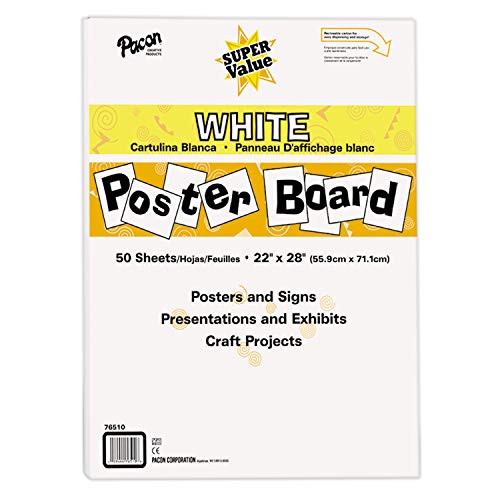
Pacon’s pack includes 50 white, uncoated sheets measuring 22 by 28 inches. The product is intended for posters, signs, crafts, painting, coloring, stenciling, and vision boards. A reclosable carton is included for storage.
Best for: Schools, clubs, and households that need a supply of large sheets for multiple projects. The bright white surface offers a plain background for writing, artwork, or mounted visuals.
Consider: These are flat sheets rather than a self-standing trifold display, so plan how to support or hang the finished poster if it needs to stand upright.
School Smart Black Railroad Board
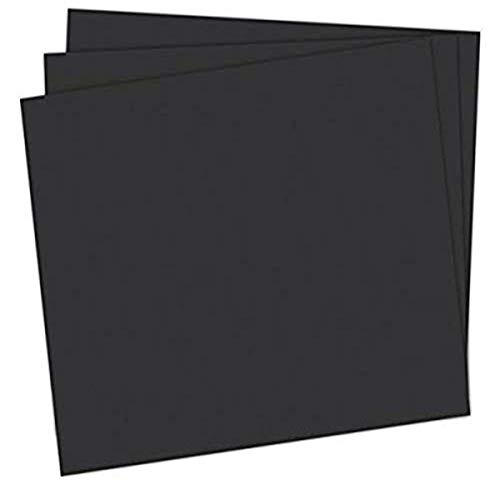
This pack contains 25 black sheets, each 22 by 28 inches. The 4-ply railroad board is described as firm while remaining easy to cut and trace. A dark background can make pale lettering and bright artwork stand out.
Best for: Makers who want a large dark canvas for signs, cutouts, or high-contrast designs. It is also useful when a project requires several matching sheets.
Consider: Black board can reduce contrast with dark ink or artwork. Choose light-colored materials for text and important details.
Carson Dellosa Black Cutout Letters

This 219-piece set includes 4-inch uppercase and lowercase letters, numbers, punctuation, and symbols. The pre-cut pieces can help create a consistent title, labels, dates, or classroom messages without hand-lettering every character.
Best for: Anyone who wants to assemble a neat, readable heading quickly, especially for a classroom display or poster with multiple labels.
Consider: The letters are black, so they may not show clearly on a dark poster background. Check that the available characters are sufficient for your wording before laying out the title.
Buying Guide: How Do You Create A Poster Board?
Begin by matching the board to the project. A flat sheet is useful for a poster that will be hung or mounted; a trifold is designed to stand on its own. Check the listed dimensions against your content and display location. If the poster must travel, consider whether a smaller format will be easier to carry.
What Should Go On The Poster?
Write down the main point before decorating. Give the poster a short title, then group supporting information into a few sections. For a school presentation, a simple structure might include the question, method, findings, and conclusion. Keep sentences brief and make the most important result easy to spot.
How Can You Make Text Easy To Read?
Use a clear title and consistent lettering. Cutout letters can save time on headings, while handwritten or printed text works for longer explanations. Use strong contrast between text and board color. Make labels large enough to read from the expected viewing distance, and avoid filling every empty space.
How Should You Arrange And Attach Materials?
Plan the layout before gluing. Place the title first, then position text, images, and diagrams so the viewer can follow them in order. Leave space between sections. Check that every item fits and is level before attaching it; use an adhesive appropriate for the materials involved.
Frequently Asked Questions
What Size Poster Board Should I Use?
Choose a size that fits the display area and the amount of information. Small boards suit compact projects; a 22-by-28-inch sheet provides more room, while a trifold adds side panels and standing support.
How Do I Make A Poster Board Stand?
Use a trifold board designed to stand, or provide a separate support for a flat sheet. The board format should match the display setup.
What Color Poster Board Is Best?
White is a versatile background for varied artwork and text. Black can create strong contrast with light-colored lettering and bright visuals.
How Can I Make A Poster Look Organized?
Use a short title, group related information, align items, and leave open space between sections. Preview the layout before attaching anything.
Can Poster Board Be Used For Crafts?
Yes. The listed boards are described for uses such as drawing, painting, cutting, tracing, signs, and other DIY projects. Confirm the board’s thickness and surface suit your materials.