For sewers seeking natural, sturdy cording, cotton options offer texture, durability, and a classic look. This guide highlights five reliable cotton cording products suitable for pillows, upholstery, drawstrings, and fabric crafts. Each selection targets different project needs, from small piping details to heavy-duty welting. Best for beginner crafters, advanced upholsterers, or DIY enthusiasts looking for natural fibers and easy handling. Below is a quick table of the chosen products for fast comparison.
| Product | Diameter / Width | Length | Best For |
|---|---|---|---|
| VitalCozy 1/4″ Cotton Piping Cord – 46 Yds | 1/4″ (6 mm) | 46 yd | Pillows, soft welted edges |
| VitalCozy 1/4″ Cotton Piping Cord – 9.3 Yds | 1/4″ (6 mm) | 9.3 yd | Smaller projects, details, light welting |
| TECEUM 3/16″ Cotton Rope – 50 ft | 3/16″ (5 mm) | 50 ft | Clothes lines, crafts, general purposes |
| Great Lakes 1/8″ Cotton Piping Cord – 10 yd | 1/8″ (3 mm) | 10 yd | Fine piping, decorative welting |
| Mandala Crafts 6mm Cotton Cording – 20 yd | 6 mm | 20 yd | Drawstrings, macrame, upholstery accents |
VitalCozy 1/4″ Cotton Piping Cord – 46 Yds

Product overview: A natural cotton piping cord designed for sewing and welting applications. The 1/4″ diameter provides a substantial edge for pillows and soft upholstery projects. The roll packaging helps prevent tangling during use. Best for sewers who want a reliable, neutral-colored cord with a soft cotton feel.
- Best for: Pillow seams, decorative welting, and lightweight upholstery
- Why selected: High-quality cotton offers a natural finish and reliable strength for repeated use
- Caution: Ideal for standard sewing projects; not designed for heavy outdoor load-bearing tasks
VitalCozy 1/4″ Cotton Piping Cord – 9.3 Yds

Product overview: A compact option of the same 1/4″ piping cord category. The roll packaging facilitates neat handling and is suited for smaller projects or trial runs. Natural color ensures compatibility with various fabrics and styles.
- Best for: Small piping accents, patchwork pillows, and craft projects
- Why selected: Consistent cotton quality in a shorter length for test runs
- Caution: Limited yardage means more frequent replenishment for larger jobs
TECEUM 3/16″ Cotton Rope – 50 Ft
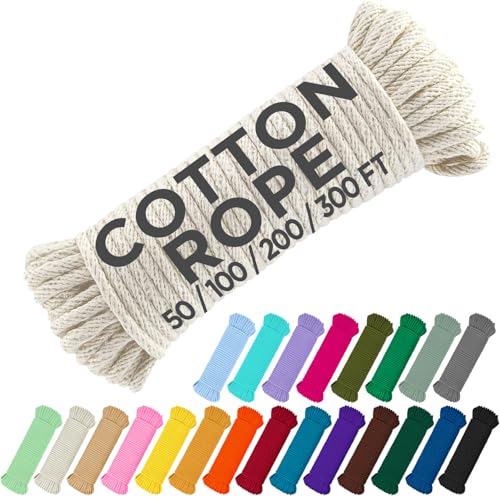
Product overview: A natural cotton rope with a 3/16″ diameter, suitable for crafts, camping, and DIY projects. The rope features a braided structure that distributes load evenly and offers a soft touch. The product is designed for versatility, both indoors and outdoors.
- Best for: DIY projects requiring a sturdy, flexible cotton rope
- Why selected: Strong, durable, and less prone to stretching compared to plain cords
- Caution: Not intended for wicking applications or high-load weight bearing in critical settings
Great Lakes Cotton Piping Cord – 1/8″

Product overview: A professional-grade 1/8″ cotton piping cord, designed for pillows and soft welt applications. The product is wound on a cardboard tube for easy dispensing and precise usage. A good balance of fiber quality and density supports neat seams.
- Best for: Fine piping details and delicate welting projects
- Why selected: Higher density material yields well-defined piping with good shape retention
- Caution: Smaller diameter may be less visible on larger surfaces; consider yardage needs
Mandala Crafts 6mm Cotton Cording – 20 yd

Product overview: A natural, unwaxed drawcord suitable for sewing, upholstery, and macrame applications. The 6 mm diameter provides a substantial feel that works well for corded garments, bags, or decorative accents. The cord is designed for pliability and durability with minimal polyester blends.
- Best for: Drawstrings, macrame, corset lacing, and upholstery trims
- Why selected: Versatile natural cord that blends well with multiple fabrics and uses
- Caution: Unwoven cord may require careful handling to avoid fraying during cutting
Buying Guide: Cotton Cording For Sewing
Key considerations help ensure you pick the right cotton cord for your project. Use the questions below to compare options and identify trade-offs that matter most for your work.
What diameter works best for my project?
For pillows and heavy welting, larger diameters like 1/4″ provide a bold, structured edge. For light piping, 1/8″ or 3/16″ can yield a subtler line. Choose based on the fabric weight and the desired visual impact.
How important is length and material quality?
Longer lengths reduce breaks during large projects, such as multiple pillows or a full upholstery job. High-quality cotton offers a natural feel and reliable strength, reducing fraying and wear over time.
Can I use cotton cording outdoors?
Cotton is natural and breathable but may degrade faster with prolonged sun exposure. Check UV resistance and intended indoor/outdoor use. Some products emphasize fade resistance, which is preferable for outdoor craft accents.
Is roll packaging better than bags?
Roll packaging helps prevent tangling and makes feeding the cord into a sewing machine or piping tool easier. For freehand craft use, bagged cords can be sufficient if kept neatly wound.
What are common limitations I should expect?
Some cords are not suited for heavy weight-bearing tasks or wicking uses. For resilience in heavy loads, consider stronger braids or alternative fibers. Always verify diameter, length, and packaging when budgeting yardage.
FAQ
- Q: Is cotton piping cord suitable for upholstery? A: Yes, especially in lighter welting and decorative piping, but test on your fabric to confirm edge definition and fold behavior.
- Q: What is the advantage of a rolled cord versus a bagged one? A: Rolled cords are easier to dispense and keep tangle-free during use.
- Q: How do I determine the right diameter for my pillow piping? A: Consider the pillow size and fabric, with 1/4″ providing a more pronounced edge and 1/8″ for subtle lines.
- Q: Can I use cotton cording for macrame projects? A: Some cords, like 6 mm, are suitable for macrame, depending on knot complexity and tension.
- Q: Should I avoid cotton cording in high-moisture environments? A: Cotton can absorb moisture; for damp settings, ensure proper drying and consider blends with synthetic cores if needed.