When choosing a color chart for painting, look for tools that clearly demonstrate color relationships, mixing results, and terms. These color wheels are ideal for beginners learning color theory and for artists refining palettes. This guide highlights five practical options, explaining who each is best for and why it stands out.
Summary of selected products:
| Product | Best For | Key Strength |
|---|---|---|
| JimKing Creative Color Wheel (9.25″) | Beginners and teaching settings | Two-sided wheel showing color relationships |
| Outus Color Wheel (9.06″) | Color theory practice | Dual-sided with grayscale and triads |
| Creative Color Wheel (9.25″) | Visual learners | Includes grayscale, tints/tones, and term definitions |
| RAL K7 Color Chart | Professional color matching | 216 hues with eco-friendly paints |
| Outus Color Wheel (5.5″) | Portable practice | Two designs on front/back for variety |
JimKing Creative Color Wheel: Color Relationships At a Glance
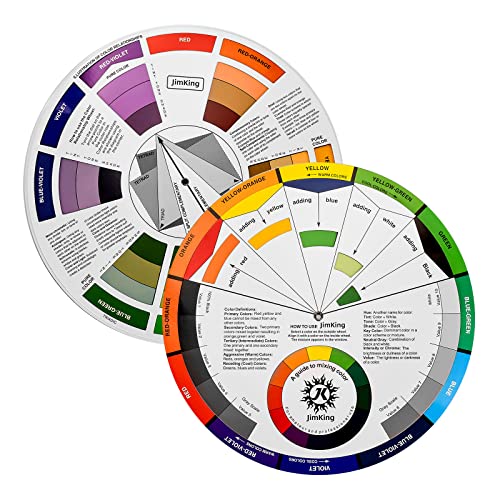
The JimKing Creative Color Wheel helps organize colors and simplifies choosing harmonious combinations. It defines common color terms and clarifies color interactions, making it suitable for painters, crafters, interior or graphic designers, and makeup or tattoo artists who work with blending. The two-sided rotating wheel, with a 230 mm diameter, is portable and easy to share in class settings. Best for: classroom demonstrations, beginner artists, or professionals seeking a clear teaching tool for color relationships. Caution: surface wear or handling may affect precision over time with heavy use.
Outus Color Wheel (9.06 Inch): Dual-Sided Color Theory

This kit includes two 9.05-inch color wheels designed for learning color theory and color mixing. The front shows basic color relationships and results, while the back offers grayscale, triads, tints, and tones with clear definitions. It’s ideal for art students, makeup artists, or hobbyists who want a portable, hands-on guide to how colors interact. Best for: step-by-step color pairing practice and classroom activities. Limitation: only visual representations; does not replace hands-on pigment testing.
Creative Color Wheel: All-In-One Mixing Guide

This package contains a Creative Color Mixing Board and a regular Color Wheel (9.25 inches). It visually illustrates relationships between colors, including grayscale, tints, and tones, plus clear color term definitions. The wheel shows which colors are complementary and how they blend together or clash. Best for: students and artists who want a reliable, compact reference for color harmony. Caution: the data is a teaching aid and should be supplemented with actual paint testing for accuracy in projects.
RAL K7 Color Chart: 216 Gloss Hues for Professionals

The RAL K7 Color Chart offers 216 timeless hues across five-page displays, facilitating precise color matching across projects. It uses eco-friendly water-based paints with enhanced UV resistance for long-lasting color. Best for: designers and professionals who require a broad, standardized color palette and durable presentation in client meetings. Limitation: larger format may be less portable for on-the-go sketching.
Outus Color Wheel (5.5 Inch): Compact Color Theory
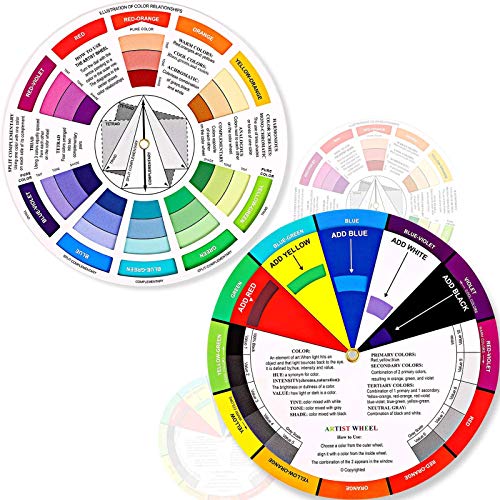
These two 5.5-inch wheels are a compact option for quick color checks and portable practice. Front side shows basic color relationships and mixing results; back side includes grayscale, triad colors, and color term definitions. Best for: students and artists who need a pocket-sized reference, travel sketch kits, or quick on-site color planning. Caution: small size may limit precision for detailed color planning.
Color Mixing Recipes And Guides

Color Mixing Recipes for Oil & Acrylic provides practical recipes for more than 450 color combinations. This reference supports artists seeking a core guide to consistently reproduce tones and shades across media. Best for: studio painters and advanced hobbyists who want a structured pallet-building resource. Note: this is a reference guide and not a color wheel, so it should be used alongside wheel-based tools for best results.
4 Pcs Color Wheel Set

The Nezyo bundle includes four color wheels in two sizes: 5.5 inches and 9 inches. It helps users compare color relationships across multiple formats and provides a robust visual reference. Best for: classrooms or studios needing multiple wheels for group activities or varying working space. Limitation: the back-and-front designs may require careful handling to avoid wear on the wheel surfaces.
Buying Guide: Practical Considerations For Color Chart Purchases
- Size and portability: Choose wheel sizes that fit your workspace. Smaller wheels are great for field work, larger wheels give more detail for education.
- Two-sided designs: Dual surfaces typically show color relationships on one side and terms/triads on the other, which is ideal for learning and teaching.
- Complements and harmonies: Look for wheels that clearly illustrate complementary colors, triads, tints, and tones to support practical color mixing.
- Material and durability: Opt for durable boards or wheels with clear print and a comfortable rotatable mechanism if you plan to use them in classes.
- Additional resources: Books or companion guides can extend learning, especially for beginners building a foundational palette.
- Intended user: Beginners benefit from visual clarity and straightforward explanations, while professionals may need a broader color range and more durable charts.
Frequently Asked Questions
- What is a color wheel best used for in painting?
A color wheel helps artists understand color relationships, identify complementary colors, and plan harmonious palettes for paintings or makeup looks.
- Do I need both front and back sides on a color wheel?
Having both sides can be advantageous, as the front typically demonstrates color mixing and relationships, while the back covers grayscale, tints, tones, and color terms.
- Are larger color charts more accurate for professional work?
Yes, larger charts can show more detail and a wider range of hues, which is beneficial for precise color matching in design and production contexts.
- Can color wheels replace actual paint testing?
No. Wheels are educational aids. They should supplement, not replace, hands-on testing with real pigments to confirm outcomes.
- Which color wheel size should a beginner start with?
Start with a portable 5.5-inch or 9-inch wheel to practice core concepts and gradually move to larger formats for in-depth color planning.