Clear glaze products for clay protect surfaces while delivering a bright, high-gloss look. This guide highlights five options that fit common clay crafts, from air-dry projects to polymer clay and pottery miniatures. The top picks suit hobbyists seeking a durable sealant, beginners needing easy application, and artists aiming for a professional, glass-like finish. Read on to find which glaze is best for your project type, drying time, and preferred application method.
Summary of chosen products
| Product | Best For | Key Benefit | Approx. Dry Time |
|---|---|---|---|
| Aukney 100ML Air Dry Clay Varnish | Air-dry clay projects needing scratch resistance | High gloss, anti-scratch, waterproof protection | 24 hours for full cure |
| EIGTWEN 100ml Air Dry Clay Glaze | Air-dry pottery, clay models, and crafts | Glossy glaze with protective film | 24 hours to full cure |
| LOCKMIO 3.4FL OZ Clay Glaze & Tool Kit | General clay work with tools kit included | Durable, high-gloss glaze with crack and scratch resistance | 24 hours for glaze to dry |
| Krylon I00500A07 12-Ounce Clear Glaze | Clear glaze needs for multiple surfaces | One coat equals three coats of protection; high gloss | Variables by spray coat, typically hours |
| Fensong Clay Glaze for Air Dry & Polymer Clay | Miniatures and ornaments requiring clear gloss | Crystal-clear finish, durable top coat | 12 hours fully cured |
Aukney 100ML Air Dry Clay Varnish

What this is best for: Air-dry clay projects that require a protective, high-gloss finish and abrasion resistance. Ideal for artists working with polymer clay or craft projects that might encounter light abrasion or moisture exposure.
Why selected: The product functions as both a sealant and a glaze, forming a transparent, protective film that reduces cracking and adds a professional gloss. It emphasizes waterproof protection and scratch resistance, aligning well with decorative clay pieces.
Key usage notes: Apply a white acrylic primer first, then color, and finally the glaze. Allow 24 hours for full drying of the glaze. Tends to perform best when applied in thin, even layers to avoid whitening or streaking.
Caution / limitation: The average user should test on a small sample first to ensure color compatibility with your paints; excessive layers can increase dry time and may alter the final gloss level.
EIGTWEN 100ml Air Dry Clay Glaze

What this is best for: Air-dry clay and pottery projects that need a durable, transparent gloss coating with water resistance.
Why selected: It provides a protective film and a bright-gloss finish, designed specifically for air-drying clay, with a straightforward application process similar to other glaze products.
Key usage notes: Follow the three-step method: prime with white acrylic, apply color, then apply the glaze. Allow 24 hours for a full cure.
Caution / limitation: Some users may require multiple light coats to achieve the desired gloss; avoid thick coats to prevent tackiness during drying.
EIGTWEN 50ml Air Dry Clay Varnish

What this is best for: Small air-dry clay projects and quick-seal tasks where a glossy finish is desired without a long waiting period.
Why selected: The product emphasizes a transparent, high-gloss finish, waterproof and crack-protective features, making it a practical option for delicate miniatures and ornaments.
Key usage notes: Use the same three-step approach as larger bottles, mindful of the smaller package and drying times. Reach full gloss after approximately 24 hours.
Caution / limitation: The smaller size may require reordering more often for larger projects; plan batches accordingly to avoid mismatched gloss levels between sessions.
LOCKMIO 3.4FL OZ Air Dry Clay Glaze & Tool Kit
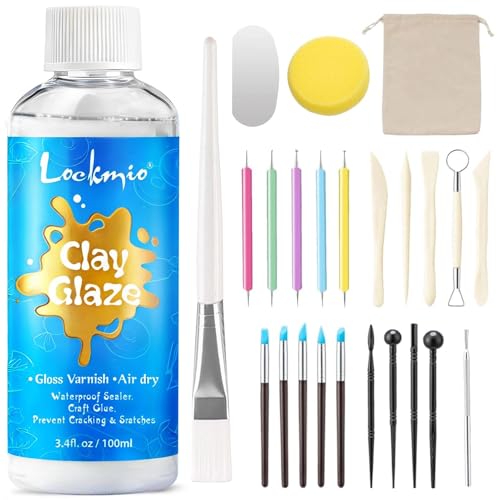
What this is best for: Hobbyists and professionals who want a complete clay toolkit alongside a protective glaze for stippling, carving, molding, and shaping.
Why selected: The kit includes 25 tools plus a durable glaze layer that helps prevent cracking and scratches while delivering a glossy finish. This makes it a versatile buy for varied clay projects.
Key usage notes: After the clay dries, apply the glaze and allow 24 hours to cure for a durable, glossy film.
Caution / limitation: Tool kits add value, but some users may not need all 25 tools for smaller projects; consider whether the full set is necessary for your typical workflow.
Krylon I00500A07 12-Ounce Clear Glaze
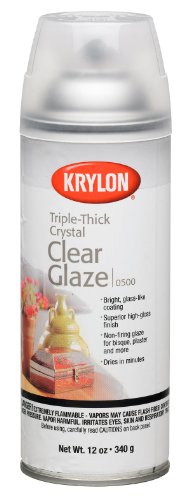
What this is best for: Projects requiring a spray-on clear glaze with high gloss and multi-surface compatibility, including polymer clay and ceramics.
Why selected: One coat can provide a level of protection comparable to several other coatings, making it efficient for larger surfaces or quick refreshes of multiple pieces.
Key usage notes: Spray in a well-ventilated area; apply light, even coats. Drying times depend on environmental conditions; reapply as needed for additional gloss and protection.
Caution / limitation: Spray coatings can run if applied too thickly; test on a sample piece to dial in an even finish before proceeding with your main project.
Fensong Clay Glaze for Air Dry & Polymer Clay

What this is best for: Miniatures, ornaments, and small sculptures that need a clear gloss finish and durable top coat.
Why selected: The glaze is designed to be crystal-clear with a smooth, protective layer that resists scratches, dust, and wear, supporting display-ready pieces.
Key usage notes: Fully cure time is typically around 12 hours, with faster touch-dry times. Layering can enhance depth of gloss without dulling colors.
Caution / limitation: Some users may prefer thicker coats; ensure you space coats to avoid long curing times or surface tackiness in humid conditions.
Buying Guide: Key Considerations For Clear Clay Glazes
What finish do you want? Decide between a glass-like high gloss or a softer satin-like sheen. Clear gloss coatings emphasize color depth and detail, while satin finishes reduce glare on large pieces.
Application method matters—brush, dip, or spray? Brush-on glazes like the gel-like varnishes give precise control; spray-on options cover larger areas quickly but may require masking and ventilation.
Drying and curing times—assess whether you need fast-drying layers for quick projects or longer cures for layering without smudging. Air-dry clay glazes often cure within 12–24 hours depending on thickness and environment.
Safety and odors—opt for low-odor, ASTM-compliant formulas when working indoors or with kids. Check for any labeling about food-safety or heat resistance if displaying pieces in kitchen settings.
Compatibility with clay types—some glazes are designed specifically for air-dry clay, while others suit polymer clay or ceramics. Review the product description for best-fit materials and surface preparation requirements.
Durability and protection—consider abrasion resistance, moisture protection, and UV stability if pieces will be handled or displayed outdoors or under bright light.
FAQ
- Can I use clear glaze on wet clay? No. Most glazes are designed for fully dried clay to prevent cracking or peeling. Always follow product-specific drying instructions.
- Will multiple coats increase gloss? Generally yes, but excessive layers can cause runs or tackiness. Apply thin, even coats and allow full curing between layers.
- Is a primer required before glaze? Some products recommend a white acrylic primer to enhance color depth and adhesion. Follow the product’s three-step guidance for best results.
- Is glaze safe for miniature display? Most products are formulated for decorative display; verify any food-safety or hobby-use labeling if the piece will be handled frequently.
- How long does full cure take? Most glazes reach full cure in 12–24 hours, but environmental factors like humidity can extend drying times.
- Can these glazes be used on other materials? Some are multi-surface (wood, plaster, ceramics); always check the product scope to avoid incompatibility with non-clay surfaces.