Finding the right card stock for postcards means balancing thickness, print quality, and compatibility with your printer. This guide showcases five reliable options that fit common postcard projects—from invitations to marketing mailers. These picks suit crafters, small business owners, and students who want professional results without outsourcing. Each product section explains who it’s best for, why it stands out, and a practical limitation to consider.
Summary of selected products:
- PrintWorks Blank Printable Postcards for Mailing & Printing — best for: cost-effective bulk invitations and promos; laser and inkjet friendly.
- TEETOOKEA 100 Pack 4×6 White Cardstock — best for: versatile, standard postcard size with strong printing results.
- NextDayLabels 8-1/2 x 11 Postcards 4 Up — best for: professional announcements and reminders with easy duplex printing.
- Desktop Publishing Supplies 500 Blank Perforated Postcards 8.5×11 — best for: large-scale direct mail and marketing prints.
- Aidunmis White Cardstock 5×7 110 Sheets — best for: premium invitations and multi-task projects with heavy stock.
PrintWorks Blank Printable Postcards for Mailing & Printing
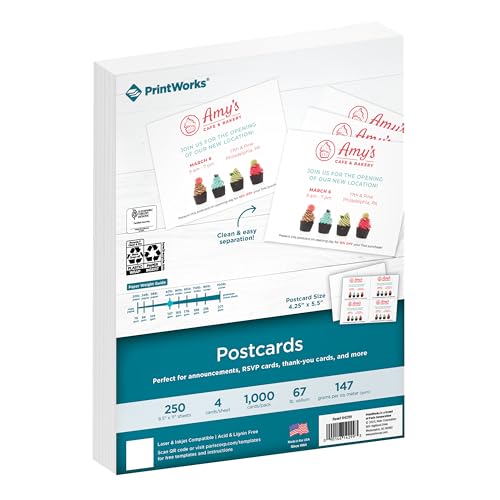
Best for bulk invitations and promotional mailers. This set includes 1000 white postcards at 4.25″ x 5.5″ per card, perforated 8.5″ x 11″ sheets, and 67 lb/147 gsm cardstock. They print on both sides and are compatible with laser or inkjet printers. The included templates simplify personalization, and no envelope is needed for mailing under postal regulations. Best for cost-conscious marketers and DIY designers who want a professional look without outsourcing.
Who it’s for: small businesses, event planners, and DIY marketers who need a scalable, cost-efficient postcard solution. Why selected: strong bulk value, double-sided printing, and US postal regulation compliance make it a practical all-in-one choice. Limitation: color fidelity may vary by printer settings; test print before large campaigns.
TEETOOKEA 100 Pack 4×6 White Cardstock

Best for standard postcard tasks and wedding materials. The 100-pack contains 4×6 white blank cards made from 92 lb/250 gsm heavyweight cardstock. They’re sturdy, resistant to bending, and designed for both laser and inkjet printers. This option suits planners who want crisp prints and a formal look on a classic postcard size. Limitation: the pack is smaller than some bulk options, so larger campaigns may require additional bulk orders.
NextDayLabels 8-1/2 x 11 Postcards 4 Up
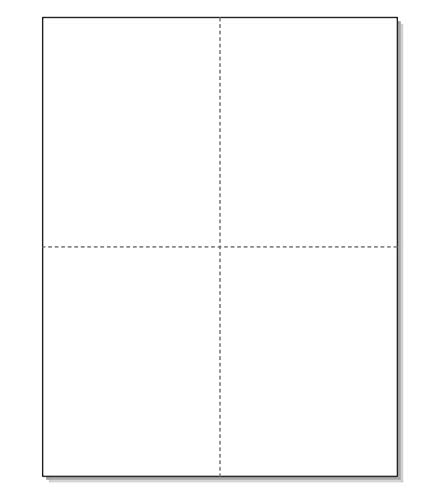
Best for professional announcements and reminder cards. This pack offers 50 sheets, each producing four 4.25″ x 5.5″ cards on 100# tag, 161.78 gsm matte cover stock. It’s well-suited for duplex printing and efficient mail campaigns where a clean, dense finish matters. Limitation: you’ll print in batches of 200 cards, so very large campaigns may require more sheets or a different format for mass mailings.
Desktop Publishing Supplies 500 Blank Perforated Postcards

Best for large-scale marketing prints and events. This set contains 500 blank perforated postcards at 8.5″ x 11″ with 2-up perforated layout at 5.5″ x 8.5″ per card, 80 lb cover (218 gsm). It’s compatible with inkjet and laser printers and suitable for promotional materials, invitations, and reminders. Limitation: perforation lines require careful alignment to maintain edge-to-edge print quality; verify printer compatibility with perforated stock before production.
Viloth White Cardstock 5×7, 100 Pack

Best for premium invitations and multi-use cards. The 100-pack features 74 lb/200 gsm heavyweight 5×7 white cardstock, a standard size for wedding invitations, RSVP cards, and postcards. It’s compatible with most inkjet and laser printers. Limitation: 5×7 size can be less convenient for typical consumer printers that handle standard letter sizes; ensure your printer supports this size without auto-trim issues.
Cranium Press 50 Sheets Heavyweight White Cardstock

Best for invitations, menus, and professional stationery. This option features 80 lb cover weight (176 gsm), 8.5″ x 11″ sheets, and a smooth bright-white finish. It’s designed to deliver vibrant prints with minimal show-through on both inkjet and laser printers. Limitation: slightly lighter weight than the 80 lb options used for heavy postcard applications; ideal for moderate-use projects rather than heavy-duty direct mail.
Buying Guide: Card Stock For Postcards
- Size compatibility: Choose postcard stock that matches your printer’s supported sizes. Common formats include 4×6, 4.25×5.5, 5×7, and 8.5×11 sheets perforated or cut to cards.
- Weight and finish: Heavier weights (80 lb cover or 218 gsm) resist bending and feel premium. Matte finishes reduce glare for photos and text, while glossy finishes enhance vibrant images.
- Printer compatibility: Ensure stock is labeled for inkjet, laser, or both. Some perforated or specialty sheets require specific printer settings for best results.
- Perforation vs. cut: Perforated sheets save time on manual cutting but may impact edge precision. Confirm your workflow before choosing perforated stock.
- Bulk needs: For large campaigns, consider bulk options (500–1000 sheets) to lower per-unit costs and maintain consistency across mailings.
- USPS compliance: If mailing without envelopes, verify the stock meets postal regulations for thickness and weight.
Frequently Asked Questions
- What card stock weight is best for postcards? A: 80 lb cover (about 218 gsm) is a common standard for sturdy, professional postcards. Heavier stock feels premium and resists creasing.
- Can I print on perforated postcard stock with a home printer? A: Yes, many perforated options are designed for home printers, but always test feed and alignment first to avoid jams.
- Is 5×7 card stock suitable for wedding invitations? A: Yes, 5×7 is a traditional invitation size. Ensure your printer can handle this dimension or use professional printing for best results.
- Should I choose matte or glossy finishes? A: Matte reduces glare and is easier to read; glossy enhances images but can cause glare in bright lighting.
- Are perforated cards easy to separate? A: Perforation helps separation, but ensure clean edges during tearing and consider trimming if edges aren’t perfectly aligned.
- What should I consider for bulk postcard campaigns? A: Look for bulk packs, consistent weight and finish, print-friendly templates, and postal compliance for mailings without envelopes.