Answering the need for realistic carbon fiber accents, these decals and wraps simplify adding a convincing carbon look to model cars and real vehicles alike. This guide highlights five top options that balance detail, ease of use, and value. Best for hobbyists seeking authentic texture without expensive materials, these picks cover fine twill patterns, full-color carbon decals, and vinyl wraps that suit beginners and experienced model builders.
Summary of top picks:
- Tamiya 12681 – Carbon Twill decorative parts for 1:6/1:12/1:24 models
- Tamiya 12682 – Ex.Fine carbon decor twill for classic model kits
- Tamiya 12679 – Decor Smooth/Fine carbon texture for detailed builds
- DIYAH 3D Black Carbon Fiber Film Twill Weave Vinyl Sheet – large, versatile roll
- VViViD+ Forged Composite Carbon Vinyl Wrap Roll – large, durable wrap option
Tamiya 12681 – Carbon Decorative Twill

Best for: Model builders who want precise, scale-accurate carbon detailing in 1:6, 1:12, or 1:24 kits. The product includes fully illustrated instructions, making it suitable for beginners and seasoned hobbyists who value clear guidance.
Why it’s selected: This Tamiya accessory offers a detailed carbon twill finish designed for plastic model kits. Its compatibility with multiple scales reduces the need for separate decals for different project sizes.
Caution: Ensure your kit allows for decorative parts placement; the two-dimensional decal may require careful alignment on curved surfaces.
Tamiya 12682 – Ex.Fine Carbon Decor Twill

Best for: Builders seeking replacement parts or extra scale-detail accents for 1:6/1:12/1:24 models. Excellent for adding a refined carbon texture to panels that would otherwise be plain.
Why it’s selected: It functions as a precise replacement part or supplementary accessory, expanding options for kit customization without creating a seamless look from scratch.
Caution: It’s a specialized accessory; verify compatibility with your specific kit model to avoid misfit on nonstandard panels.
Tamiya 54646 RC Sticker Sheet Carbon Pattern

Best for: RC car enthusiasts and modelers who need durable carbon pattern decals compatible with multiple RC brands and scales.
Why it’s selected: A trusted brand (Tamiya) offers a carbon pattern sheet that integrates well with various RC and model kit ecosystems, providing broad compatibility.
Caution: The sheet includes many small pieces; precise cutting and placement are required to avoid misalignment on curved surfaces.
TAMIYA 12679 – Decor Smooth/Fine Carbon

Best for: Builders who want a smooth, fine carbon texture for premium-looking panels on 1:6/1:12/1:24 scale builds.
Why it’s selected: It combines high-detail carbon texture with straightforward application, ideal for adding a refined finish to car bodies and interior panels.
Caution: Fine textures may require careful handling to prevent air bubbles on complex curves.
DIYAH 3D Black Carbon Fiber Film

Best for: Crafters seeking a versatile, large carbon wrap for multiple surfaces beyond a single model kit—great for hobby cars, RC bodies, or gear displays.
Why it’s selected: True 3D twill texture with a UV-resistant vinyl finish delivers a realistic carbon look without the cost of real carbon fiber. It adheres to various surfaces and accommodates customization beyond plastic kits.
Caution: It is Vinyl-based; surface prep and heat/pressure helps ensure a smooth, bubble-free finish on irregular shapes.
VViViD+ Forged Composite Carbon Vinyl Wrap
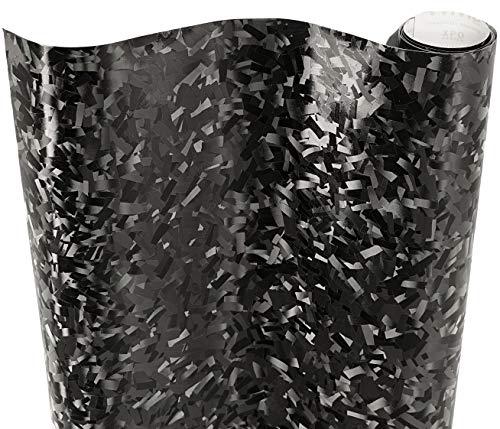
Best for: Projects needing a substantial carbon finish or partial/full body wrap with enhanced durability and self-healing properties.
Why it’s selected: The forged composite carbon finish offers a distinctive texture that’s difficult to reproduce with decals alone. The Nano Air-Release adhesive reduces lifting and bubbling, making it more forgiving on larger surfaces.
Caution: Wraps can require more skill to align and trim on complex shapes; improper heat application may affect texture fidelity.
Buying Guide
- Purpose and surface: Are you detailing a model kit, a radio-controlled car body, or a real vehicle? Decals excel on flat or gently curved panels, while vinyl wraps handle larger surfaces and complex curves better.
- Texture realism: Twill carbon textures reproduce the weave pattern. For a subtle look, choose smooth carbon finishes; for a bold look, go with a pronounced twill or forged/vinyl texture.
- Scale compatibility: Confirm your model scale (1:6/1:12/1:24) to ensure decals align with panel sizes and grid patterns. Some products are multi-scale, offering flexibility.
- Adhesive and cure: Decals rely on solvent-based or water-based adhesives with clear drying times. Vinyl wraps use pressure-activated adhesives and heat to conform to shapes. Consider ease of removal and potential residue.
- Application complexity: Beginner-friendly decals include illustrated instructions and forgiving textures. Larger wraps require careful planning, cutting, and heat application.
- Durability and aging: UV resistance and surface protection matter for long-term displays. Vinyl wraps often include UV resistance, while some decals rely on protective topcoats used in modeling.
- Compatibility: Some products target specific brands or RC kits. Verify compatibility with your kit model and body panels to avoid misfit or misalignment.
FAQ
- What is carbon twill in decals? It is a pattern that mimics the weave texture of carbon fiber, used to add authentic appearance to model surfaces.
- Are decals easier than wraps? Yes, decals are generally easier for small details, while wraps cover larger areas with a continuous finish.
- Can I remove decals if I don’t like the look? Most decals and vinyl wraps can be removed, but removal may affect underlying paint or surface texture if not done carefully.
- What surfaces work best with carbon decals? Smooth, clean plastic and painted surfaces work best; rough textures may hinder adhesion.
- Do these products require special tools? Basic tools like scissors, hobby knives, squeegees, and heat tools (for wraps) help achieve clean results.
- Which option is best for beginners? Decal sheets with illustrated instructions or vinyl sheets with straightforward adhesion are typically most approachable for newcomers.