Looking for a calligraphy pen set that excels in drawing and lettering? This guide identifies five top options that balance control, ink quality, and versatility for artists, hobbyists, and beginners. Each product is evaluated for who it suits best and why it stands out for drawing-focused tasks. The sections below help you compare nib types, ink behavior, and handling to choose the right tool for line variety, shading, and decorative lettering.
Buyer-friendly summary table:
- Speedball Sketching Set with Penholders and Pens: Best for traditional pen points and varied line work.
- Tombow 62038 Fudenosuke Brush Pen (2-Pack): Best for flexible brush lettering and expressive strokes.
- PANDAFLY Calligraphy Pen (10 pens): Best for beginners needing a wide nib range and archival ink.
- Calligraphy Pen (Fhyhej, 6 pens): Best for compact starter kits with multiple nib sizes.
- Mozeat Lens 14 Pcs Nibs Dip Pen Set: Best for nib variety and long-term experimentation with oblique grips.
Speedball Sketching Set With Penholders

The Speedball kit is ideal for artists who need a traditional pen-point experience. It includes six distinct nibs (No. 99, No. 56, No. 102 Crow Quill, No. 107 Hawk Quill, No. 108, No. 512) and two pen holders. This setup supports precise lines, cross-hatching, and varied textures essential to drawing-focused lettering. Best for: comic artists, architectural illustrators, and students who want dependable, craft-style nibs for clean, disciplined lines. Limitation: the set emphasizes nibs rather than soft brush control, so it may be less suited to expressive brush lettering without additional tools.
Tombow Fudenosuke Brush Pen 2-Pack
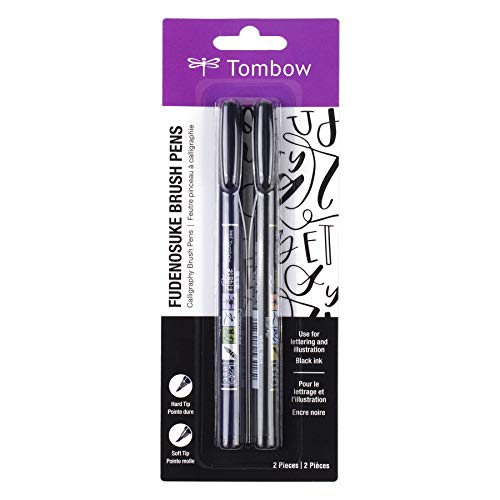
The Tombow Fudenosuke two-pack offers soft and hard tip options, delivering flexible brush tip performance with consistent ink flow. It’s best for calligraphy and art drawings that require variable line weights, from ultra-fine to broader strokes. Best for: calligraphers who want nuanced control and for artists practicing mixed media with brush-based lettering. Limitation: brush tips can wear with heavy use; the soft tip may fray on rough surfaces over time.
PANDAFLY 10 Pens For Lettering

This set provides a wide nib range across 10 pens, including sizes like 0.5mm, 0.8mm, up to 3mm, plus soft brush options. It uses archival-quality black ink that’s waterproof, fadeproof, and non-bleeding, making it suitable for drawings that may be archived or shared across media. Best for: beginners who want a broad selection without buying individual nibs, and artists exploring multiple line weights in one session. Caution: check nib quality as some users may prefer higher-end nibs for ultra-fine work.
Fhyhej 6 Size Calligraphy Pens

The Fhyhej set features six nib sizes (1mm, 2mm, 3mm, and small, medium, large) with black archival ink. It’s designed for beginners and intermediate artists seeking reliable performance in lettering and drawing. Best for: users who want a compact kit with diverse nibs for different word sizes and shading. Limitation: the set emphasizes standard nibs; it may lack the broader assortment of nib types found in larger kits.
Plotube Dip Pen Set With Nibs and Ink

The Plotube set combines a wooden dip pen with antique brass hardware and a wide nib assortment, including 11 nibs and seven-color ink bottles. It also includes a beginner’s manual, making it a practical entry point for learning traditional calligraphy and drawing techniques. Best for: beginners who want a gift-ready kit with a tactile wooden grip and rich ink options. Limitation: color ink bottles may require careful storage to avoid spills or drying out over time.
Buying Guide
Key considerations when choosing a calligraphy pen for drawing:
- Nib flexibility vs. control: Brush tips offer dynamic strokes; rigid nibs provide precise lines. Consider your preferred style and practice routine.
- Ink type and permanence: Archival, waterproof, fadeproof inks are ideal for drawings intended for long-term storage or mounting. Non-waterproof inks may smear with moisture.
- Material and grip: Wooden grips and well-balanced bodies reduce fatigue during long sessions. Metal holders offer durability for daily use.
- Nib variety: Sets with a broad range of nib sizes and types enable scaling from fine lines to broad swaths for shading and borders.
- Portability and storage: Compact kits are convenient for travel or classroom use; consider included cases or tubes for ink and nibs.
- Surface compatibility: Some nibs work best on smooth paper; others tolerate slightly textured surfaces for texture in line work.
FAQ
- What is the difference between a brush pen and a dip pen for drawing?
Brush pens provide flexible, painterly strokes with ink that dries quickly; dip pens rely on nibs that must be dipped in ink, offering more controlled line variation but requiring re-dipping. - Which pen is best for beginners in calligraphy drawing?
A kit with multiple nib sizes and a comfortable grip, such as the 6- to 10-nib sets, helps beginners explore line weight while building technique. - Are archival inks necessary for art drawings?
For long-term storage or framing, archival inks help prevent fading and ensure the work remains vibrant over time. - Can nibs be mixed between brands?
Some nibs are compatible with standard pen holders, but fit and balance can vary. It’s best to test with the intended holder. - What surfaces work best with dip pens?
Smooth, high-quality drawing papers and bristol papers provide clean ink flow and crisp lines; rough papers can cause nibs to catch or bleed. - Is a starter kit sufficient for advanced lettering?
A starter kit is a good foundation, but advanced lettering may benefit from additional nibs, ink colors, and practice in diverse scripts.