Choosing the right brown permanent marker for wood involves considering durability, tip size, and compatibility with wood finishes. This guide reviews five reliable options that work well on wooden furniture, crafts, and repair work. Each product is evaluated for how it performs on light to dark wood tones, how quickly it dries, and how well it resists fading or water exposure. Use this overview to find a marker that blends seamlessly with your wood projects while providing lasting color and clear marks.
Summary of selected products:
- Allary Furniture Touch-Up Markers: Brown Color; 1 Pack of 3 Markers — Light, Medium, and Dark brown tones; scrub resistant.
- Competitive Advantage Enamel Paint Markers MPD-15 — Brown; multi-surface durability; waterproof and UV resistant.
- FLYMAX Brown Marker Paint Pens — Permanent, water-based acrylic ink; quick-drying; versatile on many surfaces.
- Rust-Oleum Varathane Wood Stain Touch-Up Marker — Dark Walnut/Espresso tones; fast-drying and easy to apply.
- Uchida Marvy Deco Color Brown Acrylic Paint Marker — Chisel tip for broad or fine lines; great on wood.
Allary Furniture Touch-Up Markers: Brown Set

Allary’s set includes three brown tones: Light, Medium, and Dark. Designed for furniture touch-ups, these markers claim scrub resistance, helping hide small nicks on wood surfaces. The three shades let you blend repairs with varying wood tones, from pine to espresso finishes. The markers are suitable for minor scratches on doors, tabletops, and trim. For quick in-place fixes, the trio provides a simple solution without needing matching stains or complex tools. The markers are intended for light to moderate wood finishing repairs.
The markers are positioned as a practical on-hand solution for homeowners and DIY enthusiasts. The light to dark brown spectrum supports a range of common domestic woods. Performance on oil-based or waxed surfaces may vary, so test on an inconspicuous area first. If a repair area is deeply damaged, these markers are best used to blend and shade rather than fully restore a damaged wood unit.
Competitive Advantage Enamel Markers MPD-15 (Brown)

Competitive Advantage offers enamel-based markers designed for multi-surface use, including wood. The product emphasizes durability, weather resistance, and waterproof performance. With a wide color selection, the brown shade is designed to be opaque and visible on a variety of finishes. The marker is intended for permanent marks on materials such as metal, glass, rubber, plastic, and wood, making it a versatile option for hobbyists and professional fixers alike. This marker is well-suited for projects requiring bold color and long-term legibility on wood surfaces that are not sealed with a finish.
On wood, the enamel formula tends to provide stronger adhesion and resist chipping compared with water-based options. It dries to a tough film that can endure occasional handling. However, enamel markers may require a longer curing time and careful surface preparation for best results. For furniture repair, test on a small area to ensure the finish and wood grain are not damaged or darkened unevenly.
FLYMAX Brown Marker Paint Pens

FLYMAX presents water-based acrylic markers with a 2.5 mm medium tip. The pens claim quick-drying, fade resistance, and waterproof properties to help wood projects stay legible over time. The acrylic formula supports smooth application on wood, metal, ceramic, and more, allowing for both detailed work and broader fills. The markers are marketed as versatile for crafts, scrapbooks, journals, and DIY repairs, offering a paint-like finish without the mess of a brush. On wood, they can provide sharp lines or blended shading, depending on pressure and layering.
Users should note that water-based markers may lift if you seal the wood with oil-based finishes afterward. For best results, apply to clean, dry wood and allow adequate drying between layers. Ventilation is recommended when using enamel or solvent-based markers, but these acrylic markers are generally user-friendly for indoor projects.
Rust-Oleum Varathane Wood Stain Touch-Up Marker (Dark Walnut, Espresso)
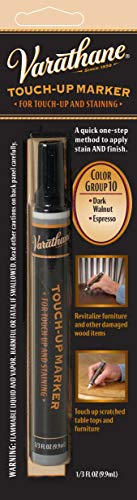
Varathane’s wood stain touch-up marker offers a practical option for repairing minor scratches and blemishes on stained furniture and molding. The marker aims to deliver a quick, one-step method to apply stain and finish the repair. It dries to the touch in about 30 minutes, allowing for fast fixes on wood surfaces such as cabinets, floors, and trim. The Dark Walnut and Espresso tones align with common stain colors, helping blend repairs into existing finishes. Like all stain-based markers, results depend on the surrounding color and the wood’s grain pattern, so testing before full use is advised.
For best results, apply sparingly and wipe away excess to avoid dark blotches. Consider the existing finish on the wood—raw or sealed surfaces will react differently. This type of marker is ideal for quick cosmetic improvements rather than major restorations, and it pairs well with matching stains or topcoats when needed.
Uchida Marvy Deco Color Brown Acrylic Paint Marker

Uchida’s Marvy Deco Color marker uses brown acrylic paint with a 3-way chisel tip, enabling broad strokes and fine lines. The marker is described as suitable for wood, plaster statues, walls, and various crafts. The chisel tip provides versatility for filling larger areas and adding precise outlines. Acrylic-based markers like Deco Color offer water resistance after drying and can pair well with wood finishes when a bold, opaque brown is needed. This option is especially useful for crafting projects that blend color blocks with natural wood textures.
On wood, the decision to use a chisel-tip marker often depends on the desired texture. A broad stroke can simulate a stained look, while a thin edge can outline grain patterns. Prepare the wood surface with a clean, dry base to maintain color clarity, and consider finishing with a clear topcoat to protect the marker from wear over time.
Buying Guide: Key Considerations For Brown Markers On Wood
- Surface compatibility: Water-based acrylic markers work well on unfinished or sealed wood, while enamel markers excel on painted or stained surfaces. Test on a hidden area first.
- Tip style and size: Fine tips suit details; medium or chisel tips cover larger areas or create bold accents. Consider the project’s scale and grain visibility when choosing a tip.
- Color range and shading: A set with multiple browns (light, medium, dark) helps blend repairs with various wood tones, from pine to walnut.
- Drying time and durability: Quick-drying formulas reduce smudging, while waterproof or UV-resistant finishes protect the color in bright or humid environments.
- Finish compatibility: If the wood will be sealed or varnished later, ensure the marker’s ink is compatible with the topcoat to avoid bleeding or dulling.
- Ease of use and cleanup: Water-based markers are generally easier to clean from unintended marks, while enamel markers require solvents.
- Intended use: For small cosmetic repairs, markers that blend with wood tones are preferable; for bold labeling or color-coding, opaque enamel options may be better.
In selecting a brown marker for wood, consider whether you need a color-matching solution for minor scratches, a high-contrast marker for labeling, or a hardy, weather-resistant option for furniture subjected to frequent use. Each product above offers distinct advantages: Allary provides tonal flexibility, Competitive Advantage emphasizes surface versatility, FLYMAX delivers quick-dry acrylic performance, Varathane targets wood stain reformulations, and Uchida offers a chisel-tip for craft versatility. A practical approach is to have two markers on hand: a lighter brown for blending and a darker brown for defining edges or filling deeper scratches.
To maximize long-term results, plan for a compatible topcoat or sealant after color repair, especially for furniture that experiences regular wear. Proper surface preparation, testing, and gradual layering will yield smoother, more natural-looking repairs on wood projects.
Additional Notes For Care And Maintenance
- Store markers in a cool, dry place and recap tightly to prevent tip drying.
- Avoid exposure to direct sunlight for products not specifically UV-resistant.
- Clean any excess ink promptly from non-wood surfaces to prevent staining.
- When in doubt, perform a small test on a hidden area to verify color match and adhesion.